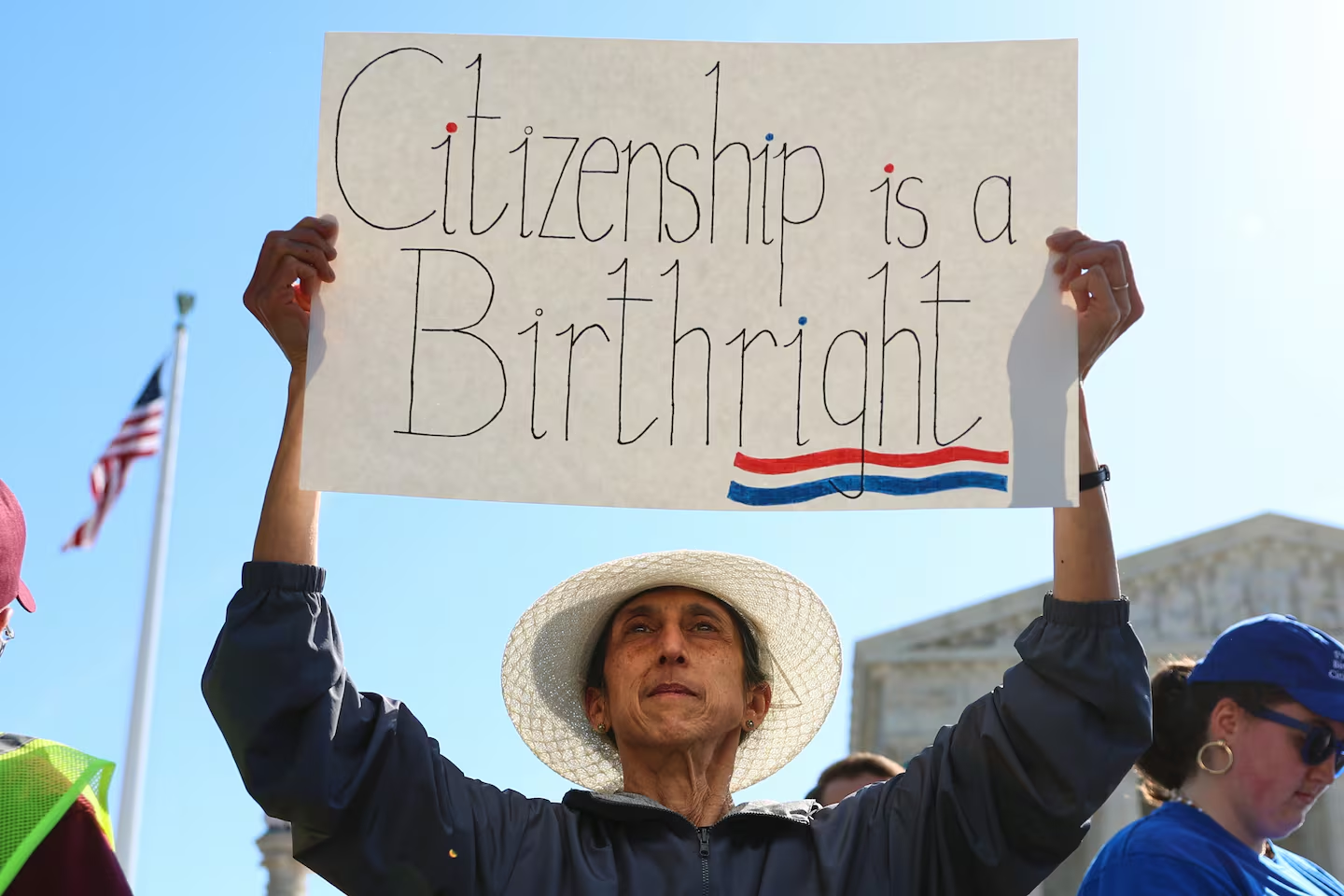
Birthright citizenship ruling brings relief to N.H. plaintiffs, ACLU attorney says
Once attorneys from the American Civil Liberties Union finished reading through the US Supreme Court’s decision on birthright citizenship Tuesday morning, confirming it was good news for their clients, they made a phone call to the mother of an 8-month-old girl in New Hampshire.
Read more Despite some losses for Trump, Supreme Court delivers enduring conservative wins
That woman, an asylum seeker from Honduras who is identified in court records only by the pseudonym “Barbara,” was the lead plaintiff in the class action lawsuit that successfully challenged an executive order President Trump had issued on his first day back in the White House.
Trump had sought to reinterpret the 14th Amendment in a way that would withhold birthright citizenship from the children of people who are present in the country illegally or temporarily. But the justices rejected his position, struck down his executive order, and issued that means Barbara’s daughter and others like her must be recognized as Americans.
SangYeob Kim, director of the immigrants’ rights project at the ACLU of New Hampshire, said his team’s clients are excited and relieved. If the president’s order had been allowed to stand, the effects would have been chaotic and potentially far-reaching, he said.
Since this was a class action case, the Supreme Court’s ruling confirms that others in similar circumstances — including a 16-month-old child born to “Gail” and “Thomas,” a couple with ties to the nonprofit New Hampshire Indonesian Community Support in Dover, N.H., which brought an earlier challenge to Trump’s order — are likewise entitled to birthright citizenship, Kim said.
“Their children are still US citizens,” he said. “Their children have always been US citizens.”
Read more Retrofitted Qatari jet takes flight as Air Force One for Trump’s trip to North Dakota
The government had argued the 14th Amendment, adopted in 1868 in the wake of the Civil War, was supposed to extend citizenship only to formerly enslaved people and their kids, not to “the children of illegal aliens.” Trump’s order was such a central part of his immigration agenda that he attended oral arguments himself.
The court’s divided ruling included dissents from Samuel Alito and Clarence Thomas and a sharp response from Ketanji Brown Jackson. The core decision was penned by Chief Justice John Roberts.
Trump said in a social media post Tuesday that Congress should begin working to restrict birthright citizenship by statute, even though five of the nine justices said the Constitution prevents such restrictions. One senator said he’ll introduce a constitutional amendment to ensure US citizenship “once again reflects allegiance, permanence, and membership in the American nation.”
The Justice Department circulated a memo Tuesday directing prosecutors to prioritize so-called “birth tourism” cases. The director of a think tank that favors restrictive immigration policies said birthright citizenship could become a powerful political wedge.
This story appears in Globe NH | Morning Report, a free email newsletter focused on New Hampshire, including great coverage from the Boston Globe and links to interesting articles elsewhere. Sign up here.
Read more Judge orders Pentagon to lift policy that New York Times journalists be accompanied by an escort


Post Comment