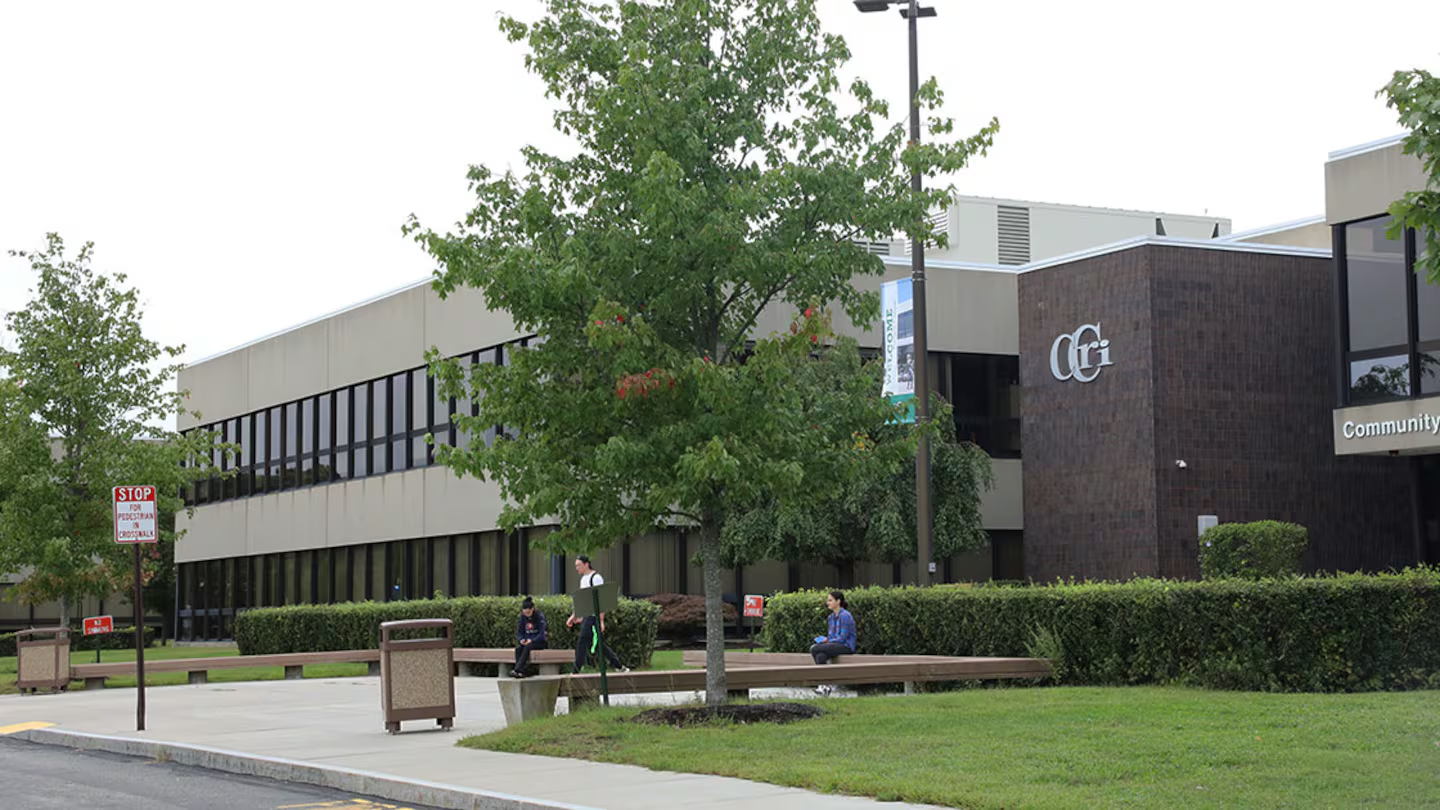
Trump’s DOJ sues R.I. and Mass. over in-state tuition for undocumented students
PROVIDENCE — The US Department of Justice on Monday filed lawsuits against Rhode Island and Massachusetts, challenging state laws that provide in-state tuition and financial assistance to undocumented students who attend public universities and colleges.
Read more How Israel and Iran are fracturing both parties in the midterms
The lawsuits represent the latest in a series of legal challenges the Trump administration has launched in states that provide in-state tuition to students without legal status.
For example, a federal judge in Texas blocked that state’s law giving a tuition break to undocumented students after the state’s Republican attorney general said he supported the legal challenge. But in Minnesota, a federal judge ruled that public universities there can continue to offer in-state tuition and scholarships to some immigrants in the country without legal status.
“This Department of Justice will not tolerate American students being treated like second-class citizens in their own country,” Assistant Attorney General Brett A. Shumate said in a statement.
In the complaints, the Department of Justice seeks to halt enforcement of Massachusetts and Rhode Island laws that require colleges and universities to provide in-state tuition rates for residents regardless of immigration status. The complaints alsoaim to stop Massachusetts and Rhode Island from enforcing state laws that providence financial assistance and scholarships to those residents.
The Department of Justice said it has now filed such lawsuits in 12 states, and it said it has prevailed in Texas, Kentucky, Oklahoma, and Nebraska. It said similar lawsuits are pending in Illinois, Minnesota, Virginia, California, New Jersey, and Kansas.
In its complaint, the Department of Justice’s Civil Division said federal law prohibits undocumented residents from receiving resident tuition benefits that are denied to US citizens living in other states. Out-of-state students generally pay higher tuition at public universities.
“There are no exceptions,” the complaint said. “Yet, Rhode Island has ignored this congressional prohibition for over a decade.”
In 2011, the Board of Governors for Higher Education approved a measure that allowed undocumented students to pay in-state tuition rates at Rhode Island’s public university and colleges after the General Assembly declined to take up the issue.
In 2021, Rhode Island enacted a law that codified that policy, extending in-state tuition to residents regardless of immigration status. To be eligible, students must attend a Rhode Island high school for three years, continue to reside in Rhode Island, and file for lawful immigration status as soon as they’re eligible.
Read more World Cup live updates: Germany and Paraguay set to face off in Boston’s first knockout round match
“Education is a promise for a better future, and this bill demonstrates Rhode Island’s commitment to supporting all students,” Governor Daniel J. McKee said at the bill signing. “This legislation is not only about equity, but an increased access to higher education, which will benefit our community for years to come.”
Representative Grace Diaz, a Providence Democrat, introduced the legislation in the House.
“As someone who came to this country with very little, I know first-hand the opportunities that a good education can bring to someone who is willing to work hard,” Diaz, a native of the Dominican Republic, said at the time. “We have so much untapped potential that has come into our state from all over the world.”
On Monday, a spokesperson for Rhode Island Attorney General Peter F. Neronha said the office had not yet been served with the complaint, but he said the in-state tuition laws “have served all Rhode Islanders well.”
“We’ll therefore have more to say in the coming days, but for now, the public can be reassured that this office will continue to aggressively defend this state’s laws against unlawful overreach by this administration,” spokesperson Timothy M. Rondeau said.
Massachusetts has been getting ready to defend the law it passed in 2023 to make in-state public tuition available to some noncitizens. Last year, a spokesperson for Massachusetts Attorney General Andrea Joy Campbell said her office “will of course defend Massachusetts law should it be challenged.”
Around 3,000 undocumented students graduate from high school every year in Massachusetts, according to the Higher Ed Immigration Portal.
Some young adults brought to the United States as children gained access to in-state tuition, as well as protection from deportation, under the Obama-era Deferred Action for Childhood Arrivals (DACA) program. However, DACA is not processing new applications for these Dreamers.
Passed in the summer of 2023, Massachusetts’ Tuition Equity Law extends eligibility for in-state tuition at public universities and colleges to people who attended and graduated from a high school in Massachusetts, giving qualified undocumented students access to the same discounted rates as their US-born peers.


Post Comment