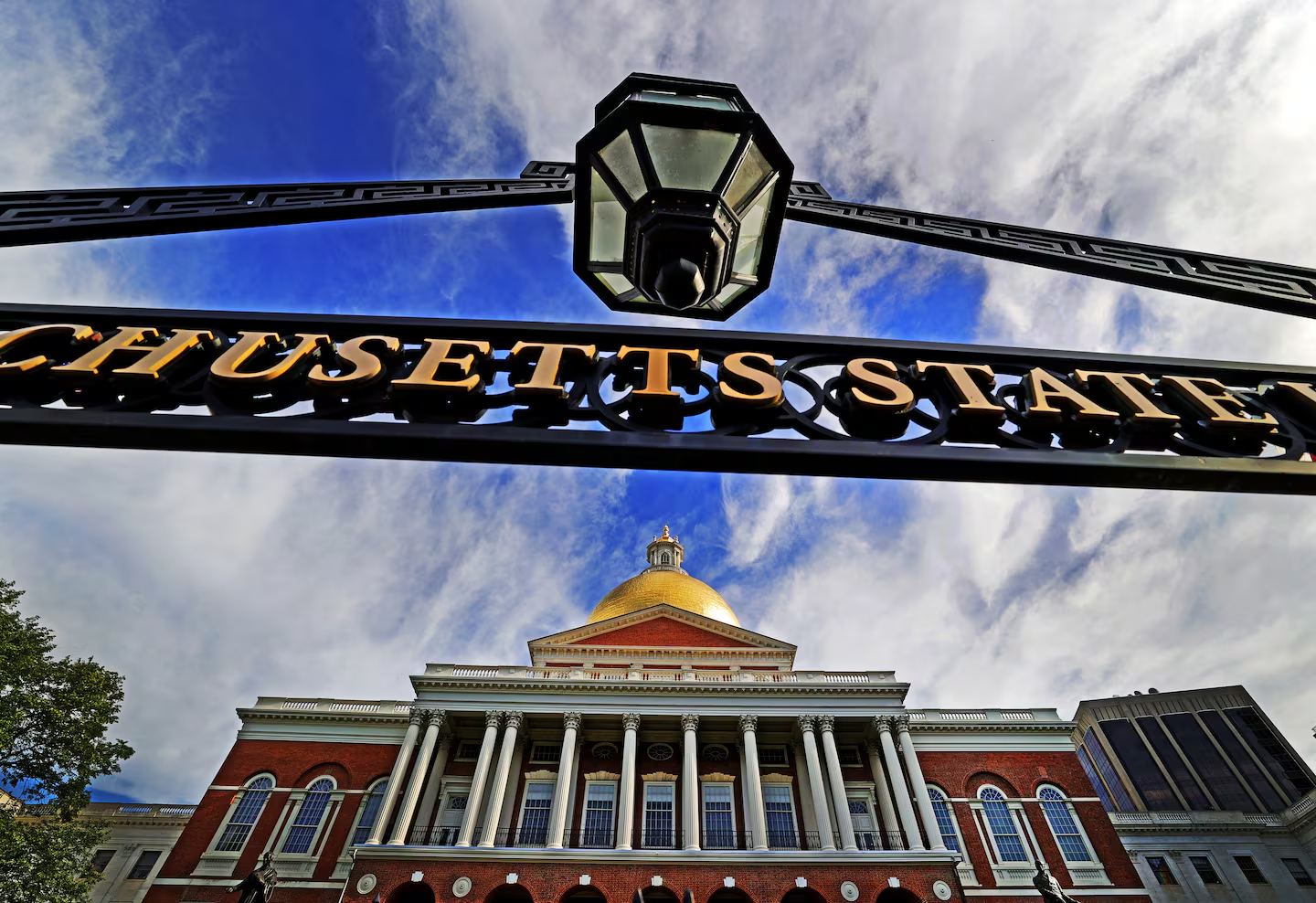
Facing ‘federal uncertainty,’ Mass. lawmakers say they have state budget deal days before fiscal year begins
Massachusetts House and Senate leaders said Monday they reached an agreement on the state’s spending plan for the fiscal year that begins Wednesday, saying it includes no proposed tax or fee increases on “residents who continue to feel the weight of federal uncertainty.”
Read more Supreme Court rules constitutional privacy protections apply to cellphone users location history
Legislative leaders did not immediately release details of what they included, or cut, from the versions of the roughly $63 billion plans each of their chambers passed in recent months.
In a statement Monday, state Senate budget chief Michael Rodrigues and his House counterpart, state Representative Aaron Michlewitz, said lawmakers “are leading with a steady hand” and included no proposal to dip into the state’s emergency savings account to balance the state budget.
“Our teams are working quickly to finalize and file the conference committee report so the Legislature can act Wednesday to deliver a fiscally sound and responsible budget to the Governor’s desk,” they said.
Should lawmakers vote on the budget proposal as expected on Wednesday — the first day of the new fiscal year — and send it to Governor Maura Healey, she would then have 10 days to review the bill. State law affords Healey the ability to veto specific items or sections, or return certain provisions with amendments.
The two branches are in agreement on large swaths of the spending in their roughly $63 billion budget bills. They both propose to increase spending over last year’s budget plan by about 4 percent. Both plans also proposed to funnel nearly $500 million in so-called millionaires tax funding to the MBTA, and hundreds of millions more to K-12 schools and early education.
Read more Anthony Rizzo cherished getting drafted by Red Sox, and other thoughts
To be sure, there are some differences.
The Senate, for example, adopted an amendment to address deadly wrong-way driving incidents. Senate leaders also want to increase unrestricted aid for cities and towns by $53 million next fiscal year, proposing more than the governor or House did at a time local officials say they’re struggling to afford the rising cost of delivering local services.
In the meantime, state government is not expected to shut down. Healey filed a temporary spending bill that lawmakers are expected to pass as a stopgap while the governor reviews the year-long budget.
The interim budget contains spending authorizations to meet “necessary obligations” through the end of July and allows for local aid payments to be delivered to cities, towns, or school districts that are facing an “emergency cash shortfall.”
Healey signed the current fiscal year’s budget unusually early last year on July 4, the same day that President Donald Trump signed the One Big Beautiful Bill Act.
Lawmakers last year passed the spending plan on June 30, marking the first time in nearly a decade that they passed a budget deal before the start of the fiscal year it was designed to cover.
This is a breaking news story and will be updated.


Post Comment