Could Massachusetts become the first state to reverse marijuana legalization?
A ballot fight to undo marijuana legalization in Massachusetts is heating up.
Anti-pot advocates said this week they’ve submitted enough final signatures to put a measure on the November ballot that would overturn state laws legalizing recreational cannabis.
Read more To mark America’s 250th, Congress is burying a time capsule. Here’s what New England contributed.
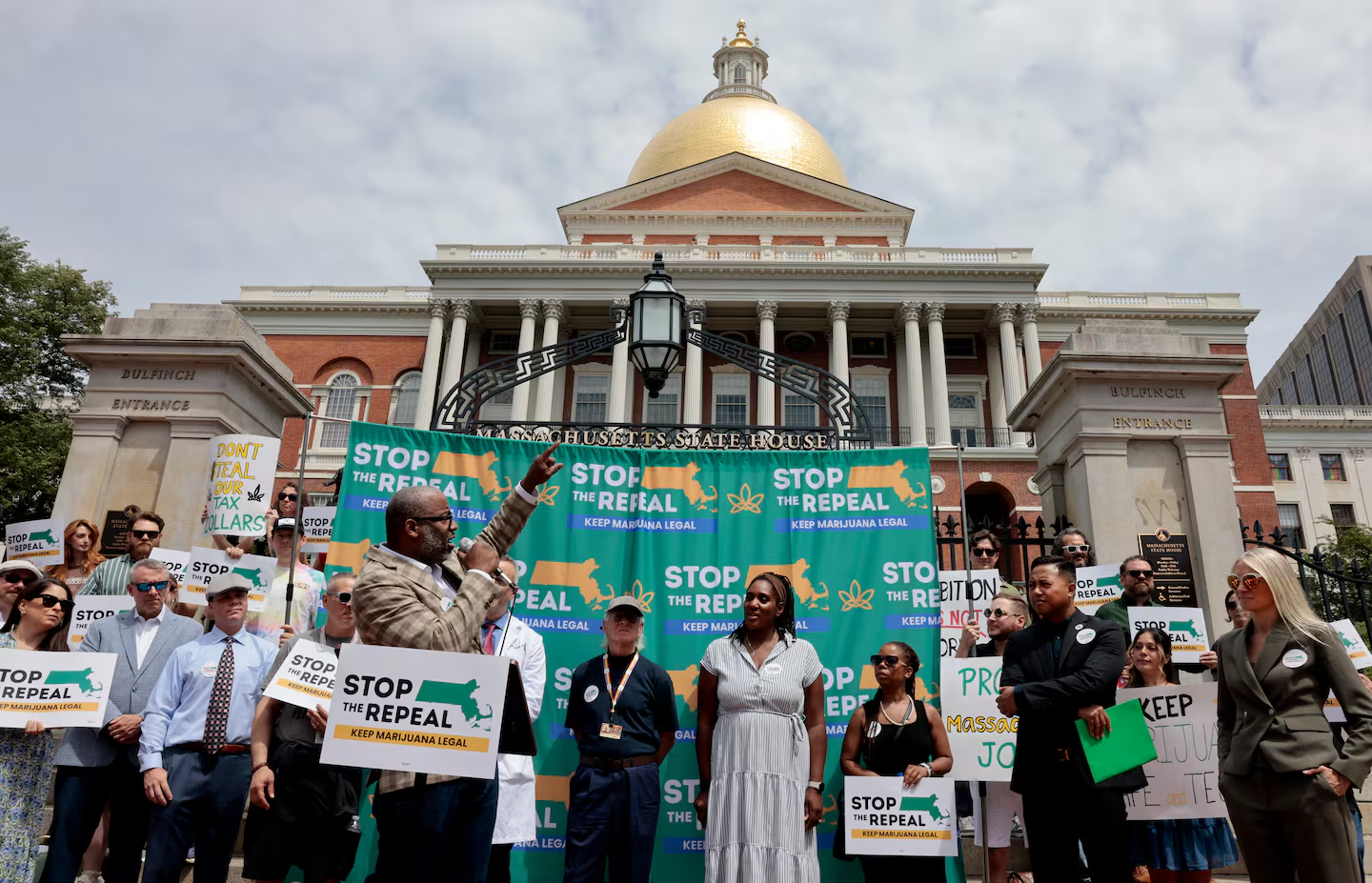
At the same time, cannabis industry leaders on Thursday launched their opposition campaign, and said they’re urging businesses to take the initiative seriously as well, after many had previously dismissed the proposal as unlikely to pass.
“I hope everybody understands how real of a threat it is,” said Ryan Dominguez, chair of Stop the Repeal, an industry-backed movement.
The pot question will askvoters whether to repeal state laws legalizing, regulating, and taxing recreational cannabis sales, which were also passed by voter referendum in 2016. The sales generate hundreds of millions in annual tax revenue from dispensaries that have sprouted across the state. If successful, the initiative would mark the first time any state has reversed marijuana legalization.
The anti-pot proposalwould join a field of other likely election questions ranging from repealing a 2024 firearms law to ending party primaries. The state will officially certify the ballot questions in July.
“I’m cautiously optimistic and I look forward to voters getting the chance to [debate this],”said Wendy Wakeman, spokesperson for Coalition for a Healthy Massachusetts, the group backing the question, and a Massachusetts Republican Partystrategist.
Industry groups attempted to block the question from ever coming to the ballot through a variety of legal challenges but were shot down.
Both sides now say they’re gearing up for a tough fight. And eachportrayed itself as the underdog coming into the fall, especially when it comes to funding.
Historically, money has been a huge predictor of ballot campaign success in Massachusetts. The better-funded side has won almost three-quarters of all questions put before statewide voters since 2008, according to Ballotpedia and campaign finance records.
Stop the Repeal will largely rely on financial backing from marijuana operators who would be wiped out by the question, said Dominguez, who also heads a large cannabis trade group.
But there could be fund-raising difficulties, advocates said, as businesses strain under an oversaturated market and record-low weed prices.
“I’d be lying if I said that the financial situation that the cannabis industry is in in Massachusetts isn’t a challenge,” said Jesse Mermell, a political consultant working for the pro-cannabis group. “The other side has … access to just gobs and gobs of money, and we have to be able to compete.”
The measure doesn’t affect medical marijuana, which would remain legal if it passes. The new law also wouldn’t take effect until 2028, givingpot shops time to liquidate their inventory to medical dispensaries or to become one themselves.
Repeal supporters said they don’t want to bring back strict marijuana policing, but doaim to curbpot commercialization, which they arguehas resulted in rising potencies, concerning rates of youth use, and driver safety issues.
“I don’t think [people] voted for a pot shop on every corner … smelling weed everywhere they go and having to protect their kids,” said Kevin Sabet, president of Smart Approaches to Marijuana, a prominent Virginia-based anti-weed group which has bankrolled the Massachusetts initiative with $1.5 million as of January, and is continuing funding. “We’re finally having some buyer’s remorse.”
Under the repeal, possession of small amounts of marijuana could result in a $100 fine for adults 21 and over. Younger people could receive that fine, plus mandatory drug awareness training. Smoking weed in public is already not permitted — that wouldn’t change.
Opponents of the repeal have taken aim at SAM, the campaign’s only disclosed funding source, alleging it represents out-of-state interests trying to sway Massachusetts voters.
“[It’s] an obscenely well-funded dark money operation,” Mermell said.
SAM allocated another $2 million for a similar repeal effort in Maine, which didn’tmake this year’s ballot. The organization was also in talks to back an Arizona rollback campaign that fizzled in May, Tucson Weekly reported.
As of its last federal financial disclosure in 2024, SAM’snonprofit reported $23.2 million in total assets.
Read more Meet 3 members of Albania’s ‘Flamingo Revolution’ trying to torpedo Kushner-linked development
“I’m concerned that we will be outspent,” said Adam Smith, executive director of The Marijuana Policy Project, a nonprofit that helped sponsor the 2016 legalization effort in Massachusetts and has donated to Stop the Repeal. “We’re going to have to win because we’re right.”
Still, Sabet said that the upcoming bout is “a David-and-Goliath” faceoff between a small coalition of concerned citizens and a “multibillion-dollar industry [with] friends at the highest corridors of power in this country and in this state.”
As for outside campaign influence, Sabet, who said helived in Massachusetts until 2017, called the opponents hypocritical. He cited out-of-state contributions to the 2016 legalization question, which raised almost $2 million from a Washington, D.C.-based PAC. That effort more than doubled the spending of its anti-weed opponents.
This year’s petition cycle marked the first time that major cannabis repeal efforts have launched across the country, shocking many industry watchers as legalization has continued to spread, now passed in 24 states and Washington D.C., while recreational sales topped $1.65 billion in Massachusetts last year.
“The fact that we’ve gotten here today is absolutely insane,” said Alex Gonzalez, president of Calyx Containers, a Utah-based cannabis packaging company founded in Massachusetts.
While starting off with cavalier attitudes toward the question, many across the industry now view it as an “existential” threat, Smith said.
“If we are significantly outgunned and we don’t get our messages out, then there is a risk that they could win,” he said.
Polling earlier this year by the University of New Hampshire had suggested the question might be handed a decisive defeat, with 63 percent of Massachusetts voters against the repeal.
But repeal opponents warn UNH’s survey is a difficult predictor due to its wording. It asked voters what positions they supported rather than how they would vote.
Another poll, conducted in April and May and commissioned by the , shows a much tighter race: 41 percent of voters were inclined to vote Yes on repealing recreational pot sales; 48 percent No; and 11 percent Undecided. The retail trade group opposed legalization in 2016, but doesn’t support the repeal this year.
Bill Rennie, the association’s senior vice president, saidits board voted in June against backing the repeal, feeling it would “all of a sudden take us back in time a decade or more.” Pot stores have “become part of the fabric of the general retail landscape here in Massachusetts,” he added.
The anti-weed campaign has faced accusations of misleading people into signing its petitions to get onto the ballot, though officials have repeatedly denied any wrongdoing.
Allegations of fraudulent signature-gathering were shot down by the State Ballot Law Commission, under Secretary of State William Galvin’s office, in January, citing lack of evidence.
Earlier this month, as anti-weed advocates collected their final signatures, another video circulated online appearing to show a signature-gatherer for the question displaying the Stop The Repeal website when asked for their credentials. The worker appeared to tell bystanders that they needed to get the issue on ballots in order to defeat it and keep marijuana legal.
Wakeman, of the Massachusetts coalition behind the repeal, said the worker in the video washired by the campaign’s vendor and has since been fired, calling the alleged actions “wholly unacceptable.”
“The coalition has zero tolerance for any circulation tactics that would mislead petition-signers,” she said.
Dominguez, of Stop the Repeal, said his campaign is no longer trying to oppose signature-gathering tactics following legal rebuttals. The group, he said, is now focused on informing voters about the benefits of the regulated industry and the harms it sees of repealing recreational sales.




Post Comment