Supreme Court allows Trump administration to revoke immigration protections for thousands of Haitians and Syrians in US
The US Supreme Court has ruled the Trump administration has the authority to revoke an immigration program that allows some 330,000 Haitians, including thousands in Massachusetts, to live and work legally in the United States on humanitarian grounds.
Temporary Protected Status, or TPS, shields immigrants from certain countries that are undergoing armed conflict, environmental disasters, or other extraordinary country conditions from deportation. The program protected a total of 1.3 million people from 17 countries when Trump took office.
The administration has been fighting to end the programfor Haitians since last year, assertingthe program was never meant to be permanent.
Attorneys representing five Haitian immigrants sued to prevent the termination. They told the court their clients could not safely return to their homeland and asserted the administration ended the program in an unlawfully hasty process motivated by, as one lawyer put it, “racial animus towards nonwhite immigrants and bare dislike of Haitians in particular.” During his 2024 presidential campaign, Trump amplified false rumors that Haitian immigrants were abducting and eating dogs and cats.
The Trump administration denied a racial motivation for its decision and argued that judges do not have the authority to override immigration officials’ decisions about the protections.
The high court’s 6-3 decision allows the Department of Homeland Security to move ahead with its plans to swiftly end the program. It is not immediately clear when that will happen.
Justices in the majority said the Haitians’ claim that “Haiti’s TPS designation was terminated because of race—is unlikely to succeed.” The government, they wrote, expressed policy views that could “rest on race-neutral justifications.”
“Ironically,” the majority wrote, attorneys representing the Haitians “themselves offer a race-neutral explanation for the Government’s action: namely, that the current administration, which has terminated every TPS designation that has come up for renewal, simply opposes the TPS program as it has been implemented in the past.”
Haitian immigrants who have lost their TPS status will have to either leave the country voluntarily, apply for other legal pathways to stay in the United States lawfully, or remain here without legal status, which could make them ineligible for permission to work here — and subject them to deportation.
“We are not really living well, because when you are in the street, you are paranoid,” a Haitian mother on TPS who has been living in the US for three years told the Globe, speaking in Frenchon a recent Sunday. “It’s very difficult for us.”
As they awaited the court’s decision this spring, advocates for immigrants worried that this Supreme Court decision could set the stage for the Trump administration to take away these legal protections for tens of thousands of TPS holders from other countries, too. The Supreme Court decision also applies to about 6,000 Syrians living in the US under the program.
About 45,000 TPS holders live in Massachusetts, with the largest group being from Haiti, according to estimates from lawmakers and policy groups. Some arrived just a few years ago. Others have been here for a decade, or longer if they were already living in the US when Haiti was first designated for TPS.
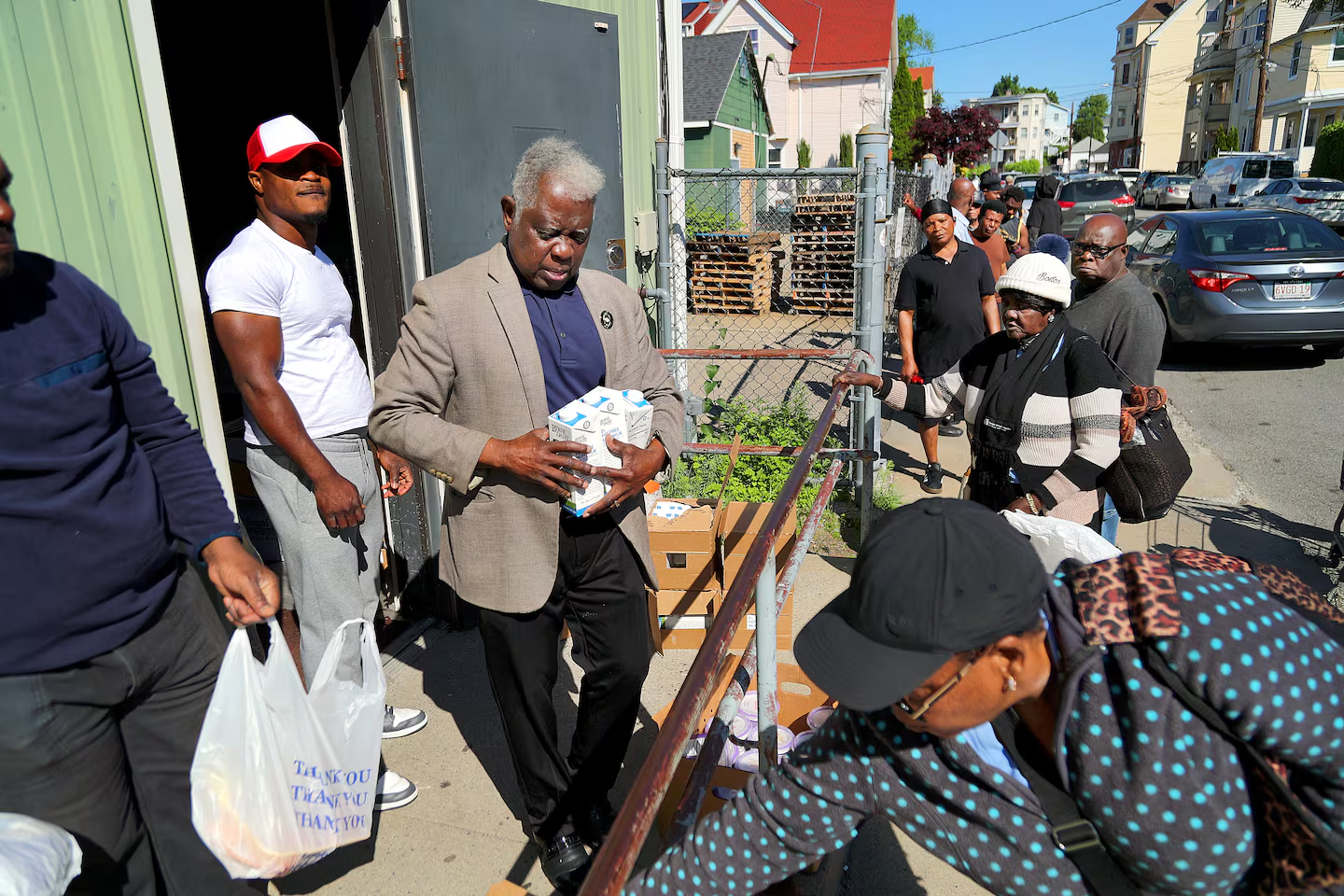
Many have built up businesses and careers, have US citizen children, attend local churches and schools. They include nurses who attend to hospital patients, caretakers for the elderly, early childhood education teachers, and airline cabin cleaners.
The Department of Homeland Security originally granted eligible Haitian nationals TPS after the country’s 2010 earthquake, which killed more than 200,000 people, and led to the country’s economic collapse and years of government instability, which continues today.
Deadly gang violence in Haiti has surged since the 2021 assassination of the country’s president, Jovenel Moïse. Gangs now commandeer most of Port-au-Prince, the capital city.
Read more Supreme Court clears way for Trump administration to revive restrictive immigration policy
Still, the Trump administration has been resolute in its attempts to shut down TPS for Haitians, appealing to the US Supreme Court after a federal judge temporarily halted the administration’s move to dismantle TPS earlier this year.
After the court ruled Thursday, some Trump administration officials took to social media to praise the Supreme Court’s opinion.
“The Court vindicates DHS yet again,” James Percival, the General Counsel for DHS said in a post on X. “The T in TPS stands for TEMPORARY, yet many of these designations became de facto amnesty. This is a win for the rule of law and common sense.”
A contingent of Massachusetts officials has publicly supported protectingTPS for Haitians, and condemned the Trump administration’s repeated attempts to shut Haitians out of the program.
US Representative Ayanna Pressley, a Democrat who is the co-chair for the House Haiti Caucus, has been a particularly staunch advocate in Washington for Haitians under TPS. Earlier this year, she led the charge to pass bipartisan legislation in the House to extend protected immigration status of Haitian nationals for three additional years.
“To deport anyone to Haiti right now is unlawful, and it would be a death sentence,” Pressley said at the time.
The Haitian community in the state makes up a sizable portion of the state’s health care workforce, providing crucial care especially to older adults and people with disabilities. The revocation of TPS would disproportionately impact Massachusetts and its health care sector because of this, a recent report by three federal lawmakers found.
In April, when the high court heard the TPS case, dozens of TPS holders and advocates traveled from Boston to DC to rally in front of the Supreme Court in support of TPS.
Others took to praying.
At the Voice of the Gospel Tabernacle church in Mattapan, Rev. Nicolas Homicil and his parishioners have been holding moments of prayer for a favorable outcome in the Supreme Court decision.
On Sundays, more than a hundred people gather in the warehouse space on Edgewater Drive to sing, study the bible, and hear from church leaders. Many of the children switch easily between English and Haitian Creole as they whisper and laugh with each other in the pews. Homicil, who is from Haiti and a naturalized US citizen, tries to make these services an uplifting reprieve from what has felt like weeks of impending doom.
In an interview after church on a recent Sunday, he said he’d been receiving daily calls and questions from Haitians in Greater Boston about the potential fallout from the court’s decision. Some in his congregation have already lost jobs and housing as a result of these rapidly-changing immigration policy decisions, he said. Some have returned to third countries they migrated from, like Brazil, Chile, or the Dominican Republic.
Some parents pleaded with Homicil to step in if their worst-case scenario plays out. “They say, ‘if I go and I’ve been taken by ICE —please, could you take care of my kids?’”
Homicil said he often feels overwhelmed by the suffering of his fellow Haitians in Massachusetts and across the US. The future for them seems bleak. “They don’t want them here, they don’t want them in their home country,” Homicil said. “They have no place to go.”
Read more Graham Platner targets Susan Collins in first policy roll out of the general election
This story includes material from the Associated Press.


Post Comment