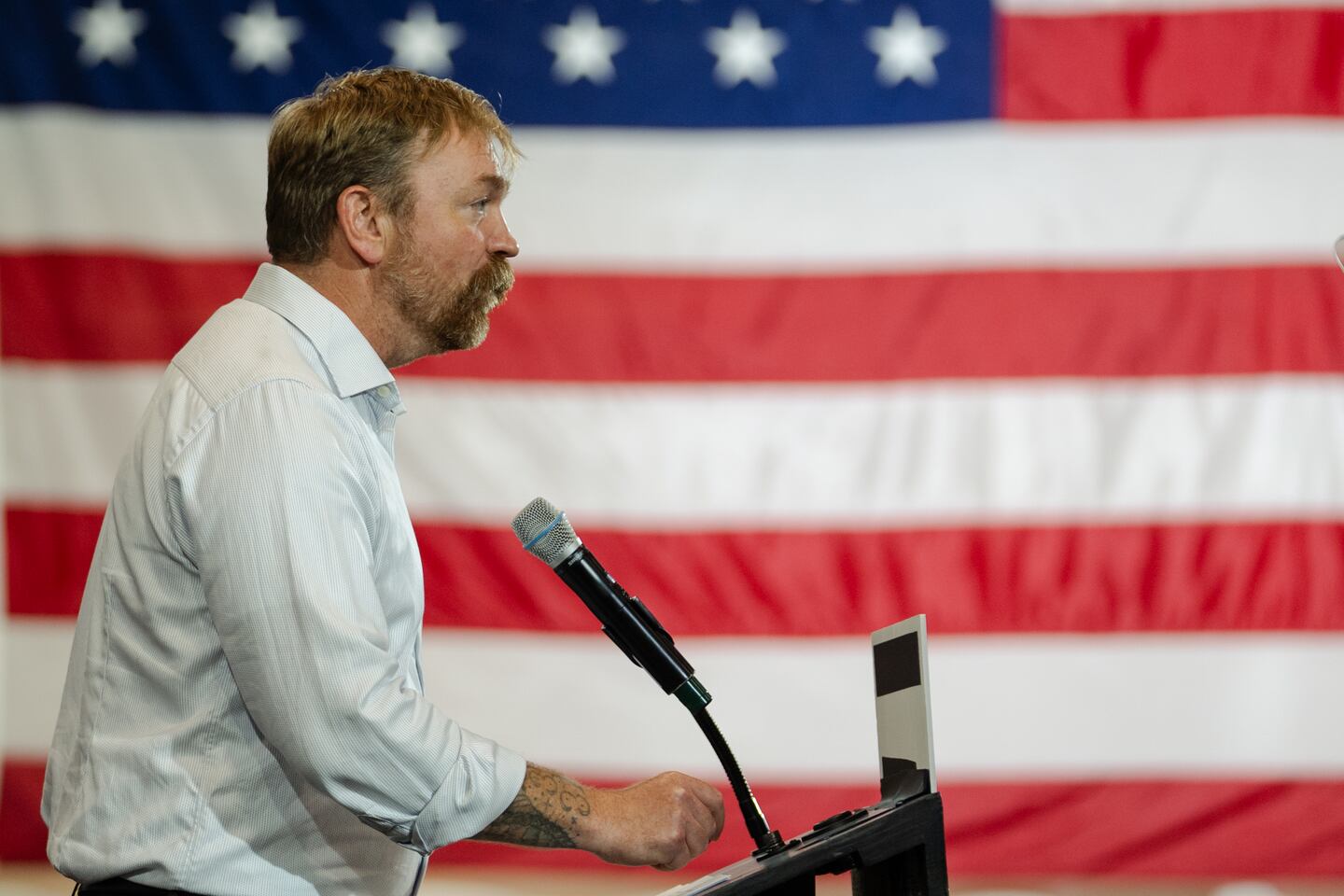
Graham Platner targets Susan Collins in first policy roll out of the general election
Graham Platner is making his first big policy splash since becoming Maine Democrats’ nominee for Senate — and it’s the clearest distillation yet of how he plans to make his general election case against Republican Senator Susan Collins.
Read more Game 79: Yankees at Red Sox lineups and notes
Platner’s “corruption crackdown” policy platform includes proposals to reform campaign finance, lobbying, and federal lawmaker conduct while in office, according to a copy first shared with the Globe.
“The establishment has rigged the system with legalized corruption and poisoned our elections with billionaire money and a politics that enriches the powerful at the expense of working people,” Platner said in a statement. “We’re taking this fight directly to Susan Collins and her billionaire donors, and we won’t stop until power is returned to the working people of Maine.”
The proposals suggest how Platner might continue to articulate his populist, stridently progressive opposition to billionaire and corporate influence if he goes to Washington. But for now, they mostly point to what attacks on Collins his camp believes will get him there.
For instance, many of Platner’s positions on how to curb the influence of money in politics double as expressions of policy as well as critiques of Collins. He favors overturning the Supreme Court’s Citizens United decision, which opened the door for unlimited super PAC spending, as well as banning corporate political action committees altogether.
Many Democrats agree with those positions, but Collins does not — a difference that Platner is aiming to highlight as he bets that broader voter exhaustion with money in politics will fuel his populist campaign.
Platner is also backing a ban on lawmakers’ ability to trade stocks while in office, another policy that has broad support — including from Republicans — but not from Collins. He also criticizes the existing STOCK Act, which requires lawmakers and their spouses to report trades made by themselves or a spouse within 45 days, and was in part crafted by Collins. The law is routinely violated on both sides of the aisle, including by Collins’ husband earlier this year, with virtually no penalties or repercussions.
Beyond that, Platner proposes a lifetime ban on lobbying by former members of Congress, an idea advanced in bipartisan legislation authored by Senator Elizabeth Warren and Senator Rick Scott, a Florida Republican.
He also outlines plans to curb defense industry influence on, and profits from, the U.S. military, a critique clearly personal to the Iraq and Afghanistan veteran. He favors “lifetime restrictions” barring senior military and Pentagon officials from lobbying or serving on boards at defense contractors. (This is a more aggressive version of another proposal from Warren, who was a key endorser of Platner.)
Read more Why we need a ballot question to fix ballot questions
The item that Platner’s team may be most eager to highlight in the plan is also the most questionable claim. He proposes a law to “require a senator to recuse themselves from any vote, decision, or oversight activity involving an agency from which their spouse’s [lobbying] firm receives government contracts.”
Platner dubs it the “Collins Rule,” because Collins’ husband Tom Daffron, formerly a lobbyist, saw his firm awarded substantial federal contracts from agencies overseen by Collins’ Senate committees.
While congressional lawmakers determine how much executive branch agencies spend — and can make laws and launch investigations regarding federal contracts — they do not individually direct contract awards or administer the process. Daffron and Collins wed in 2012, six years after he had ceased being an active lobbyist, but heremained employed by Jefferson Consulting Group until leaving the firm in 2016.
The Collins campaign did not immediately provide comment on Platner’s policy push. However, in a statement to the Bangor Daily News about a recent Platner attack ad that referenced the lobbying claims, Collins spokesman Shawn Roderick said “Platner can’t run on a record of results, and now that he’s sinking in the polls faster than an oyster boat with a hole in it, he resorts to lying about [Collins’] husband.”
“His accusations are long on outrage, short on evidence, and based on already debunked lies,” Roderick said.
Scrutiny of Collins’ husband’s lobbying ties has formed a core part of Platner’s early messaging, but he’s not the first Democrat to try the tactic. It was also a thread in Collins’ last campaign, in 2020, when Democratic challenger Sara Gideon also ran ads on the subject. (The ads were judged “mostly false” by Politifact.)
Six years later, Platner may hope these attacks will resonate moreamong an electorate that could be more ready to move on from long-serving politicians, even popular ones like Collins. They also represent the strategy behind Platner’s pivot to the general election — and his attempt to redirect scrutiny away from his own considerable personal baggage and make the race the referendum on Collins that Democrats have long wanted.
Platner’s corruption messaging also addresses President Donald Trump, an unpopular figure in Maine who Democrats hope yet again to link to Collins. Noting Trump’s extensive family business dealings and donor influence, Platner proposes requiring a president to divest, or place in a blind trust, their business interests while in office. He also suggests measures to strengthen the Federal Trade Commission, a consumer regulatory agency, to bolster its independence to scrutinize how donors might benefit from presidential decisions.
Read more Dianna Russini was an NFL ‘insider.’ Was she also out of bounds?


Post Comment