A history of living on hope: Cape Verdeans ready to watch their team surprise the world — again
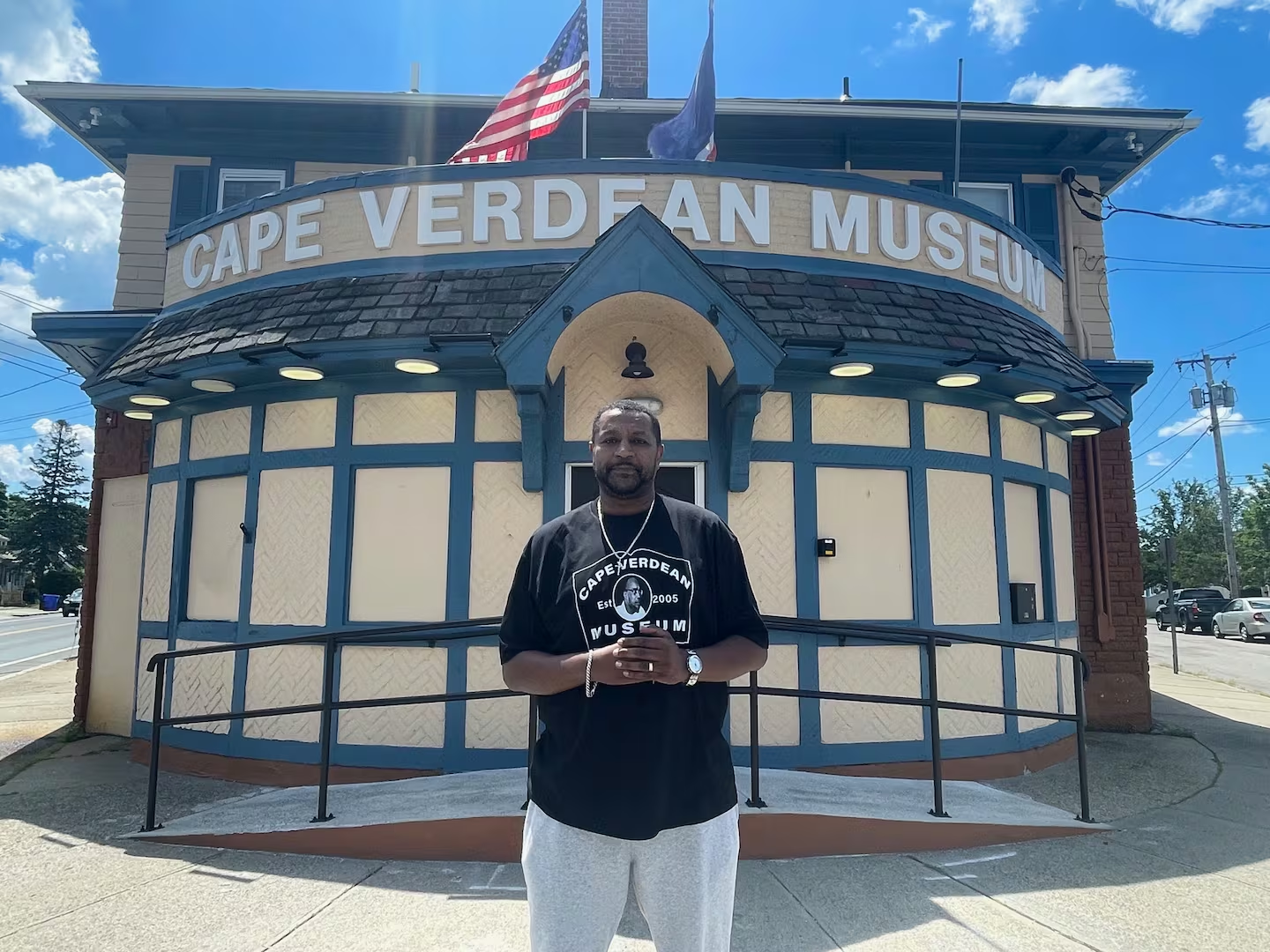
PAWTUCKET, R.I. — Joe DaMoura is always looking for way to introduce the world to Cape Verde, a small nation of 10 volcanic islands off the coast of Africa.
Read more Kylian Mbappé vs. Erling Haaland: Sizing up the striker showdown when France faces Norway on Friday
And in the last few weeks, the national soccer team has made his job a whole lot easier, he said.
“It’s the most exciting time in Cape Verde history, and we’ve had some pretty exciting times,” DaMoura, the executive director of the Cape Verdean Museum, said Wednesday.
With little more than 500,000 residents, Cape Verde arrived at the World Cup as a “severe underdog,” DaMoura said. It was ranked 67th in the world and was the third-smallest country by population to ever compete in the world’s greatest sporting spectacle.
The team played its first-ever World Cup match on June 15 against mighty Spain, which ranked second in the world before the tournament. They ended up in a 0-0 draw.
The Cape Verdean team then tied 16th-ranked Uruguay 2-2 on June 21. And on Friday, the museum will host a watch party as the Blue Sharks take on Saudi Arabia, aiming to advance to the round of 32.
“On paper, none of it should have happened. Cape Verde is ranked 67th and this is its first World Cup. Spain is the European champion, one of the few teams that could win the entire cup,” wrote Amy Cuddy, a social psychologist and the author of “Presence,” in an editorial in The Globe. “And yet a roster of supposedly lesser players spent 90 minutes playing at the peak of their abilities, all at once.”
“Sure, it was surprising to the world,” DaMoura said of the team’s performance. “But to some Cape Verdeans, it was just another evidence of our history of resilience and tenacity,” he said.
“That comes with our history of living on hope,” he said.
The draw against Spain felt like a win. After the match, Cape Verdean fans took over Main Street in downtown Brockton, Mass., with cars honking, flags waving, and people screaming with excitement.
“This is history being made. Remember that we are made for this. Forget that one percent chance. Ninety-nine percent fate,” said Keila Rodrigues, 30.
“I was born and raised in Cape Verde,” said Alissa Teixeira, 27, as she sipped on a Shirley Temple at a bar in Brockton. “This is a dream come true. My expectation is for us to do our best, no matter the result.”
Read more With the draft over and free agency up ahead, the Celtics still look basically the same as last year
DaMoura noted that while Massachusetts has the highest number of Cape Verdean Americans, Rhode Island has the highest proportion, with Cape Verdeansaccounting for 2.4 percent of the state’s population.
He said Pawtucket now has the highest concentration of Cape Verdeans in Rhode Island, and there are also large concentrations in East Providence and Providence.
The Cape Verdean community used to be centered in Providence’s Fox Point neighborhood before Interstate 195 and Brown University expansion displaced people there, he said.
“Boats used to come right up to India Point, and that’s where our community was,” he said. “People would walk off the boats right to their family’s houses.”
The Cape Verdean Museum opened in 2005 in East Providence, and in 2022 it moved to 617 Prospect St. in Pawtucket.
The museum includes exhibits on whaling, slavery, cranberry bogs, music, and the arts. It contains artifacts, photographs, maps, and crafts donated from around the world, and has a library of books and films
And now, the museum features a World Cup display that includes a soccer ball signed by members of the Cape Verdean soccer team and its coach, Bubista.
“It’s only natural we have an exhibit about our soccer team,” he said. “This is big part of Cape Verdean history, as well.”
The museum will open its doors for the watch party at 7 p.m. Friday, and the match begins at 8 p.m.
The museum is open every Friday, Saturday, and Sunday from 1 to 5 p.m., and during the week it hosts visits by schools and other groups.
Material from previous Globe articles was used in this report.




Post Comment