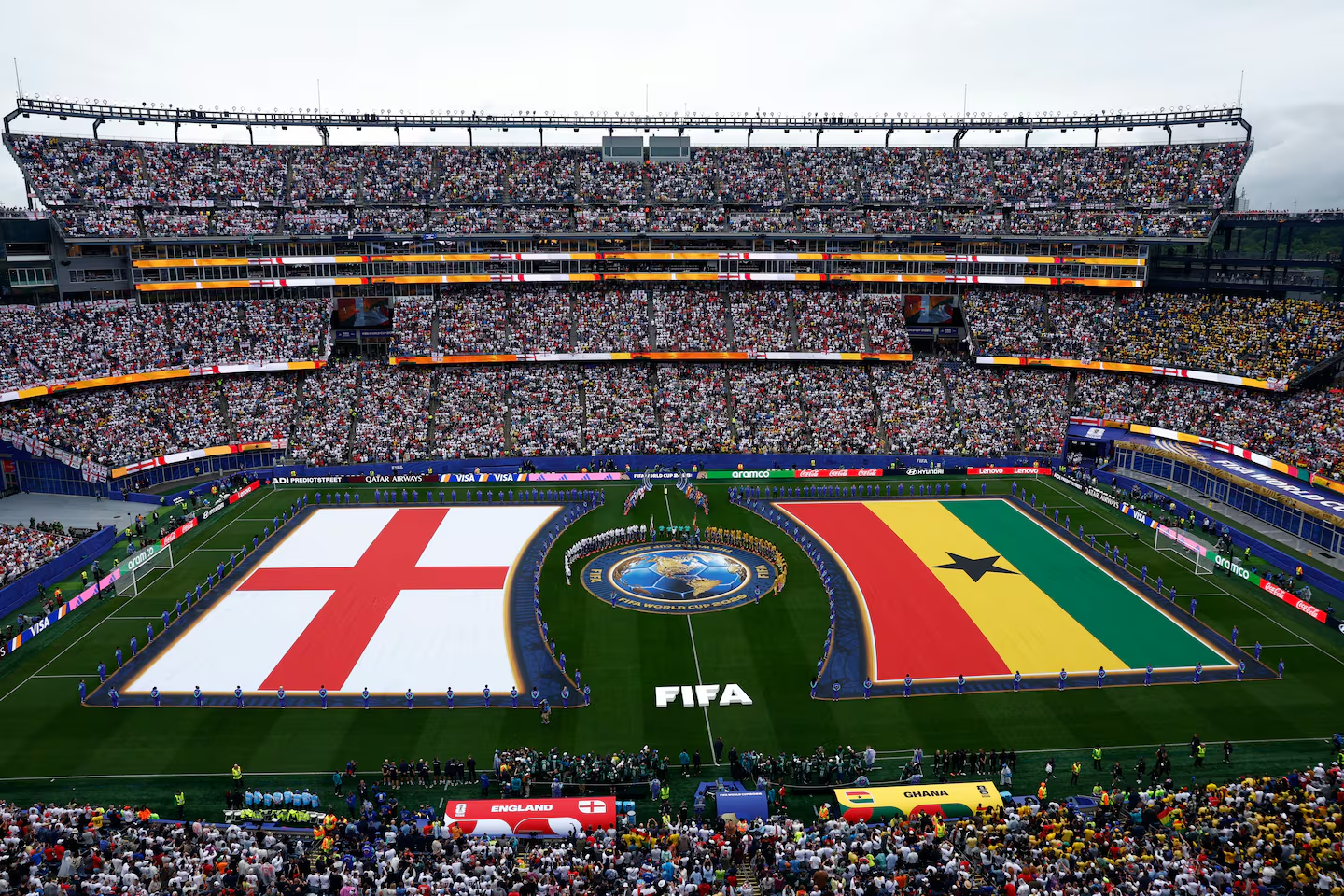
International journalists walk a fine line at the World Cup. And they break some unspoken rules.
One of the first things they teach you in journalism school — particularly if you’re planning a career as a sportswriter — is a simple six-word phrase: “No cheering in the press box.”
Read more Appeasing Jaylen Brown after Giannis trade fell apart should be a priority for the Celtics
It has a more subtle connotation, making a broader point about objectivity, but also a very literal one about press box etiquette.
That rule, much like fans’ wallets and Boston’s transportation infrastructure, is being stretched pretty thin by this World Cup.
The press box in the currently named Boston Stadium is a place used to relative quiet and order, but a number of journalists have been having a blast (and making their allegiances clearly known) during their stay in Foxborough.
Each nation’s reporters has a slightly different approach. The English were generally pretty quiet through a 0-0 draw with Ghana, mostly muttering frustrations in hushed tones. The Scottish were largely leaning toward stress over their two games here, seemingly worrying that their nation was going to blow it (again). You hardly heard a peep out of the Norwegians during a 4-1 win over Iraq.
A little more noise came from the Ghanaians on Tuesday, who seemed to be doing their best to restrain themselves from letting their emotions out amid a hectic goalless draw against England.
“It’s very dicey and difficult because you have to be very professional in your job, but at same time your heart follows where you come from,” said Yaw Adofo, a Ghanaian journalist who now lives in Maryland. “You have to make sure professionalism comes in between your pride and the job that you’re doing. It’s difficult to keep your composure when it’s a game like this, between England and Ghana, but you have to.”
While the Ghanaians just about maintained that composure on Tuesday, their African neighbors to the northwest did no such thing on Friday. As Morocco picked up a crucial 1-0 win over Scotland, Moroccan journalists in the press box were as loud as the fans outside.
They wore Moroccan jerseys, they shouted at every misplaced pass on a counter attack and every defensive lapse, and when the final whistle went, they cheered as if they’d just finished watching the game in their living room at home.
Can you blame them?
Much as it does for the fans, the World Cup provides journalists from all over the world the chance to see their nation on the biggest stage, to see their country’s colors flown for the whole world to see, to hear their national anthems played at a World Cup.
Read more NATO’s Trump whisperer heads to the White House to soothe the president ahead of next month’s summit
Four of the countries playing in Foxborough — Norway, Scotland, Haiti, and Iraq — haven’t seen the World Cup stage this century.
“I’m 29, soon to be 30, and Scotland were last at a World Cup in 1998, so a few generations, we have never experienced Scotland being at the major stage,” said Jordan Campbell, a Scottish reporter for the Athletic. “[Hearing the Scottish anthem] was amazing, to be honest. Coming into the industry, the ultimate goal is to watch Scotland play at a World Cup … it was amazing, quite emotional for a lot of us.”
Of course, there’s a job to do, and a level of professionalism to be maintained. Some — journalism professors, especially — might frown upon the Moroccans’ effusive, external eruptions, instead preferring the relative stoicism of the Scots and the English.
But at a tournament ostensibly about joy, national pride, and togetherness through soccer, it’s hard to be too critical.
When Ghana hung on to that scoreless draw with England, one that will likely put the Black Stars into the knockout stages of a World Cup for the first time since 2010, Ghanaian reporters broke into a modest round of applause.
It meant something to them. After all, those journalists are achieving a dream, too, with family and friends back home — in Scotland or Morocco, England or Ghana, Norway or Iraq — that couldn’t be prouder.
“They’re always happy and proud,” Yaw said of his friends and family. “I have a brother who does photography for my website, so he’s [pitchside], and we are very happy and excited.
“Every Ghanaian and every friend and every journalism colleague who loves football is very enthusiastic about how we’re all covering the World Cup, and the happiness that we find in ourselves to do the job.”




Post Comment