With housing costs sky high, Congress finally puts aside partisanship and acts to increase supply
WASHINGTON — The affordability crisis has finally hit home in Congress, prompting an overwhelmingly bipartisan effort to try to bring down high housing costs.
Read more Trump heads to Capitol to speak with GOP senators who have grown increasingly frustrated with him
On Tuesday, the House voted 358-32 to approve legislation, championed by Massachusetts Senator Elizabeth Warren, designed to increase the supply of homes and apartments through streamlined regulations, incentives, and innovation. The swift action followed the Senate’s 85-5 approval on Monday, ending months of negotiations between the two chambers.
The bill now goes to the White House and President Trump is expected to sign it Wednesday.
The 21st Century Road to Housing Act is the first major bipartisan action by Congress since the 2024 election to address the soaring post-pandemic cost of living that was a major factor in Trump’s return to the White House. Although he’s dismissed the affordability crisis as a politically motivated Democratic “hoax,” passage of the legislation shows a broad consensus on both sides of the political aisle that housing costs need to be addressed before November’s midterms.
“The bill came together because no one wanted to go back home and explain to their constituents why a bill with such deep, broad, bipartisan support couldn’t actually pass,” said David Dworkin, president of the National Housing Conference, a coalition of organizations including banks, homebuilders, realtors, and housing advocacy groups.
Housing costs have become increasingly unaffordable for many Americans: the median price of a single-family home in the Boston area topped $1 million this spring, and tenant advocates in Massachusetts had brought a proposal for rent control to the November ballot that was ultimately blocked by state’s highest court on Tuesday.
A report from the Bank of America Institutereleased Tuesday found 58 percent of Americans said expensive home prices were the biggest barrier to a purchase, up from 46 percent last year.
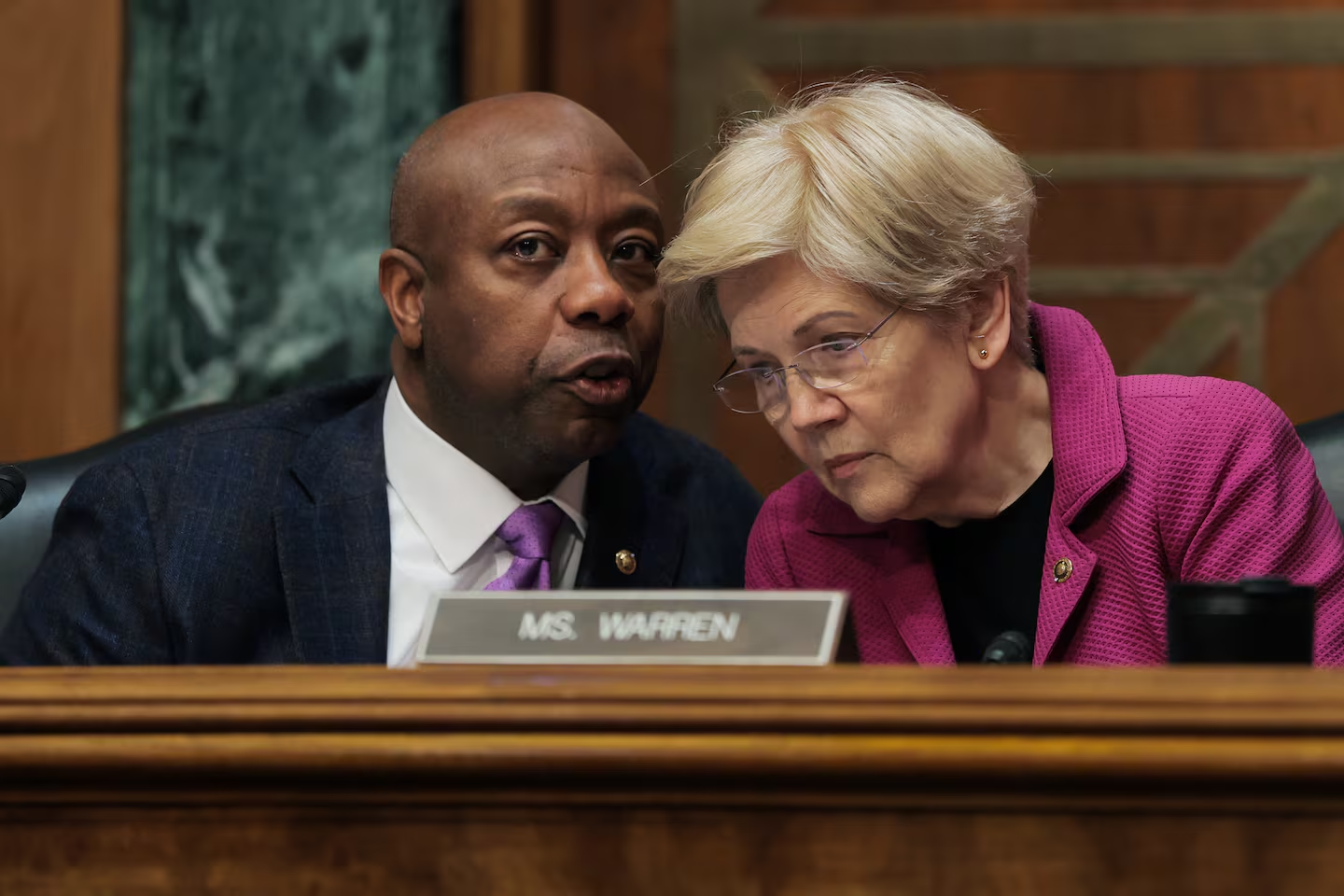
“We’re in a full-blown housing crisis,” Warren told the Globe. “Home prices are sky high, rent is through the roof, and the median age of a first time homebuyer is at an all-time high. That drove home the urgency of making change.”
The legislation is a compilation of 47 initiatives from dozens of Democratic and Republican lawmakers, many of which had already been proposed as standalone bills. They include speeding up environmental approvals to build homes and encouraging communities to develop preapproved building plans to reduce the time and costs for new construction.
One example of the approach is a provision to reduce the cost of manufactured housing unitsby as much as $10,000 by removing a federal requirement that factory-built homes have a permanent steel chassis to make them mobile even though most owners never move them.
Warren said she developed the concept for the bill after meeting with mayors across Massachusetts who told her the federal government could do do a variety of things to make housing more affordable.
“They didn’t need the federal government to come and big-foot a single right answer,” Warren said. “What’s needed out on the Cape is not what’s needed in Pittsfield. What would be helpful in Boston is different than what would be helpful in West Springfield. That’s where I began to think of a basket of changes.”
Mayors across the country have been tackling the problem but need the help from the federal government the legislation provides, said San Diego Mayor Todd Gloria.
“Every mayor I talk to identifies housing as being their top challenge in their city,” said Gloria, the incoming president of the US Conference of Mayors. “It’s reaffirming at a time of real polarization that you can still see Democrats and Republicans coming together . . . and passing common-sense legislation that should be a help to most Americans.”
Read more Follow live updates on the Trump administration
Warren, the top Democrat on the Senate Banking, Housing and Urban Affairs Committee, teamed with the panel’s Republican chair, Tim Scott of South Carolina, on the Senate’s version of the legislation. They built unanimous support for the bill on the committee by including proposals from all 24 members of the panel.
One of Warren’s contributions was a scaled down version of a proposal that was part of her 2020 presidential campaign: an innovation fund that would provide $1 billion over five years in federal grants for infrastructure, such as schools and other public projects, to communities that are increasing home construction or changing land-use rules to make it easier to build.
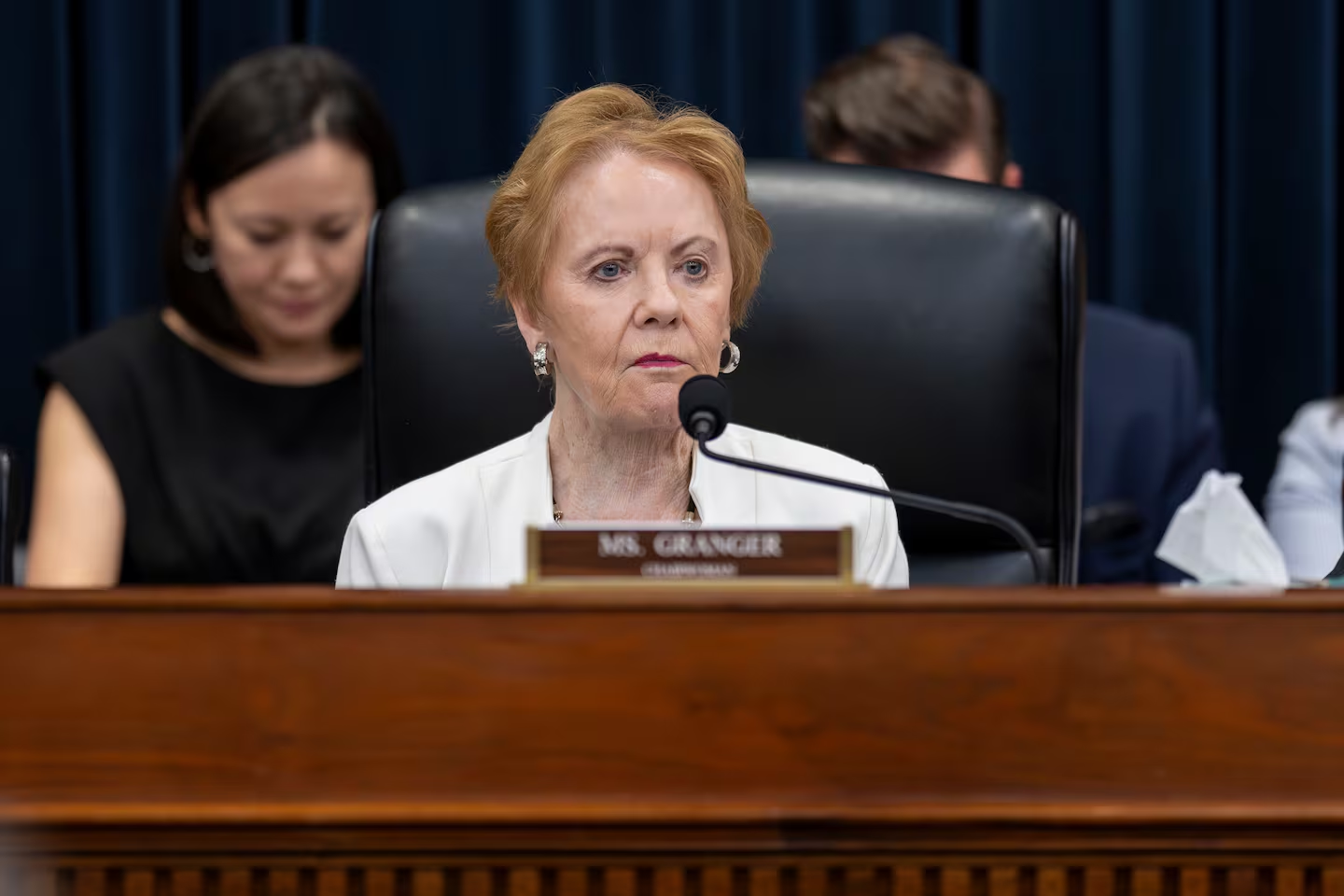
Representative French Hill, an Arkansas Republican who chairs the House Financial Services Committee, and that panel’s top Democrat, Maxine Waters of California, took a similar bipartisan approach to their version of the legislation.
The House and Senate each passed their own versions of the legislation by large margins. But despite the broad agreement on the need to address housing affordability, there were key differences between the bills that had to be worked out.
One major sticking point was a provision aimed at Wall Street hedge funds, private equity firms, and other large institutional investors that have been buying homes with cash. Critics, including Warren and Trump, said that practice has helped drive up prices.
The Senate bill banned large institutional investors from purchasing single family homes but also required them to sell any such homes being used as rentals after seven years.
The version of the bill the House passed in May did not include the sale provision for “build to rent” homes. The compromise struck by Scott, Warren, Hill, and Waters included removing that divestiture provision but restoring tough new restrictions on private equity purchases of single family homes the House had stripped out of the Senate bill.
“Never has Congress said to private equity in any industry — health care, manufacturing retail sales. Enough. You can’t just keep mowing through one part of our economy after another, sucking out all the profits for yourselves and leaving nothing but misery behind,“ Warren said.
Despite the unusual display of bipartisanship, congressional Republican and Democratic leaders have rushed to put their spin on the legislation’s passage.
Senate majority leader John Thune, a South Dakota Republican, called it “just the latest item on Republicans’ agenda to address the cost of living,” citing last year’s GOP tax cut legislation.
At the same time, Senate Democratic leader Chuck Schumer of New York said his party would continue to work to lower the costs of “necessities that working families need to achieve the American dream, which seems more out of reach than ever before because of this administration.”
Still, the bill’s many components will take time to make a dent in the high housing costs, Dworkin said.
“No one of these is going to have a huge impact on the affordable housing crisis, but collectively they absolutely will make a significant contribution,” he said. “We did not get into this hole overnight. We dug it over 15 years, and we’re going to get out of it the same way, one shovel at a time.”
Read more Will Brockton’s AJ Dybantsa go No. 1? Follow live updates on the NBA Draft.



Post Comment