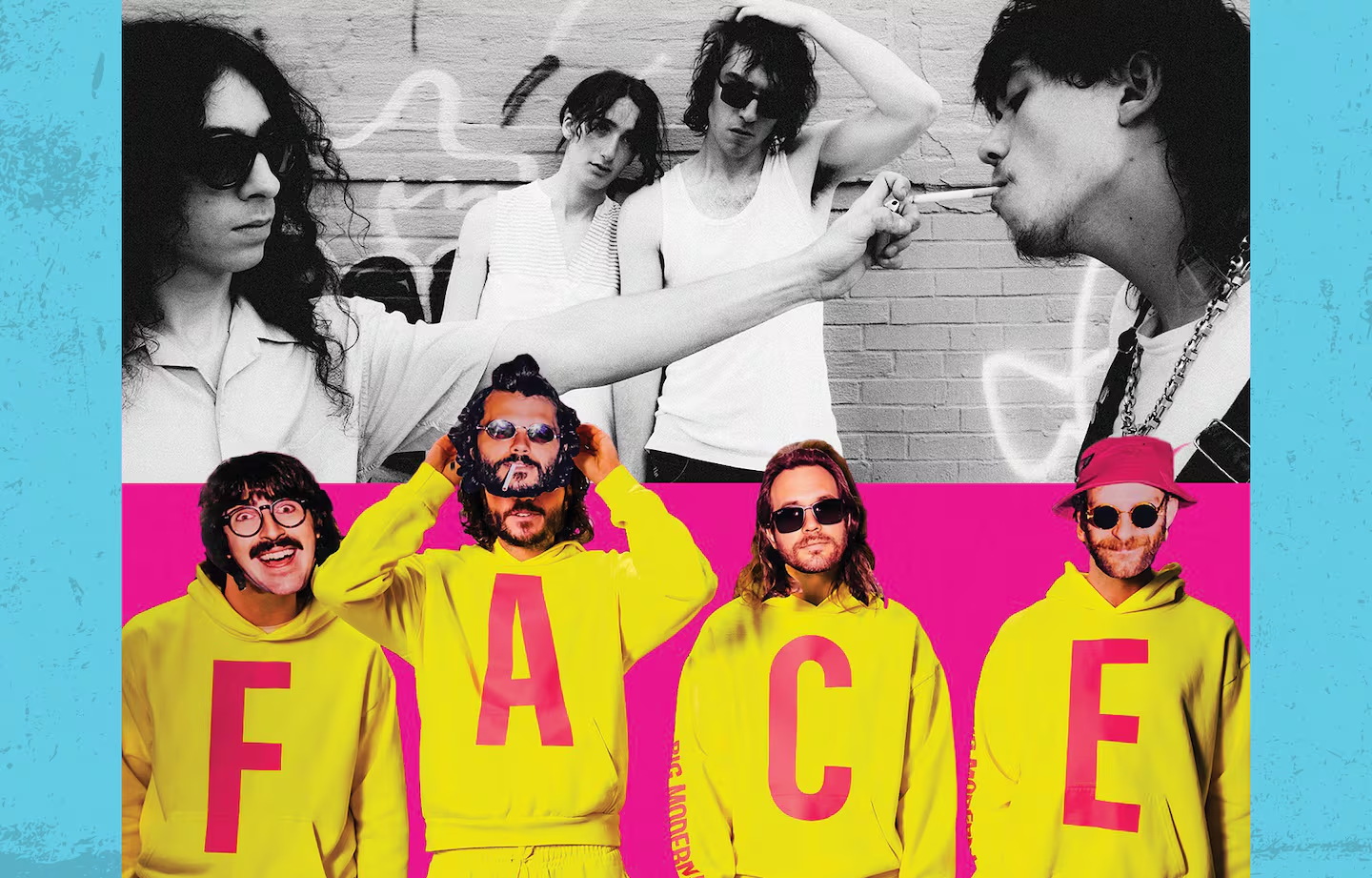
The bands Geese and Goose are performing in Mass. this month. What’s the difference?
Satire site The Hard Times once posted a mock story about a Needham superfan of the band Geese whose well-meaning parents bought her tickets to see Goose instead, much to her dismay. It sounds like an honest mistake for people who can’t distinguish between two bands, whose names straddle a singular/plural line.
Read more Trump says Reflecting Pool will be drained and claims vandalism
Both young groups were hatched around New York City, with Geese from Brooklyn, and principal members of Goosefrom just over the Connecticut border in Wilton. Now their popularity has taken off with a viral velocity that’s fueled admirers and detractors, as the bands coincidentally flock to Massachusetts this month.
Between stops at Bonnaroo and Lollapalooza, Geese close Green River Festival in Greenfield on June 21. And on the heels of two headlining nights at Madison Square Garden, Goose host a sold-out pair of shows at Leader Bank Pavilion on June 30 and July 1.
One key difference between them — lamented by that fictitious superfan of Geese’s hipster indie-rock — is that Goose are (oh, dear) a jam band. It’s not quite that simple though. Both groups blur the edges of style with ambition, despite their clear contrasts.
Wings of sound
Sure, in concert, Goose — which formed in 2014, two years before Geese — often stretch songs past the 15-minute mark with winding guitar flights over a steady rhythmic churn. Yet the group’s also adept at laying down shorter versions of their tunes in the studio. Goose explored an indie-rock palette on 2022’s “Dripfield,” and three albums later, their colorful new “Big Modern!” hones 1980s-style dance-rock, showing commercial aspirations beyond noodling. The lead track suggests a cross between Dire Straits (think “Money for Nothing”) and Huey Lewis & The News.
On their 2025 breakthrough album, “Getting Killed,” the omnivorous Geese conjure an extreme mash-up that evokes Radiohead, The Strokes, and Talking Heads among sonic touchpoints that also include punk and free jazz. It all combines in art-rock stitched with chaotic, noisy textures, as well as transfixing melodies — a unique sound that’s captivating for many listeners, while off-putting to others.
Leading the formation
Geese singer and guitarist Cameron Winter’s warbled vocals stand as both the most intriguing and irritating element in his band. He stretches from a croon to a bray, like Thom Yorke or Rufus Wainwright singing from the back of the throat, carving lyrics of seeming stream-of-consciousness whimsy. It’s an acquired taste, and Winter’s melodramatic, keyboard-tilted 2024 solo album, “Heavy Metal,“ highlights that voice ever more.
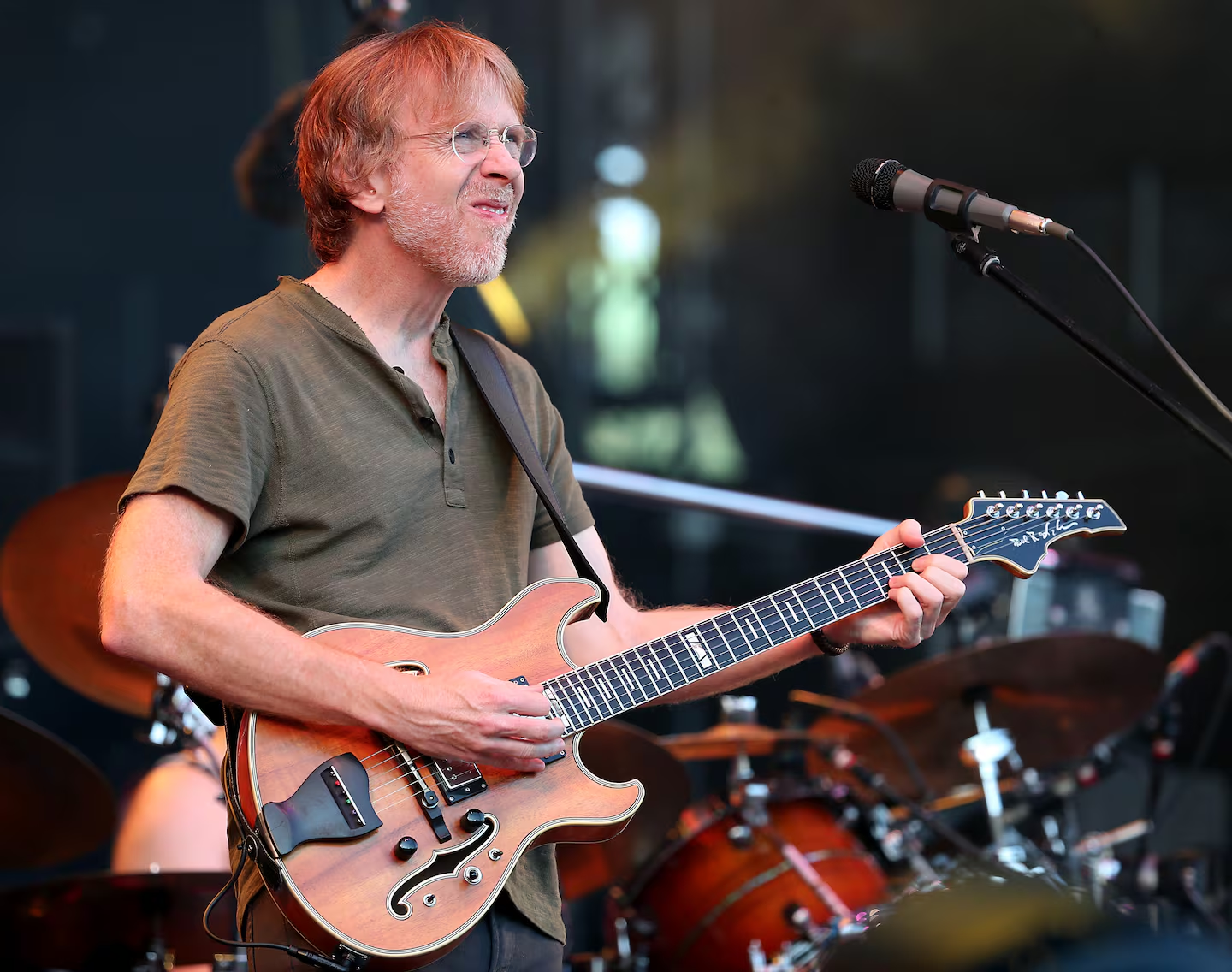
Goose frontman Rick Mitarotonda doesn’t draw attention for his vocals, which glide in an unobtrusive way, but rather for his guitar work. Even more than other lead guitarists in contemporary jam bands that follow in the footsteps of Phish’s Trey Anastasio (who has joined Goose onstage), the Berklee-schooled Mitarotonda can really rip. He’s the lightning rod that enables his band’s straightforward jams to approach Phish-scale heights without that predecessor’s affinity for more abstract improvisation.
Read more Taylor Swift wedding speculation heats up (again) near her R.I. mansion
Gaggle of perceptions
Goose overcame theusual headwinds for jam bands. But just as Phish had to get beyond Grateful Dead associations (despite knottier compositions that owed as much to Frank Zappa), Goose get judged in comparison to Phish not only for the type of music they play but for their jump to large arenas — a level only surpassed nationally at the moment by bluegrass jammer Billy Strings.
Geese sparked more of a fuss in a couple of cases. A January performance on “Saturday Night Live” drew a spectrum of love-it-or-hate-it reactions online. Winter’s harsh, howling refrain of “There’s a bomb in my car!” during “Trinidad” (the song’s crash of soft/loud dynamics bringing to mind Pixies or Black Midi) cemented the stark divide in opinions.
Then a musician’s viral Substack post called out Geese’s link to a digital marketing firm using “trend simulation” and “fake fan accounts” to drive social media exposure. Wired magazine amplified the controversy, flashing the term “psyop” in a headline. Other outlets gave blowback in defense, noting such practices are a given in today’s music landscape, especially for pop acts, if not sotypicalfor cool indie-rockers.
Passing in flight
Some confusion or overlap between the bands is bound to happen — hey, Geese even adapted their moniker from lead guitarist Emily Green’s nickname, “Goose.” Months before “Getting Killed” blew up, both groups appeared at the Newport Folk Festival on the same day, although they played separate stages and did not collaborate. Not that they’re feuding. Yet The Smashing Pumpkins’ Billy Corgan broached that idea when stumped by a Geese tune on the video quiz series “Track Star.” “They should fight,” he cracked. “Goose versus Geese and winner take all.”
Both bands circle back to New England in mid-November. Goose hit arenas in Connecticut (two nights at Mohegan Sun) and Portland, Maine, while Geese swoop into Roadrunner for two sold-out shows.
Clearly there’s room for the groups to coexist and — oddly enough — thrive. Maybe it’ll even get to a point where people can tell them apart without asking which one is the jam band.
Read more James Burrows, director of classic TV comedies including ‘Cheers’ and ‘Friends,’ has died



Post Comment