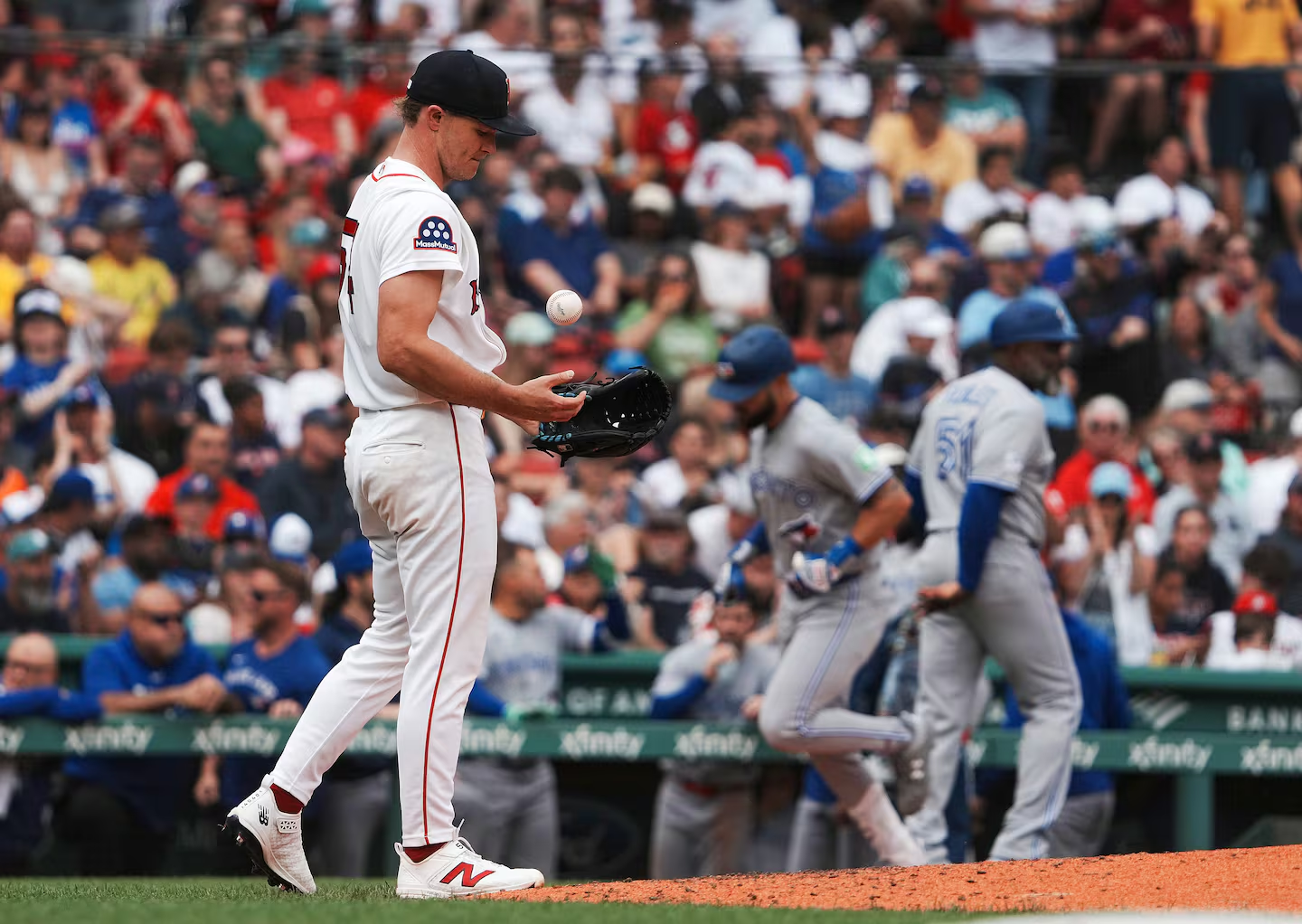
Less than halfway through the season and it’s clear the Red Sox should raise the white flag on 2026
The Red Sox are not salvageable this season. And they had better not jeopardize next season by pretending otherwise in a manipulative attempt to keep Fenway Park as full as possible for as long as possible this season.
Read more Week 1 review: The World Cup has delivered in a big way, and other takeaways
Their 4-3 loss to the Blue Jays Thursday afternoon was their fourth straight. They were swept in the three-game set, and fell to 0-32 in games in which they’ve trailed by three or more runs, a statistic as telling as it is embarrassing, and one that is going to be cited over and over again as confirmation of their offensive ineptitude until they somehow complete a comeback win from that margin. That’s not a when they do, but an if, though they came close Thursday.
The Red Sox are now 29-43 on the season, 15½ games back of the Yankees in the American League East. In 2021, the last season the Red Sox won a playoff series, they did not lose their 43rd game until July 31, when they had 63 wins. In 2018, the last time the Red Sox went to and won the World Series, the Red Sox did not lose their 43rd game until Aug. 31, when they had 93 wins already.
That season, probably the best the franchise has ever had, feels much longer than eight years ago, and that’s only partially because the homegrown superstar of the ’18 Sox, Mookie Betts, has now played more games for the Dodgers (postseason included) than he did for the Red Sox.
This team is on its way to a third last-place finish in five years and a fourth in seven. It’s not an unlikable team personality-wise, certainly not in the way, say, Joe Kerrigan and the 2001 Red Sox behaved down the stretch in that lost season.
It’s just bad, so bad, and boring, with a lineup that features Willson Contreras, who is actually submitting a Manny Ramirez-type of season, and a bunch of underachievers, platoon players, and Quadruple-A replacement types who are being asked to play roles above their capabilities.
Poor Chad Tracy, moved in as the interim manager when Alex Cora was set free, has to write out a lineup card that wouldn’t even be inspiring in Worcester. Couldn’t blame him if he were tempted to give couple of the larger fellas from Scotland’s Tartan Army a couple of at-bats. Just don’t let the Driveline crew near them.
The Red Sox are a roster-construction failure. Management can claim to be looking for outside help, and maybe they are, but the lineup is not repairable this season. The priority going forward this summer is simple, providing that the truth can be acknowledged up and down the organization:
This year is already about next year — yes, even with the possibility that next year is impacted and perhaps abbreviated by a lockout.
That means trading away veterans, especially those on short contracts, that would have appeal to legitimate contenders, such as closer Aroldis Chapman, starting pitcher Sonny Gray, and perhaps Contreras, Garrett Whitlock, and Jarren Duran.
Read more Three hundred miles from shore, their sailboat sank. They’re back this week to finish the race.
No, I don’t necessarily trust chief baseball officer Craig Breslow to make the right deals, either. He is the architect of the structural mess that constitutes this lineup. But so long as he has the job, it’s his obligation to try to do the right thing for the ball club in the short and long term. In a lost-cause season, trading useful veterans that aren’t part of long-term plans is the proper approach.
There’s something even more important with that when it comes to the Red Sox future.
They absolutely cannot attempt to rush back Roman Anthony and Garrett Crochet from injury in a desperate and transparent attempt to pretend this season is salvageable and save some face.
Anthony, the gifted 22-year-old outfielder who had carried instant-superstar expectations into the season, got off to a rough start (229/.354/.321, 1 homer), then hurt his hand/wrist on a check swing on May 4 against the Tigers.
There have been curious differences in semantics on the nature of the injury — the team called it a right wrist sprain when he went on the disabled list a few days later, while Anthony later detailed that it is a partial tear of a ligament at the joint in his right ring finger, a rare and somewhat confounding injury, as detailed in a clarifying story by colleague Alex Speier early this week.
Anthony is still feeling pain when he swings the bat, which is understandable given that the injury to his carpometacarpal joint can take 8 to 12 weeks to heal. The Red Sox, whose initial description of his injury did no favors for the most important position player in the organization since Betts was traded, would be fools to bring him back before there is 100-percent certainty that he is ready.
The same goes for the other most important player in the organization, ace Garrett Crochet. He has been on the injured list since April 29, initially with left shoulder inflammation. Crochet had a setback when he suffered a lat strain while playing catch on May 28. He isn’t expected to return until after the All-Star break.
The story with Crochet should parallel what should be the imperative approach with Anthony. Neither one of the Red Sox’ most essential players should return until they are certain to be in full health.
After all, the reality is harsh, but it is entirely true.
This season isn’t yet half over, and yet we already know that there is nothing essential about it.
Read more Trump approval on Iran low even as tentative deal to end fighting emerged, new poll finds
This year? It’s about next year.



Post Comment