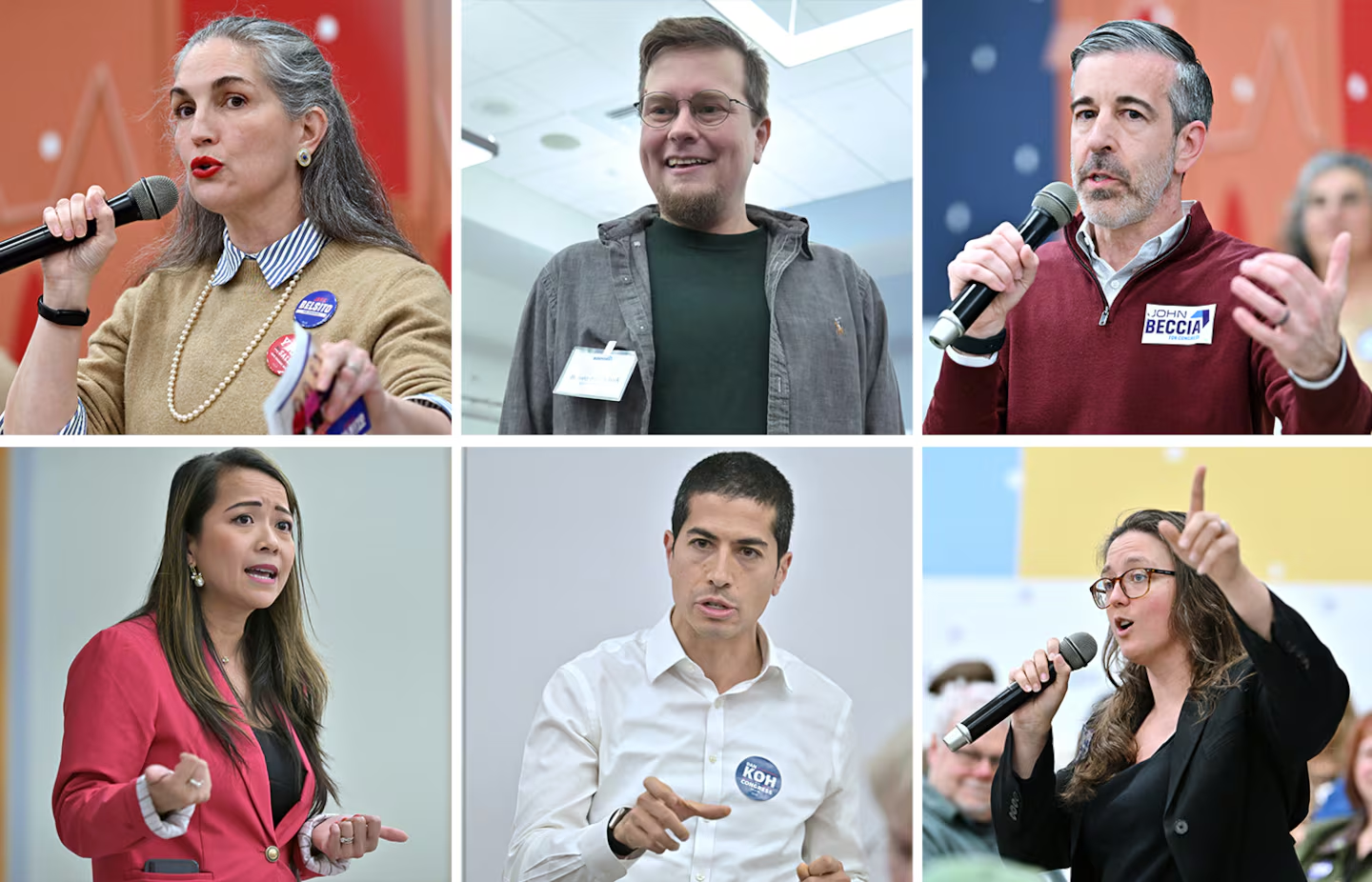
The Democrats vying for Seth Moulton’s House seat debated. Here’s what to know from the six-way matchup.
SALEM — If you blinked, 2020 was so back at Salem State University.
The six Democrats competing to replace US Representative Seth Moulton in the Sixth Congressional District faced off at a candidate forum Wednesday, offeringtakes on voters’economic concerns, foreign affairs, healthcare, and climate policy.
Read more A strategy for survival as Native Americans navigate 250 years of history
The 90-minute event was reminiscent of the Democratic presidential contest in 2020, when a bevy ofcandidates weresimilarly testingDemocratic messages to stand out as the party’s best option to battle President Trump and his allies.
Wednesday’s debate offered candidates an opportunity to try to break away from a crowded field ahead of the Sept. 1 primary.
The candidates include Bethany Andres-Beck, a Middleton software engineer; John Beccia, a Lynnfield businessman; Jamie Belsito, the Topsfield town moderator; Dan Koh, a former White House official from Andover; Mariah Lancaster, a former federal worker of Salem; and state Representative Tram Nguyen of Andover.
Here’s what to know from the rare one-on-one-on-one-on-one-on-one-on-one forum:
‘I agree’ was the refrain of the night — especially on affordability
Candidates offered similar, if not identical, messages indifferent fonts throughout the night, making it feel more like a collaborative policy discussion than a contentious debate.
Nowhere was that more prevalent than on issues around affordability, the cost of living, and the economy, phrases collectively mentioned more than 50 times.
“In traveling across the 39 towns and cities, the No. 1 issue that we hear from folks is affordability,” Nguyen said. “People are not going to worry about other things — they cannot worry about other things — if they cannot put food on the table.”
Or as put by Beccia: “Affordability is an issue, it is not just a slogan.”
Proposed solutions included strengthening worker protections (Nguyen), pushingmiddle-class tax relief (Beccia), reining in housing and child care costs (Koh), breaking up monopolies (Lancaster), reversing Trump’s tariffs (Belsito), and changing federal policy to address education and energy prices (Andres-Beck).
All of the candidates, separately, said they supported abolishing federal Immigration and Customs Enforcement, implementing some form of universal health care, and regulating artificial intelligence.
That said, there were a few points of disagreement.
When asked whether they planned to support Senator Ed Markey or Moulton in the party’s US Senate primary, four out of six named Markey. Koh, however, said he was “one of the 50 percent undecided,” and Beccia said he would “abstain” from answering.
The biggest point of contention? Cash.
The debate stayed civil — for the most part. That is, until a few candidates took swipes at their rivals’ humongous cash hauls and insider connections.
Koh has far out-raised the field, pulling in $3.5 million by the end of March.
Beccia has put $2 million of his own money into his campaign, making him one of Massachusetts’ biggest self-funders in recent years. He indirectly took aim at Koh’s Washington experience.
“We’re sending insiders to DC with people who just aren’t focused on the right things,” Beccia said. “We need to reform the system from top to bottom. Obviously, we’ve got to take the money out of politics.”
Belsito then interjected:“You know the system’s broken when you have $2 million of your own dollars to self-fund a campaign,” drawing applause from the crowd.
Read more California billionaire tax proposal is slated to qualify for the November ballot
Beccia later said he’s “been very blessed” and that he was “betting on myself” but still supported system reforms.
Belsito, who called the race an example of “class warfare,” also referencedKoh’s father, Howard Koh, who served as a public health official in the Obama administration, whilesaying her father, a floor layer, “can’t call anybody to help me in Congress.”
“Respectfully, I think we should leave parents out of this conversation,” Koh responded.
“I don’t have, and the majority on the stage do not have, access to the wealth that you do to be running for this race, and that is part of the problem of what this race has presented,” Belsito said.
Candidates offered an array of anti-Trump messages
All six candidates invoked Trump’s name dozens of times as they criticized his administration’s tariffs and handling of global conflicts, among other things.
But the group, in agreement that Democrats are “angry” and have an opportunity to “define the future” of their party, offered differing visions on the best resume to take on his administration.
Those in the group with federal government experience — Koh, Belsito, and Lancaster — held up theirprior work in Washington as evidence that they understand how the federal system works. Nguyen leaned on her experience in state government. And Andres-Beck and Beccia emphasized that their experiences in science and business, respectively, would bring fresh, outside perspectives to Capitol Hill.
They also disagreed on how much they would need to work across the aisle.
“Now is not the time to play patty-cake with MAGA,” said Koh, who pitchedperhaps the most direct anti-Trump platform of the evening.
Beccia, at another point, said it’s important to “find common ground” to “get things done” while discussing his business background — prompting a retort from Andres-Beck.
“I don’t understand how you can call for revolution on the one hand, and then say you expect bipartisan cooperation with people currently in power on the other,” Andres-Beck said.
The discussion was a nod to the deep anti-Trump sentiment in Massachusetts, a state that hasn’t elected a Republican to the US House in the last three decades. The winner of the Democratic primary will face Micah Q. Jones, an Army veteran and the only Republican on the Sixth District ballot, in November.
“What we need to accomplish will take Republican votes … especially in the Senate,” Lancaster said. “To say that they won’t, is ignorant.”
Read more Mass. high court rules proposal to slash income tax can’t appear on November ballot


Post Comment