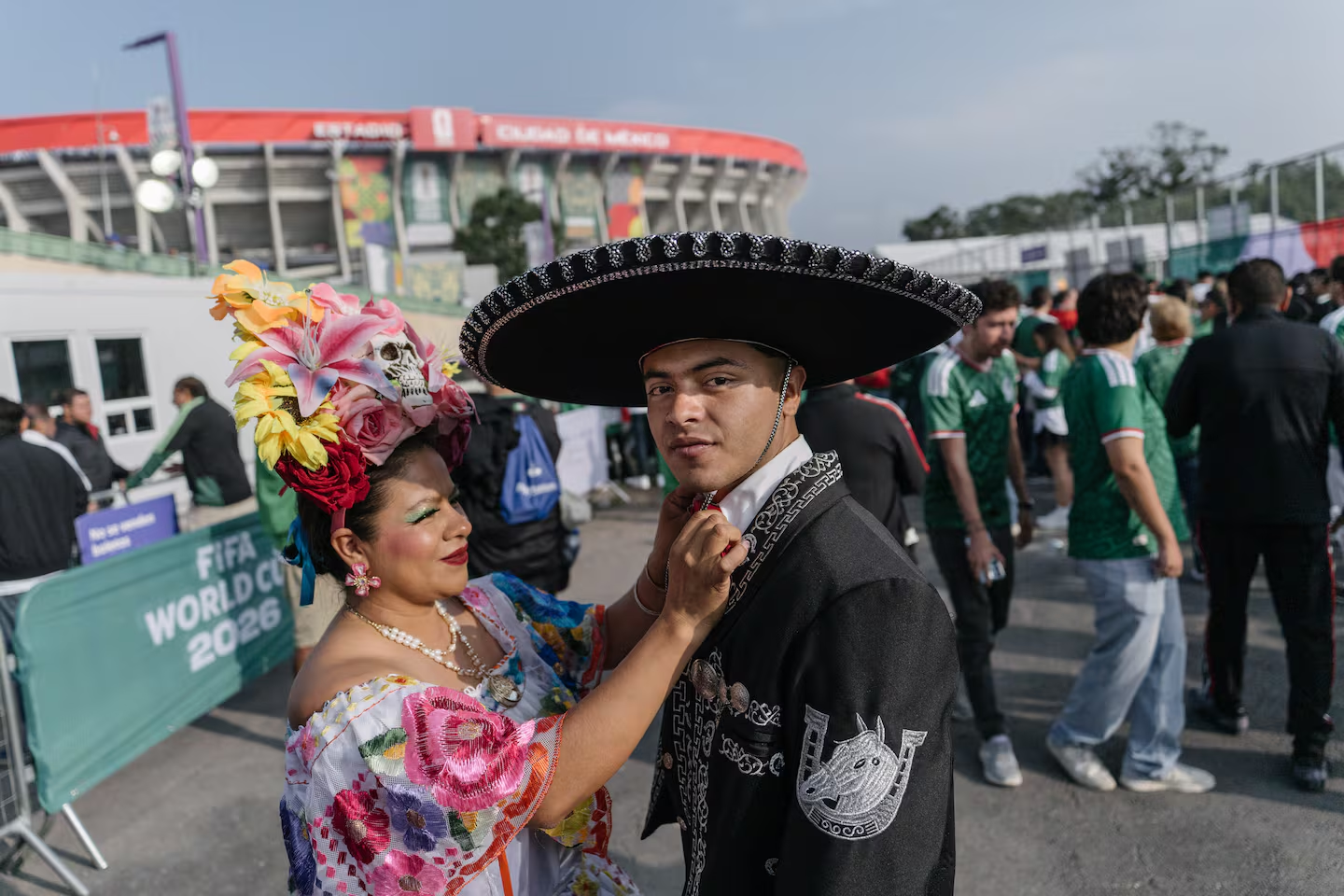
There is a sense of dread as the World Cup begins, but let’s hope the joy of the ‘beautiful game’ wins out
When the games begin, the joy will follow. On the field, the World Cup will deliver on its promise, bringing the excitement, drama, greatness, and joy of the beautiful game.
Read more I took a tour of the White House Octagon, Trump’s ultimate safe space. Here’s what I saw.
But as this grand sporting spectacle takes the first steps of a journey across 39 days, 3 countries, 104 matches (including Boston’s opener between Scotland and Haiti Saturday night in Foxborough), and one epic final on July 19, an accompanying sense of dread looms.
In psychological circles, it’s called the approach-avoidance conflict, where there are enough positive and negative elements to an event that it can be appealing and unappealing at the same time. Can’t wait for it to start; can’t wait for it to be over. Thrilled to have the United States hosting for the first time since 1994; embarrassed over the anti-immigration sentiment and aggressive posture being pushed by our political leaders. Love the message; hate the messenger. While my colleague Dan Shaughnessy put perfect pen to paper about Boston’s ambivalence, the nerve he struck reverberates everywhere.
Billed by self-righteous organizers (looking at you, Gianni Infantino) as a great unifier, healer, and celebration, the run-up felt like anything but. Exorbitant ticket prices. Impossible logistics. Made-up peace prizes. The presence of two nations simultaneously playing soccer and launching missiles at each other in the United States and Iran. Denials of visas and reports of lengthy immigration delays.
The case of Somali referee Omar Abdulkadir Artan, who was denied the opportunity to be the first from his nation to officiate a World Cup match when the United States refused his entry, is but the latest example of our inability to live up to the ethos of what a tournament like this wants us to believe it does to enhance our reach and understanding of the world around us. Instead, here was Infantino at his pre-tournament news conference in Mexico:
“It’s unfortunate what happened to Omar. But we don’t control everything. Maybe it’s good to just chill, relax. Sometimes screaming and shouting has the opposite effect.”
In the maddening world of alphabet incompetence in sports, FIFA never fails to remind us it’s the worst of the worst, lowering the bar to make the likes of IOC, NCAA, IBF, et al look good by comparison. And Infantino, president since 2016, has made a career of issuing high-minded platitudes as cover. Who can forget him at the last World Cup in Qatar four years ago, and his cringe-worthy “Today I feel Qatari. Today I feel Arab. Today I feel African. Today I feel gay. Today I feel disabled. Today I feel a migrant worker.”
Read more Too sick to work, but can they prove it? New Medicaid rule worries patients.
Set against the backdrop of migrant workers literally losing their lives to build stadiums and infrastructure in Qatar or against that nation’s abysmal record on LGBTQ rights, Infantino sounded ridiculous. But rehashing the quote does serve as a reminder that all of these major international sporting events come complete with geopolitical concerns that go far beyond the games being played. Historically, that was not the case on American soil. But as our president continues to wage trade wars with both of our fellow World Cup hosts, or chooses to defend the Artan immigration decision by insisting “we are working on it very closely to make sure the right people come into our country,” this is not our finest hour.
Back at the Super Bowl in San Francisco, FIFA and the World Cup had a spot on Radio Row, and I had the chance to chat with Landon Donovan, one of the best US soccer players in history who works now as a lead television analyst. A three-time World Cup player with one of America’s most memorable goals (stoppage time against Algeria in 2010), Donovan remained confident that ultimately, the soccer will rise above.
“This is why,” he said. “Every World Cup I participated in, and the subsequents, there’s always something that’s going on that feels like it’s going to be an issue. Like in South Africa, everyone told us how bad crime was. And for that month at least, and I’m not saying everything’s great, but for that month, there were no issues. In Brazil, it was poverty and favelas and crime. In Russia, it was Russia Putin and all the things. In Qatar, it was, you know, you’re in the Middle East, is something going to happen, and it just didn’t pan out that way.
“In 2002, it was right on the back of 9/11. We had crazy security. Everyone was worried about it. Nothing happened. So knock on wood. I assume that everybody is going to use some common sense and say, ‘Hey, this would be really bad for America, the world, if something goes bad.’ ”
As someone who grew up just as soccer was breaking through the wall of silence in our collective sports consciousness, as the son of a single mother who likes to say that “soccer chose me” when his talent became undeniable, as a student of the game who fell in love with its diverse cultures enough to become fluent in Spanish, Donovan is a great ambassador. Here’s hoping he’s right, and that joy wins out.
Because football, futbol, soccer — by any name, is the world’s game, and joy is fundamental to what makes it great. The fluid movement of incredible athletes capped by the balletic, intricate feats of their feet. The long stretches of patient passing followed by short bursts of scoring strikes. The relentless tension of a ticking clock and then nerve-jangling injury and stoppage time. If you are a soccer person, you get it. Even as we battle some conflicted emotions, this is soccer’s moment.
Read more ⚽ If World Cup teams were Rhode Island power players



Post Comment