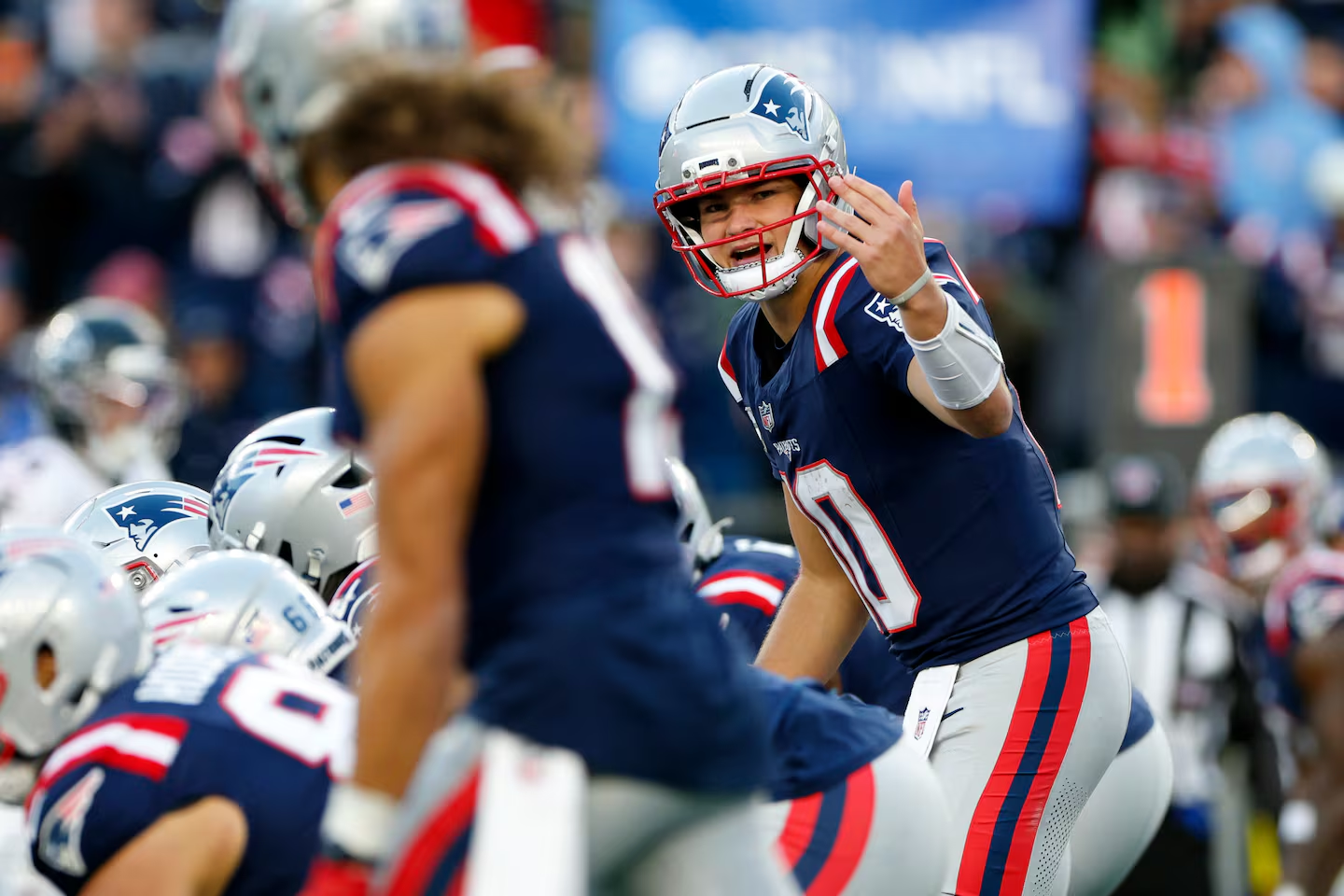
‘It’s tough to be a play-caller’: How the Patriots’ coaching staff is challenging Drake Maye at the line of scrimmage
FOXBOROUGH — During Tuesday’s mandatory minicamp practice, there were a couple of plays in which the Patriots’ offense hurried to line of scrimmage, only for Drake Maye to take his time before snapping the football.
Read more US launches a second day of strikes on Iran and Iran fires back at Gulf States and Jordan
Typically in an up-tempo, “no-huddle” situation, the offense wants to snap the ball as fast as possible. In this situation, however, the goal of the sequence was to test Maye. Coaches sent him to the line without a play call. Maye then took time to survey the defense, set the protections, communicate with the entire unit, and run a play of his choosing.
“It’s tough to be a play-caller,” Maye said Wednesday. “It’s tough in this environment, when they got 18 seconds on the clock in and I’m trying to do a hard count and try to get us in a play we like. I think it’s awesome to challenge me and push my limits of knowing the offense and knowing what play looks good against the defense.”
As Maye enters his third season, second with offensive coordinator Josh McDaniels, the coaching staff has sought out ways to further accelerate his already impressive development. The line of scrimmage is an area of growth McDaniels and quarterbacks coach Ashton Grant have homed in on, with hopes that Maye can take another step in his command of the system.
“The quarterback at the line of scrimmage, you can do two things,” McDaniels said. “You can tell them they don’t have much freedom or responsibility and just tell them to snap the football and hope for the best and try to execute as best they can. Or you can, if they’re capable and able and willing and want to and can do it at a high level, you can give them some tools for them to try to use to help us in every way.”
Tuesday’s exercise was intended to support that progression. After practice, Maye reviewed the tape with McDaniels and Grant to break down his thought process.
“We go into the meeting room and talk about what he was thinking and why he was thinking it,” Grant said. “If it was a great answer, you give him a pat on the back. If it’s something we might want to tweak or adjust, we talk about it. It’s easy to say solve the problems, but if you never let him practice solving problems, you’re just talking to a cement wall.”
Read more Follow live updates on the Trump administration
Grant saw a few examples last season of Maye changing protections and signaling routes, but ultimately felt he was “just dipping his toe in the water.” This year, he’s hopeful Maye will be more intentional and consistent at the line of scrimmage.
“If we’re going to put the onus on the quarterback to have more responsibility, let’s practice giving him the freedom to have that responsibility,” Grant said. “When you’re the quarterback, and you’re on the ball, and you have somebody telling you what to do, it’s easy to operate. You can kind of tone the thinking down a little bit, so to speak.
“When you’re in charge of the operation, the communication, getting all of the other 10 guys on the page, but then you have no play call, it’s pretty cool to see him start to calculate, ‘OK, what is the matchup? Do I think the pressure is coming? Do I have time to get the ball off? What play do I want to get to?’ It gives him some ownership over the offense, as well.”
Grant and McDaniels also have dug up tape of seven-time Super Bowl champion Tom Brady, who established a reputation for his mental processing and conduct at the line of scrimmage. McDaniels will explain a concept and then use clips of Brady to show how it applied at the time, as well as how it can apply now.
The conviction in which Brady operated the system is something Grant believes Maye can aspire to reach, especially now that he has some greater familiarity working with McDaniels.
“It seemed as if anything the defense presented to him, [Brady] had the answer at the tip of his tongue,” Grant said. “It didn’t seem like there was a lot of confusion or hesitation. He would call the play, break the huddle, and see what the defense was presenting. If there was something he liked, he would put the foot on the gas and snap the ball. If there was something he didn’t, he’d change it and usually got to a good answer.”



Post Comment