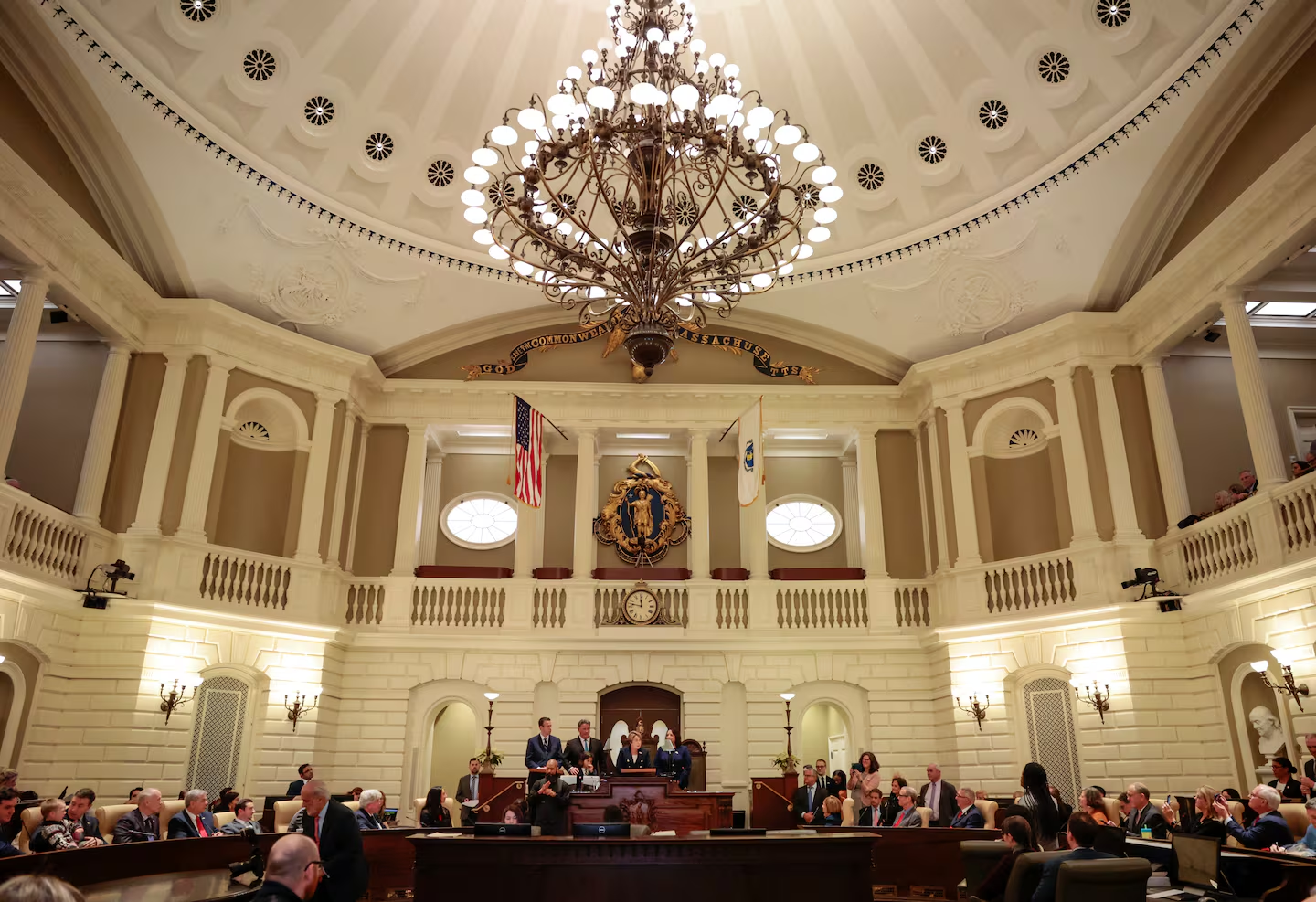
Facing Wu-connected challengers, two state senators defend opposition to some of her Beacon Hill priorities
Two Boston-area state senators facing challengers with connections to Mayor Michelle Wu defended their opposition to some of her legislative priorities on Beacon Hill, saying that their role is to be both a partner and a check on City Hall, while their opponents argued for more collaboration.
Read more R.I. lawmakers vote to ban new charter schools for three years
Wu-influenced dynamics hung over a dual candidate forum Tuesday featuring both incumbent state Democratic Senators Will Brownsberger and Nick Collins, and their primary challengers. Daniel Lander, a former Wu aide, is taking on Brownsberger, while Latoya Gayle, a Wu-backed first-time candidate, and Juwan Skeens, a former city of Boston youth worker, are challenging Collins.
Both Collins and Brownsberger havepublicly clashed with Wu over her push to temporarily shift more of the city’s property tax burden onto commercial real estate in order to soften a spike in homeowners’ property tax bills.
In back-to-back events hosted by Boston’s Wards 4 and 5 Democratic committees atBerklee College of Music,the conversationsranged from how to tackle the city’s housing and affordability crises to increasing funding for public schools. But the candidates most clearly split on the role they believe Boston’s state senators should have in advocating for Wu’s priorities, many of which have died on Beacon Hill amid opposition from the city’s own Senate delegation.
Both Brownsberger and Collins acknowledged the ongoing tension between themselves and the mayor after they fought to kill her property tax legislation, during which Collins accused Wu of using “fear and manipulation” in a bid to get the proposal through the Legislature. Brownsberger described his relationship with Wu as “a little bit strained,” but insisted he’s not harboring any lingering negative feelings. Collins said he and Wu continue to be “in a debate.” (Wu did not attend the forum.)
But they argued that state lawmakers’ role is not simply to acquiesce to local leaders on issues that can have ramifications beyond those cities and towns.
“We are one Commonwealth, there are 351 cities and towns — it’s entirely appropriate that there should be statewide rules on things like taxes, transportation,” said Brownsberger, a Belmont Democrat who represents parts of Boston.
Wu has expressed increasing frustration that many of her legislative priorities — from creating a local option for rent control to setting a tax on high-dollar real estate transactions — have met dead ends at the State House.
Collins, a South Boston Democrat, Tuesday argued that state lawmakers should not blindly support City Hall-backed policies.
“There are times where you’re working closely together, and sometimes you’re debating, and that’s the important part of this job,” Collins said. “It’s not to be a ‘yes’ person. It’s not to do everything somebody asked you to do.”
Lander, Gayle, and Skeens countered that Boston’s senators have not done enough to support Wu’s efforts to tackle issues such as housing affordability.
Read more Boston police arrest 8 after protesters disrupt City Council vote on $4.9 billion budget
“We’ve asked for state support, we’ve sent up home rule [petitions] for things like a transfer fee to invest in affordable housing, and the answer from my opponent is, ‘No, those things do not get a vote,’” Lander said. “We need much more collaboration in the state Senate with cities, all across the district.”
Gayle and Lander both framed their races as a choice between the status quo and more urgency. While Wu has backed Gayle, she has not publicly weighed in on the race between Brownsberger and Lander.
“We share constituents,” Gayle said of Boston’s senators and Wu. “You get more things done when you’re working together and not in conflict and fighting.”
Skeens also agreed there’s room for more partnership between City Hall and Beacon Hill. “The state could be doing a little bit more to support the city of Boston,” he said.
All the candidates agreed in part on some policy issues, including subjecting the governor’s office and the Legislature to public records law. All five said they would support it to some degree, with Brownsberger saying he believesthe Legislature should agree to it “in some form.” Collins and Brownsberger also defended state lawmakers’ efforts to increase transparency, while acknowledging there is room for improvement.
All five also said they oppose a proposed ballot question that would cut the state’s income tax rate from 5 percent to 4 percent.
But on some policies, they split. Brownsberger said he opposes both creating a local real estate transfer fee and allowing for rent control, while Collins said he would support local municipalities’ ability to opt into both, rather than settinga statewide policy. Lander, Gayle, and Skeens said they firmly support both.
Michael Holmes, a 25-year-old Boston resident and member of the Ward 5 Democratic committee, said the debate did not settle who he plans to support.
“They’re public seats, and at the end of the day, that’s what’s important, is we kind of keep pushing the needle,” Holmes said.
Read more Trump again shrugs off high prices amid war with Iran


Post Comment