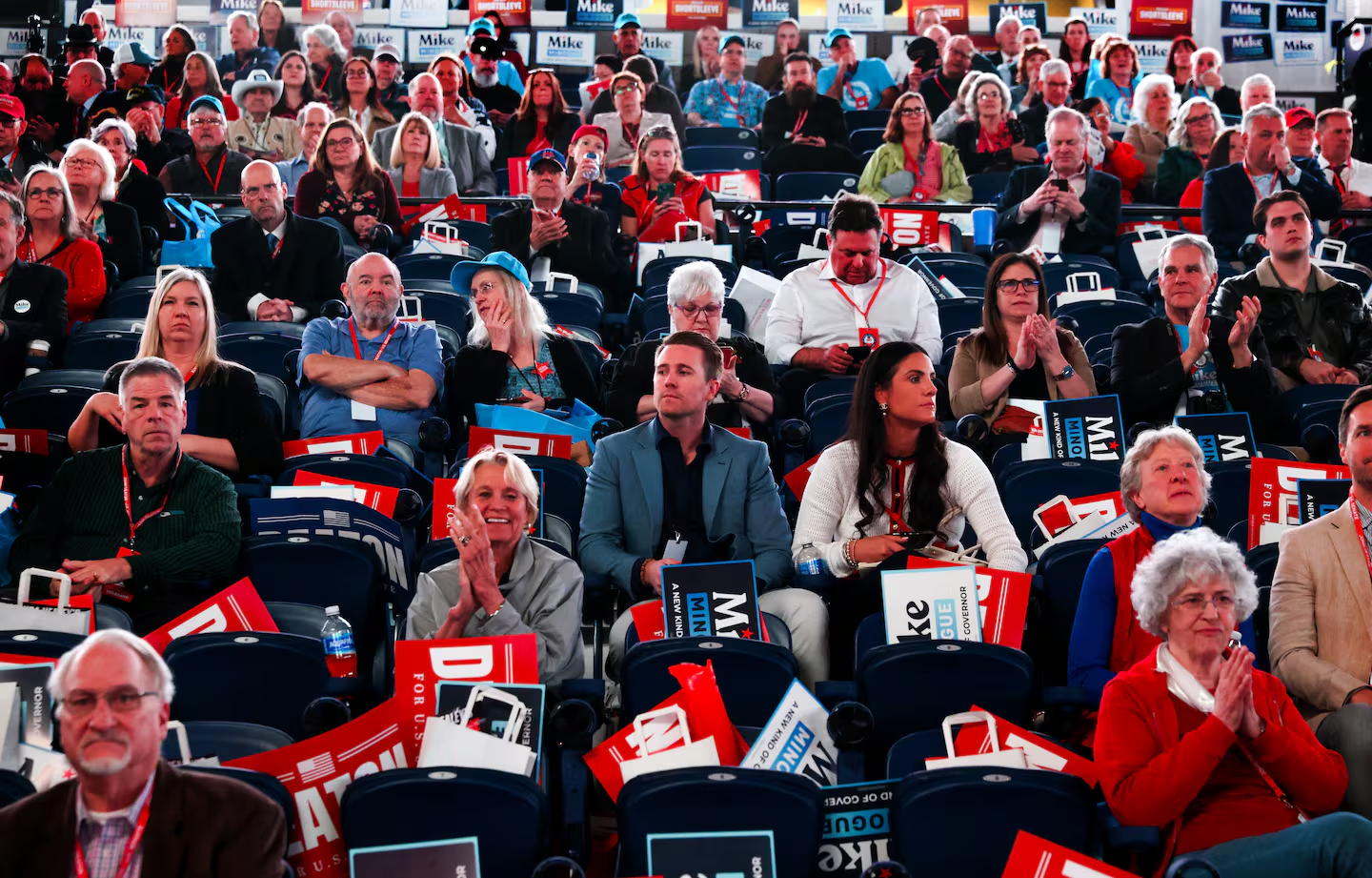
Their campaigns are in limbo, but two Republicans candidates want to tap taxpayer funds to help finance their runs
Two Republican candidates for statewide office may not ultimately make the September primary ballot amid a dust-up over signatures they submitted. But if they do, they want to turn to taxpayers for help financing their campaigns.
Read more Could control of Congress run through northern Maine?
Anne Manning Martin,a GOP lieutenant governor candidate, and Michael Walsh, the state Republican party’s endorsed candidate for attorney general, opted into the state’s campaign financing program, state officials said Wednesday. Both Manning Martin and Walsh are eligible to receive some of the roughly $1.4 million in public funds set aside for the program, which would be evenly split between the primary and general elections.
Manning Martin and Walsh were the only candidates of the 12 eligible to join the program, which offers candidates public funds if they agree to limits on spending. The money comes from taxpayers who voluntarily divert $1 to the program from the state income taxes they owe.
The amount of money available to participating candidates will be determined in early July, the state Office of Campaign and Political Finance said Wednesday.
Under the program’s rules, candidates for lieutenant governor and attorney general who have primary contests can receive up to $312,500 in matching funds in the primary election, so long as they agree to limit their spending — either to $625,000, or to whatever cap their opponents who do not opt into the program set. Manning Martin’s primary opponent, lieutenant governor hopeful Shawn Oliver, opted out of the program, and set his own spending limit to $2 million.
Walsh faces no primary opponent, so he wouldn’t be eligible to receive public funds until the general election against Democratic incumbent, Andrea Campbell.
Read more Hopes dim for renewing spy law as Trump digs in on Bill Pulte
Walsh and a spokesperson for Manning Martin didn’t immediately respond to requests for comment Wednesday. In announcing Manning Martin as his running mate, then-GOP gubernatorial hopeful Mike Kennealy — who laterfailed to make the ballot at the state Republican convention in April — said she has often beenthe “lone voice for fiscal discipline” as a member of the Peabody City Council.
Both candidates’ fundraising efforts have been lackluster. Manning Martin had just over $2,000 in her campaign coffers at the end of May, compared to $17,500 for Oliver, who’s campaigning as a running mate to GOP gubernatorial hopeful Brian Shortsleeve. Walsh had less than $700 in his campaign account at the end of last month, records show.
That’s a far cry from the Democrats they’re hoping to replace. Lieutenant Governor Kim Driscoll had $2.3 million in her campaign account, while Campbell had more than $811,000.
Whether Manning Martin and Walsh will still be on the ballot by the time funds from the program start flowing is an open question. Both are set to appear before the State Ballot Law Commission on Tuesday after Democratic officials — and, in Manning Martin’s case, Oliver — challenged the validity of signatures they submitted to get on the ballot that had been flagged by local officials as being potentially fraudulent.
Anne Brensley, the state Republican Party’s endorsed candidate for lieutenant governor, has already said she did not collect enough signatures to qualify for the ballot, blaming the shortfall on a consultant she hired to help gather the 10,000 signatures she needed to qualify.
Read more Serena Williams’ doubles campaign at Queen’s Club in jeopardy after Victoria Mboko injury


Post Comment