Hopes dim for renewing spy law as Trump digs in on Bill Pulte
WASHINGTON — Hopes were fading Wednesday for a breakthrough in Congress to salvage a warrantless surveillance law before its expiration this weekend, after President Donald Trump dug in on naming a close ally who has alienated members of both parties to a top intelligence post.
Read more Serena Williams’ doubles campaign at Queen’s Club in jeopardy after Victoria Mboko injury
Unless lawmakers act by midnight Friday, the law, known as Section 702 of the Foreign Intelligence Surveillance Act, or FISA, will sunset. It is the legal underpinning for what is widely considered to be the most powerful surveillance tool the federal government has at its disposal, credited with generating intelligence that thwarts terror plots, defangs foreign hackers, curtails drug trafficking and gleans key insights for policymakers about chief rivals like China and Russia.
Trump administration officials and some Republican lawmakers have warned that letting Section 702 lapse would risk grave security threats to the United States, especially as the war in Iran grinds on.
But while a bipartisan coalition had been close to a deal to extend it, Trump injected fresh chaos into the debate last week by naming Bill Pulte, a confidant without any national security experience, as acting director of national intelligence.
Even some Republicans expressed reservations, noting his lack of qualifications for the post. And days later, a bipartisan coalition blocked a renewal from moving forward in the Senate, as even Democrats who had previously been working with Republicans to forge an agreement to renew the law said they would not vote to do so unless Trump withdrew Pulte as his pick.
Read more ActBlue CEO invokes fifth amendment repeatedly in testimony to Congress
Congressional leaders had already been struggling to find enough votes amid long-standing privacy objections to pass compromise legislation that would renew Section 702 for three years.
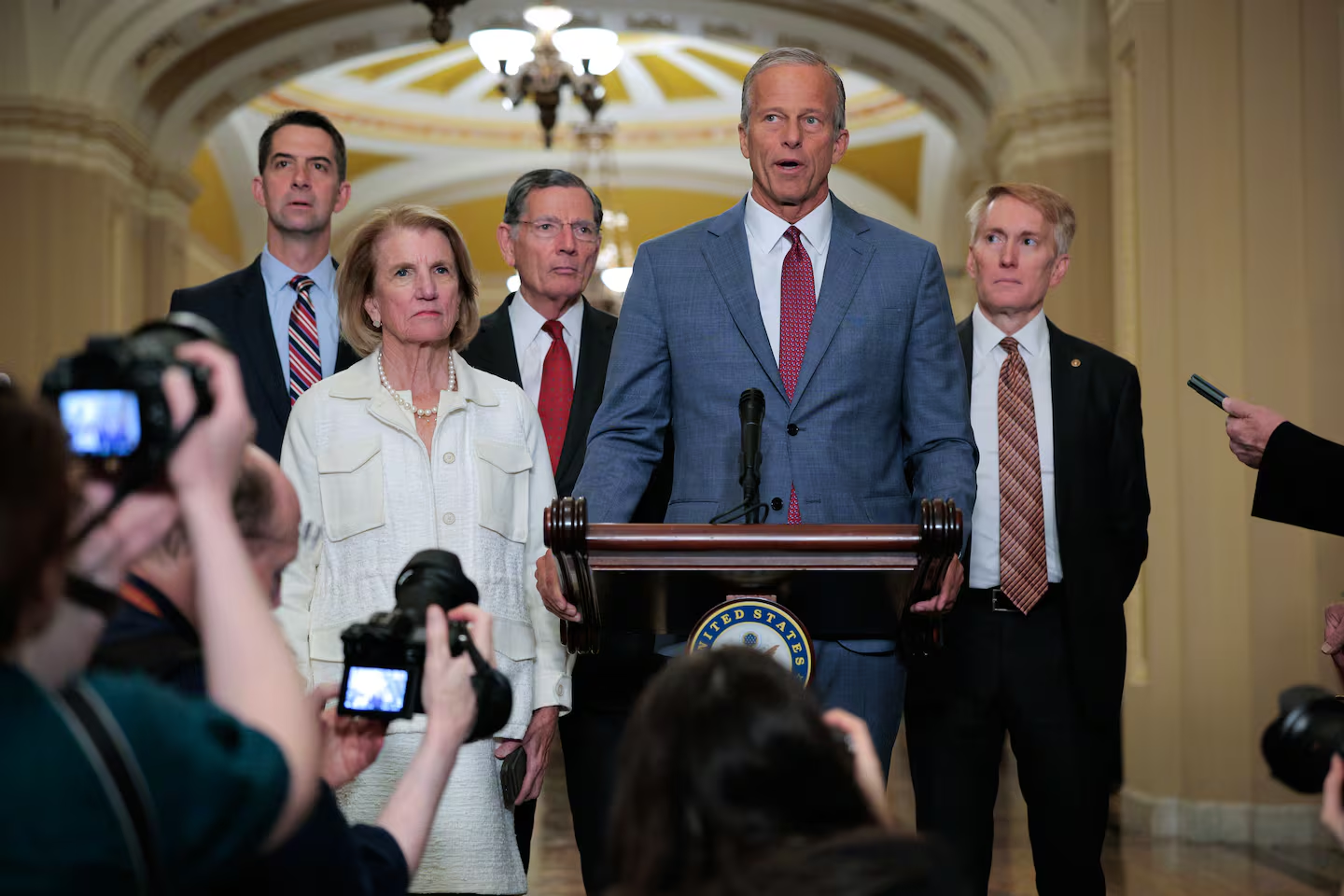
Sen. John Thune, R-S.D., the majority leader, conceded Wednesday that there was now almost no chance of acting on such a bill before the law expired, and he was instead gauging support for a short-term extension, perhaps for three weeks.
“Well, I think if we do, it’s looking increasingly like it’s going to be some sort of an extension,” Thune told reporters at the Capitol.
But Congress has already punted on the issue twice this year, and another short-term reprieve looked less achievable, as some privacy advocates indicated that they were unwilling to continue extending the law.
This article originally appeared in The New York Times.


Post Comment