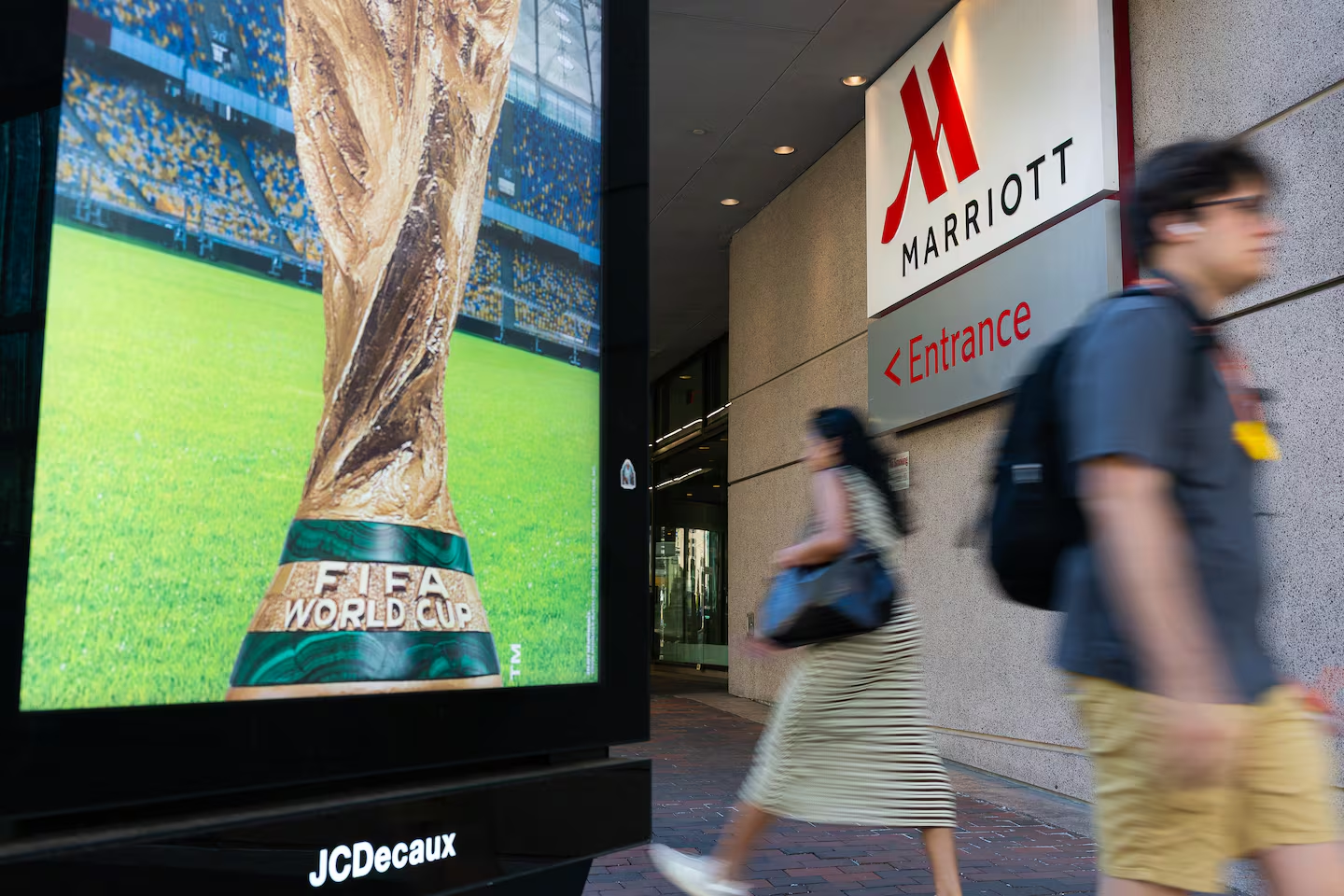
Boston hotels were expecting a World Cup gold mine. It might not be coming.
Boston hotels expected a World Cup bonanza. Months prior, many set high nightly rates and enforced four-night stays to capture the anticipated demand.
Read more Boston extends summer operating hours for bars, restaurants
But days before the first match, local hoteliers are reporting tepid occupancy as they vie for more guests. Prices have dropped. Minimum nightly stays have gone from four to two. And establishments are hawking luxe amenities, including help getting from the city to games in Foxborough.
The city has boasted that up to 2 million travelers will visit Greater Boston to see the world’s most-watched sporting event. Organizers haven’t said how many tickets were sold, but the results so far portend disappointment for the hospitality industry.
“There were initial expectations that performance would be strong,” said Bill Brodsky, managing director of Boston Harbor Hotel. “That got a heightened sense of emotion.”
The anticipated demand has not materialized for a host of reasons: Tourists have moved vacations from Boston to cities where they can spend less. Geopolitical tensions have dampened booking demand. Short-term rentals have siphoned off a significant number of visitors.
While many in the hospitality industry say they hope to see late bookings for the World Cup continue to come in, they also acknowledged that advance reservations have been weak — particularly for the days between the matches scheduled at Gillette Stadium from June 13 through July 9.
As of late last week, Boston Harbor Hotel expects to finish June with 80 to 85 percent occupancy, which is a few points greater than years prior. But Brodsky said some others are “far behind” expectations.
In June, Boston hotel occupancy is anticipated to be 82 percent, a 1 percent rise from the comparable period in 2025, according to real estate analytics firm CoStar. July is poised for 80 percent, which is roughly the same as last year.
“The booking window is unbelievably short,” said Sean Howe, general manager of Revere Hotel Boston Common in the theater district.
More travelers in the past six weeks have called Revere Hotel Boston Common for long-term stays. As of late last week, Howe said he’s seeing a spike in demand from Europeans and travelers looking to stay during matches on June 23 and 26.
Of those tourists, many don’t have tickets.
The industry is “hopeful” that the days between matches gain more momentum, Howe said. “In the short term, there’s a bit of a boom.”
In recent weeks, bookings across many hotels have picked up, and more fans are expected to book as teams advance.
Reservations average one- or two-night stays around gamedays. That is lower than the industry’s expected five or seven, especially when hotels are trying to fill holes left by diminished corporate, family, and group travel.
Lower occupancy has been an issue for months. Earlier in 2026, extreme weather conditions and tighter visa restrictions repelled travelers. Hotel owners and lodging analysts believed World Cup fans would pack hotels and resist the slowing market.
For the summer, hotels in Boston, Los Angeles, Dallas, Philadelphia, and Seattle blocked off reservations for FIFA workers, technical staff, media, teams, and referees. But earlier this spring, up to were canceled, according to the American Hotel and Lodging Association.
Read more Why complete election results in Maine could take more than a week
Fourteen of Boston’s largest hotels were affected, said Sebastian Colella, managing principal of Pinnacle Advisory Group, a hospitality consulting firm.
It’s not clear how many rooms were blocked off for FIFA in Boston. But those rooms reentered the market and lowered occupancy rates.
In past years, occupancy rates averaged 85 to 90 percent for June and July, Colella said.
Nearly 80 percent of Boston hoteliers reported that bookings for the FIFA World Cup have been fewer than expected and slower than an average summer, according to a survey published by the AHLA in early May.
“Even if occupancy is below what it was a year ago, it could still be a very successful event for local hoteliers,” said Jan Freitag, national director of hospitality analytics for CoStar. “Because they’re going to be able to drive rates more than a year ago.”
Hotels currently average about $291 per night starting mid-June to mid-July — up from around $256 last year, according to CoStar. A review of booking sites around the city shows nightly rates increasing to above $400 for stays around gamedays. Many hoteliers, however, were expecting higher prices for the events.
In the spring, hotels are able to raise rates due to larger tourist demand. Those prices usually increase in summer months with little new supply hitting the market, which creates greater earnings.
Short-term rental bookings in Boston have increased on average by 21 percent year-over-year during the nights of the first five matches, according to AirDNA, a firm that tracks Airbnb and Vrbo reservations.
As of earlier this week, nearly 82 percent of short-term rentals are booked for Boston’s first match June 13 and 80 percent for the third match June 19. For June’s first five scheduled matches, occupancies average 72 percent. Occupancies are less than 50 percent for the two knockout matches June 29 and July 9, but AirDNA said that will likely increase once teams are finalized.
Group and international travelers typically book a month or longer in advance. That leaves transient tourists, who stay one or two nights and book last-minute, as Boston’s hope for a booming World Cup performance.
“There’s a booking hole,” said Michael Bellisario, managing director and senior research analyst at Baird, a financial services firm. “The expectation is you will see a big pick up in demand seven or 14 days beforehand when people know who’s playing in each city.”
Often, hotels block rooms off during popular times for groups. If none book within a month or two before the stay, hoteliers release the rooms.
Because summer conventions have been rescheduled to the weeks before and after the World Cup, the hotel market’s rebound will take longer to see, Bellisario said.
“Bookings are up,” Bellisario said. “Not as much as people have hoped for or expected.”
Read more Braden Montgomery, former Red Sox prospect, hits walkoff home run in MLB debut for White Sox




Post Comment