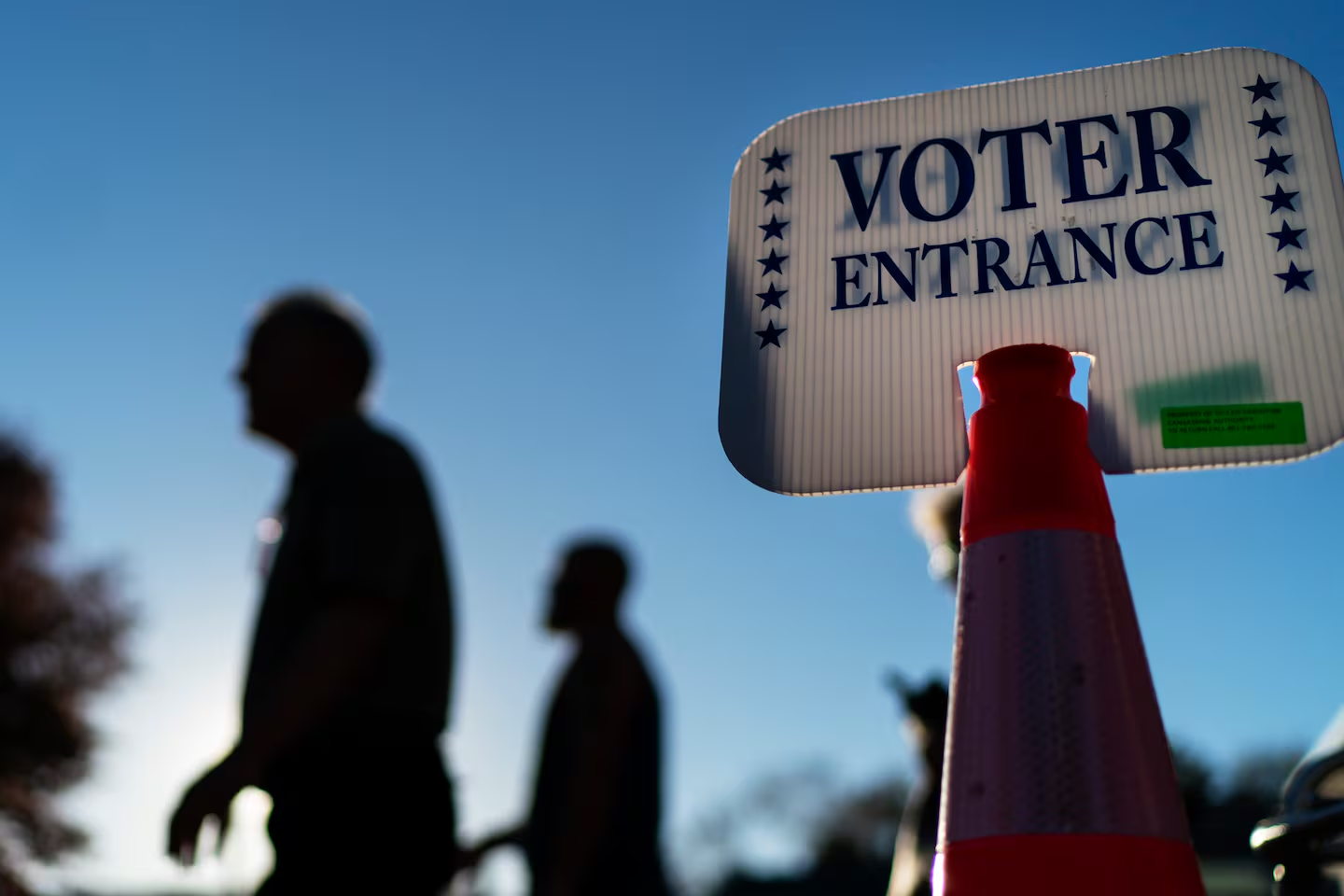
R.I. Assembly won’t vote on a state Voting Rights Act this year
PROVIDENCE — General Assembly leaders say they won’t bring a proposed Rhode Island Voting Rights Act to the floor for a vote this legislative session.
Read more Olympian, elite track stars sue Puma, claiming ‘defective’ shoes caused injuries, ended careers
Advocates argue that Rhode Island needs to pass its own law to protect against voter discrimination and suppression now that an April 29 US Supreme Court ruling has gutted a key provision of the federal Voting Rights Act.
The was introduced by two powerful East Providence Democrats — Senate President Valarie J. Lawson and new House Majority Leader Katherine S. Kazarian.
But in a joint statement, Lawson, House Speaker Christopher R. Blazejewski, and Secretary of State Gregg M. Amore said they’re now planning to consider the legislation next year, and won’t bring it to a vote before the end of the 2026 session, which is expected to wrap up Friday night.
“From the beginning, we have all understood the importance of passing a strong Rhode Island Voting Rights Act,” the joint statement said. “But we also understand that as the federal administration continues to work to make it more difficult to access the ballot box, we have to do it right. This legislation is broad-ranging and complex, and required feedback and input from many partners.”
They noted provisions of the proposed Rhode Island Voting Rights Act would not take effect until the 2028 election cycle.
“Therefore, we will work over the course of the off-session to put forward as strong a bill as possible for consideration in 2027, and will continue to prioritize the Voting Rights Act in the upcoming session,” the joint statement said.
Lawson, Blazejewski, and Amore said there wasn’t one single concern that cause them to postpone action. But given the complexity of the bill, they sought input from Attorney General Peter F. Neronha, whose office would handle enforcement and defend the legislation from a likely court challenge.
“It is imperative that we enact as strong, enforceable, and defensible a bill as possible,” the joint statement said. “With those priorities in mind, we recognize there is more work to do.”
But advocates plan to gather at the State House at 3:30 p.m. Tuesday to urge legislators to act now.
“The Rhode Island Voting Rights Act has been killed,” the Womxn Project wrote in a Facebook post. “While we are devastated, we are not giving up. … This is not over and that we are not going anywhere.”
Shahidah Ali, political action committee chair for the Rhode Island Coalition of Black Women, said she was “very disappointed” that the General Assembly won’t vote on the bill this year. She said the legislation has been around since March if lawmakers had any questions.
Read more Four high school journalists named winners of new-look Will McDonough Writing Contest
“To wait until the last minute felt like another slight for Black people, especially with the Supreme Court decision and what happened immediately with the southern states redistricting and gerrymandering the Black neighborhoods,” Ali said. “This is an urgent matter. It would give the Black and brown communities a feeling of security.”
She said the midterm elections are coming up this fall, and she’s concerned the Trump administration will send Immigration and Customs Enforcement agents to certain polling sites to try to intimidate voters.
Ali said the Rhode Island General Assembly has a super majority of Democrats, but some “don’t act like Democrats — they act like soft-level Republicans.”
John M. Marion, executive director of Common Cause Rhode Island, said the legislation is urgent in part because the state’s fourth-largest city, Pawtucket, remains under a federal consent order for violating the federal Voting Rights Act, and Trump’s Department of Justice has shown no interest in enforcing that.
The Department of Justice alleged that Pawtucket failed to provide election assistance and materials in Spanish for Spanish-speaking voters with limited English proficiency, in violation of Section 203 of the Voting Rights Act. A 2024 consent decree requires Pawtucket to provide all election-related information in both English and Spanish, and it extends through 2028.
The proposed legislation would provide a way for people to go to court to combat discrimination in voting — particularly racial discrimination, Marion said.
“We would not have expected lawsuits necessarily to emerge between now and November,” he said. “But it would have sent a message — particularly to Black voters in Rhode Island that no longer enjoy the protection of the federal Voting Right Act — that the legislature is willing to step up and protect their rights.”
Advocates have said the proposed Rhode Island Voting Rights Act is similar in spirit to the 2019 Reproductive Privacy Act, which protected abortion rights in anticipation of the US Supreme Court overturning Roe v. Wade.
Marion said the federal Voting Rights Act has provided a deterrent against discrimination in elections for decades.
“Now, that deterrent is no longer there, so we need the state Voting Rights Act to replace it as a deterrent,” he said. “It’s disappointing that the legislature doesn’t think it can get it done this year.”
Read more World Cup referee denied entry to the US was about to make history for Somalia


Post Comment