A giant waterfront sanctuary plus much-needed housing in Chelsea. What took so long?
CHELSEA – Today, an unlikely story, in which the good guys win, and a city gets a chance at transformation.
Read more Iran’s soccer team readies to leave for World Cup as some officials still await US visas
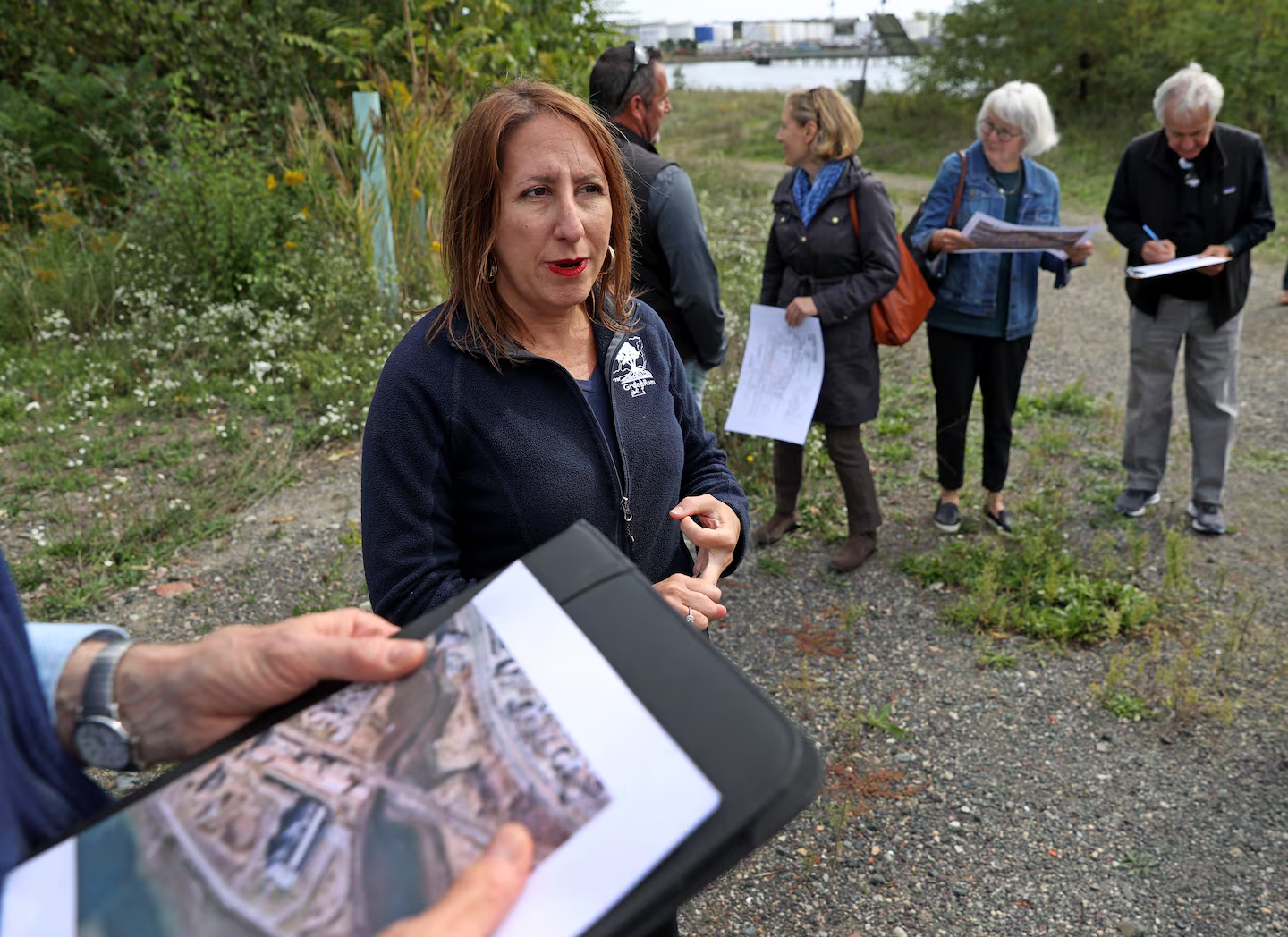
The setting: 18 acres of contaminated, overgrown land in Chelsea, a former industrial site. It is surrounded by the Mill and Chelsea creeks on three sides, and the commuter rail on the fourth. The crumbling and burnt-out remnants of the Forbes Lithograph Company and other noxious plants sit on the site. Piles of bricks, twisted metal and other debris litter the place. Toxic waste saturates it.
But nature has been having its way here for almost two decades, spreading branches up through pavement and poison, and into the sky. The trees form a lush, unruly sanctuary that feels worlds away from the nearby neighborhood which, like the rest of Chelsea, has been literally dumped on for more than a century. Between the rumble of passing trains, there is birdsong, as Carolina Wrens, Hermit Thrushes, Red-winged Blackbirds and many others flit about the canopy. Occasionally, a rabbit scurries by.
We have been here before. In 2022, I walked this land with Roseann Bongiovanni, who grew up in this area, and heads GreenRoots, the Chelsea environmental justice organization. Back then, Bongiovanni and her allies were making a long-shot attempt to buy this site from a developer who had let it go to further ruin, his inaction allowing the place to deteriorate into an even more dangerous waste of potential.
Improbably, Bongiovanni and her allies, including affordable housing builder The Neighborhood Developers, and Mass Audubon, were all set to bid on the place, which was on the brink of foreclosure. But the property owner won a reprieve, and the auction was called off at the last minute.
In November 2024, someone on the poorly-secured site started what became a massive fire in one of the disused buildings, so huge that residents in the densely-packed neighborhood were evacuated and classes at nearby elementary schools were canceled. The city had had enough, and put the site into receivership, fronting the costs of security and upkeep.
All along, Bongiovanni, David O’Neill of Mass Audubon, and Rafael Mares of The Neighborhood Developers refused to let their hopes for the property go, and kept working on lining up more resources to buy and transform it, confident the site would eventually come up for sale.
“Patience is not one of my greatest skills,” said Bongiovanni, long a formidable activist in the city, who has created waterfront access, green spaces, and an army of local environmental champions by sheer force of her will.
Their vision was easy to sell to donors: If they could get their hands on those 18 acres, the effects would ripple far beyond them. About 2.5 acres of the site would be given over to 225 units of desperately-needed affordable housing. A handsome old power plant would be converted to a Mass Audubon nature center, and a new headquarters for GreenRoots. And some 15 acres would become a huge, resilient, public park on the waterfront, for a city criminally low on open space.
Read more The World Cup pitches are the result of years of engineering to find just the right grass
So far, they’ve raised $27 million: The local philanthropic community appears as desperate for a feel-good story as the rest of us.
The property owner has tried legal maneuvers to maintain ownership of the site, but courts have repeatedly denied him. Finally, this past March, the good guys, led by Mass Audubon, closed on the property. The previous owner is challenging the purchase, calling the $8.36 million sale an improper taking by the city at a too low a price, but he is unlikely to succeed, Bongiovanni said.
And so last week, she and her colleague John Walkey, and O’Neill and Mares were walking the area, talking details and timelines.
“The site is magical,” O’Neill said. “Once you cross over the bridge, you have entered an oasis, and while it may not look like that to everyone now, once it’s complete, it will serve as a beloved community asset for generations to come.”
There is an enormous amount of work ahead. It will take a good year to bring down the unsaveable buildings and remove the toxic materials. Mares says it will take a few years to complete the housing, two six- or seven-story apartment buildings. O’Neill estimates the public will have some access to the park area within three years. If all goes well, these 18 acres could be completely remade in about six years, at a cost of around $65 million.
When it’s done, people will be able to walk among parkland and restored marshes and along a wide swath of waterfront. The sanctuary will also accommodate the water that will continue to flow in here as sea levels rise. Chelsea kids will have access to gorgeous open spaces, designed for them to get close to thriving wildlife – spaces kids growing up in other places can take for granted.
Years ago, Bongiovanni decided that this land, a decrepit liability for Chelsea, could become the city’s most valuable gem. I’ve known her a long time, and am well-acquainted with how unstoppable she is. Even so, I had my doubts that she and her allies would succeed in this singularly improbable and wildly ambitious goal.
Read more FBI fires several analysts tied to disputed ‘Catholic ideology’ memo
I am delighted to report I was wrong.



Post Comment