City Council delays vote on Wu’s $4.9 billion budget proposal, approves using $70 million of reserves to plug budget gaps
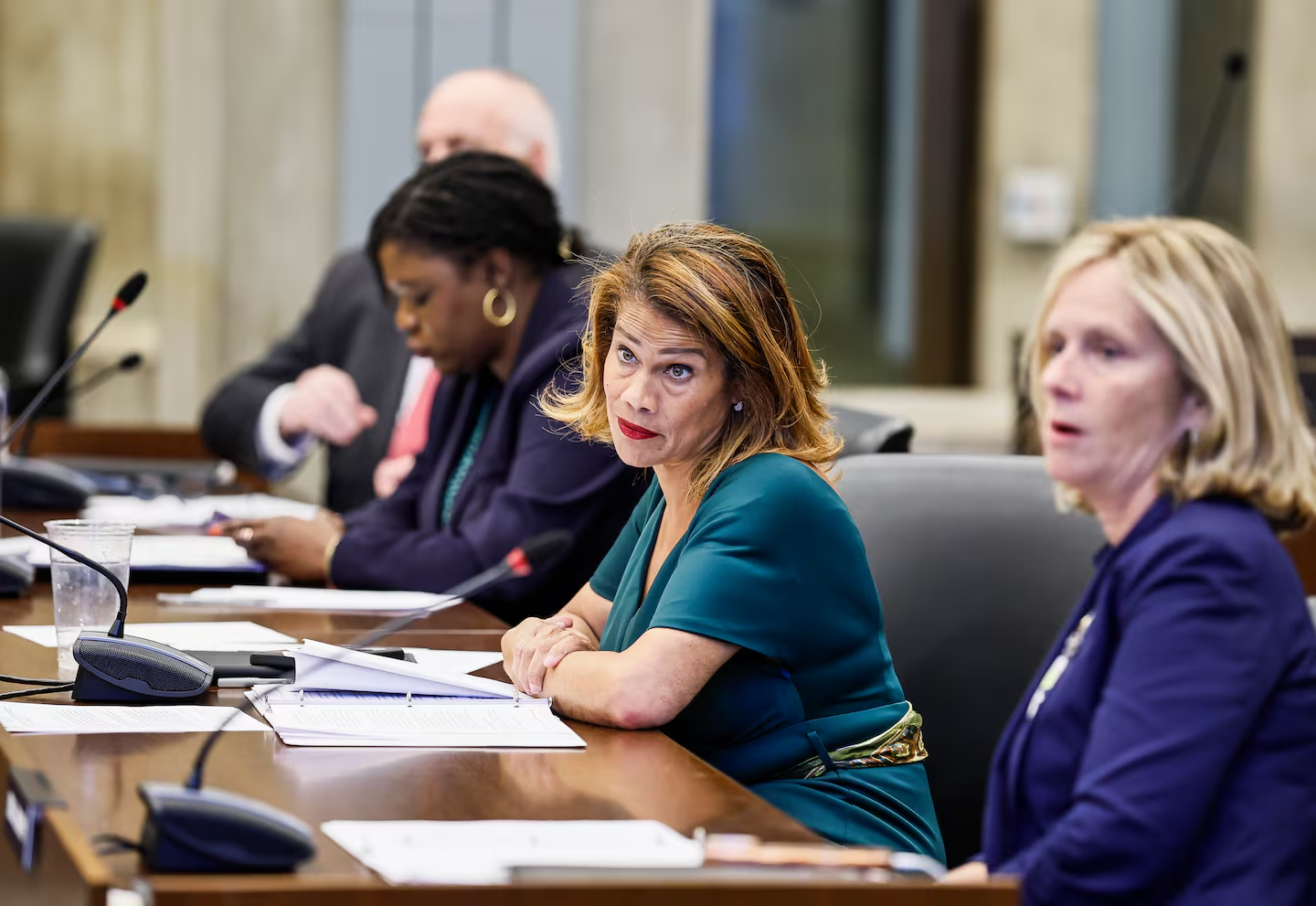
The Boston City Council voted 10 to 3 Wednesday to postpone a planned vote on Mayor Michelle Wu’s $4.9 billion budget proposal for the next fiscal year until next week, delaying action on a spending plan that has divided the council and drawn intense pushback from community groups for cutting certain department budgets and axing a number of grant programs.
Read more Fleet protect Megan Keller, Haley Winn, and Aerin Frankel from PWHL expansion process
The council did vote unanimously to approve a number of other spending proposals, including Wu’s move to pull nearly $70 million from the city’s emergency reserve fund in order to plug deficits in the city’s and Boston Public Schools’ budgets this fiscal year. After a passionate debate, councilors also voted 8 to 5 to pass a $1.73 billion budget for Boston Public Schools next fiscal year, which would cut hundreds of staff jobs.
That vote also came with scrutiny, particularly from the Boston Teachers Union, which had advocated for the council to reject the budget in protest of the planned layoffs. Some councilors, though, argued that wouldn’t solve the significant budget challenges the district is facing, in part due to declining enrollment.
“Rejection doesn’t change the very real circumstances that we have lost thousands of students, it doesn’t solve for the long-term budget issues, ,” said Councilor Gabriela Coletta Zapata. “Our teachers and parents deserve respect. They also deserve stability and long-term solutions.”
But other councilors argued that approving a budget with such large staff reductions would set a bad precedent.
“My fear is that this budget puts BPS on a pathway towards cuts this year, more cuts next year, and then more cuts the year after that, and every year, the students who need the most support will be asked to carry the heaviest burden,” said Councilor Brian Worrell.
The council’s move to punt its vote on Wu’s controversial operating budget proposal appears to indicate the body remains deeply split on how to push back on Wu’s planned cuts in the city’s operating budget that advocates are protesting. For weeks, councilors have bickered over whether to reject the budget before moving to make changes to it, and fought over how their colleagues have approached the amendment process.
After speeches from some frustrated members , the council took a roughly hour-long recess, then voted to postpone the vote until next Wednesday, June 10, and schedule another council meeting to review the mayor’s response on June 17.
Wu has described her budget proposal as painful but needed belt-tightening as the city grapples with surging costs and stagnating revenues, saying the city must make difficult choices in order to continue to fund essential services.
Read more The date for the 2026 Fenway Bowl is set for Dec. 26
Boston is, as other cities are across the state, facing significant financial challenges, with health insurance costs skyrocketing and snow removal expenses coming in much higher than expected after two major winter storms buried the region in snow earlier this year.
Despite months of imposing and enduring cost saving measures, both the city and BPS were still on track to end the fiscal year in the red, leading the council on Wednesday to vote unanimously to approve using $70 million from the city’s emergency reserve fund to cover the gaps.
But in recent weeks, grassroots advocates and more than 30 nonprofits and community groups have demanded that Wu restore funding for the roughly 40 city grant programs she has proposed to cut, which range from a school-year jobs program for students, to supports for immigrants and resources for food access.
The activists also launched an effort to pressure councilors to vote to reject Wu’s proposal, in a bid to push her to increase overall spending.
But a move to do so failed last month, when the council split 6-6 on the vote. Some councilors have echoed activists’ calls for the Wu administration to dip into the city’s so-called “rainy day” reserves to fund the programs in jeopardy. Wu has previously called that option “fiscally irresponsible,” and said she will not increase bottom line spending either, even if the council rejects her budget.
Instead, she has worked to secure private investments to make up for some of her planned budget cuts, including for veterans’ services and afterschool jobs for Boston students.
The council must take action to either accept, reject, or amend the budget by June 10. The council has the power to change or reduce individual line items in the budget, as long as the amendments do not increase the total amount of spending the mayor has proposed.
If a majority of the council votes against the budget or approves line item changes, the mayor then has seven days to respond, and either accept or veto any council amendments, sending the budget back to the council. The council can override a mayoral veto with a two-thirds majority vote.
Read more An outcry erupts as a whale mural beloved by many in Dallas is replaced with art for the World Cup


Post Comment