‘Boston is already a drunk city’: Bartenders resist proposal to keep bars open later during World Cup
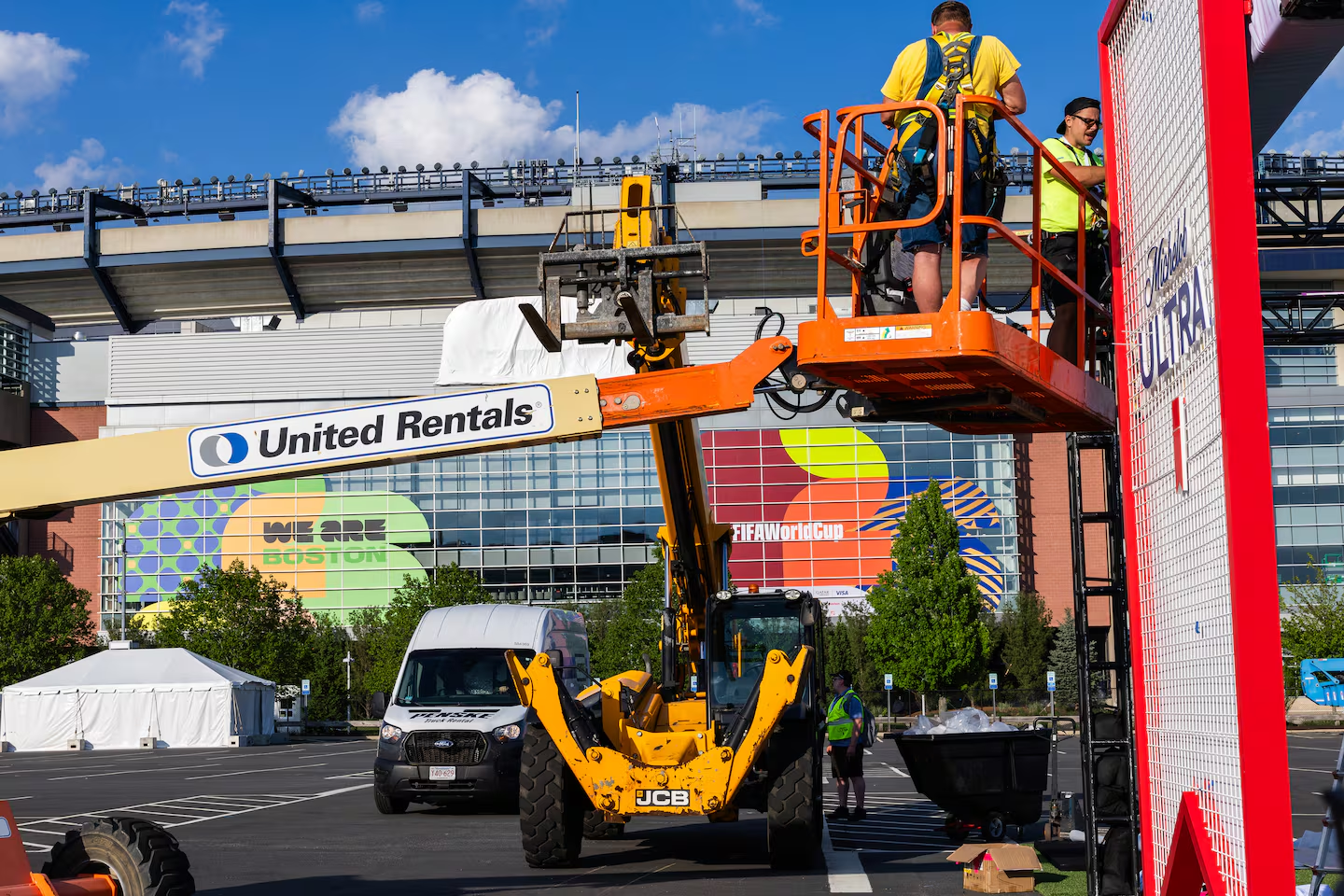
While World Cup fans from around the world prepare to descend on Boston this month, many workers in the city’s hospitality industry are approaching the tournament with caution, now that it looks like their night shifts could last a little longer.
Read more Game 60: Orioles at Red Sox lineups and notes
State Representative Carole A. Fiola, a Fall River Democrat, recently proposed legislation that would allow Massachusetts cities to authorize bars to remain open until 3 a.m., an hour later than the state’s current 2 a.m. closing time, and designate public areas where people could consume alcoholic beverages, during the 2026 FIFA World Cup. The proposal, backed by Boston Mayor Michelle Wu, would apply from June 1 through Aug. 31.
Supporters argue the measure could generate significant economic benefits for the city. However, many in the service industry say the extended hours could create new challenges for employees already working late nights.
For bartenders, servers, and managers, the workday does not end when customers leave. Employees often spend an additional hour or more cleaning, closing tabs, and preparing the establishment for the next day.
“An extra two hours is a lot to put on the staff,” said Amanda Wahlen, a server and bartender at Loco Taqueria & Oyster Bar in Boston’s Fenway.
Wahlen, who commutes from South Boston, said she could leave work as late as 5 a.m. if the bar decides to remain open till 3 a.m.
“If I work till 5 a.m., I’m going to sleep all day and no one will be seeing me,” Wahlen said.
Workers’ concerns extend beyond longer shifts.
“I don’t mind walking back 35 minutes,” Elijah Johnson, an arcade associate at Cheeky Monkey Brewing Co. in Fenway, said. But “maybe for female workers walking home late at night, it would be worrisome.”
The issue of safety does not apply only to the commute home. Some worry larger crowds and increased alcohol consumption could lead to more confrontations inside the bars.
Read more Wu endorses state Senator Nick Collins’ primary challenger, ratcheting up Democrats’ feud
“Boston is already a drunk city,” said Tairon Martins, a bartender at Allston dive The Avenue Bar, as he prepared a drink at a bar already full at 6 p.m. “The extra hours aren’t going to do anything but cause more trouble,” he added.
“If I know anything about sports, I know the people are very passionate about them,” Wahlen said. “That mixed with alcohol brings fights and aggression.”
Others acknowledged the potential financial upside but remained uncertain whether these benefits would outweigh the costs.
“We are still unsure if we will keep the bar open, but I can foresee that it could bring in more business,” Randi Robbins, a server at Cheeky Monkey Brewing Co., said about the potential change.
Still, she questioned whether the influx of international visitors, who may not be accustomed to a 20 percent tip, would actually translate into higher earnings for workers.
“Usually, drinkers are nicer with gratuity,” Robbins said. “But tipping is different everywhere, even when we give the best service.”
While workers remain divided on the proposal, which is still awaiting Senate approval, the bill’s success could hinge on whether lawmakers believe the economic boost from the World Cup can be balanced with employees’ well-being, safety, and quality of life.
Similar measures have passed in other states such as Rhode Island, which last week cleared a path for bars to remain open until 4 a.m. during the World Cup. Now, hospitality workers across Boston wait to see whether the city’s biggest international event will become an opportunity, or an additional burden, for them.
Read more A fake Trump endorsement in N.H. is a reminder for voters to stay skeptical online


Post Comment