Boys don’t need looksmaxxers and alpha males. They need men who show up.
What are we doing, guys?
These feel like especially messed-up times for boys and men. The online world is a cesspool, pumping out revanchist, dystopian notions of masculinity. Whether they seek it out or not, our sons and brothers swim daily in a toxic soup full of influencers and others who are dosing themselves with testosterone and altering their facial features to emulate cartoonish concepts of manhood. In wildly popular podcasts, men like Andrew Tate, Nick Fuentes, and Joe Rogan revel in rhetoric that runs the gamut from bro-y to misogynistic to full-on rape-y — all while hawking supplements to enrich themselves.
Read more Kyle Busch had pneumonia for ‘days to weeks,’ according to his death certificate
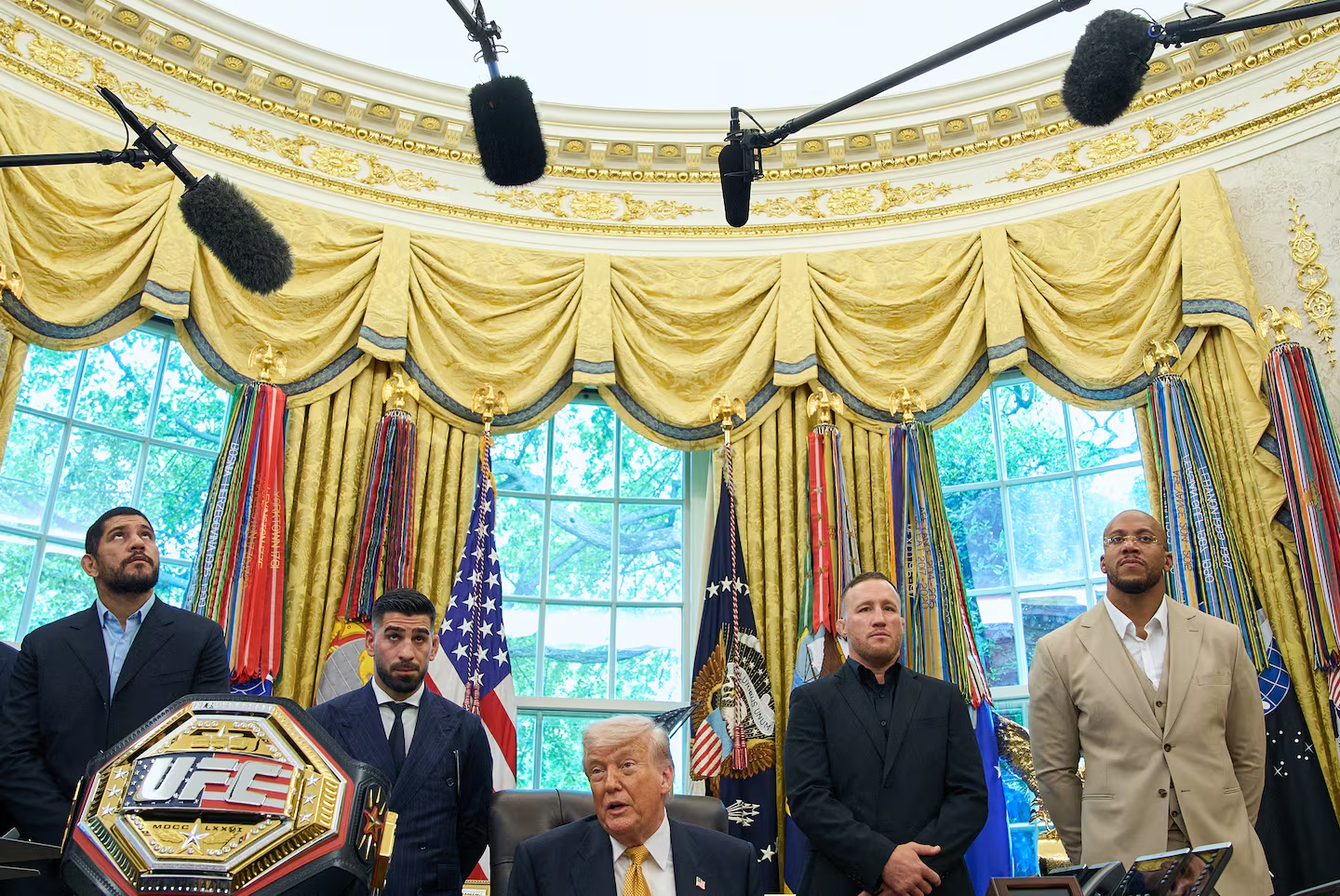
And they’re all backed up by a presidential administration that elevates this throwback masculinity to official policy. Defense Secretary Pete Hegseth and HHS secretary RFK Jr. are all about their pull-ups. The president fetishizes athletes, the more brutal the sport the better. The UFC cage-fighting arena he’s having built outside the ruined White House says it all.
We have always had some version of the manosphere, but now it is supercharged by the algorithms that funnel people into poisonous silos, feeding a spiral of disaffection and isolation that keeps them going back for more.
That isolation is real. In one poll from 2023, nearly two thirds of young American men reported that “no one really knows me well.” Everyone is feeling more alone these days, but according to , adult men more so. The consequences show up in some grim statistics: Men make up 72 percent of opioid deaths in Massachusetts, and account for three-quarters of deaths by suicide.
Self-harm takes many forms. Young men in particular are spending staggering amounts of time — and money — wagering on basketball games and world events via online, hand-held casinos that suck away their resources and self-worth. The more obsessive and isolated these gamblers are, the better it is for outfits like FanDuel and Polymarket.
For more than two decades, Terrence McCarron has been watching the ways boys and men navigate the destructive, impossible expectations pushed at them.
McCarron is chief program officer at Big Brothers Big Sisters of Eastern Massachusetts, the national nonprofit that matches kids with mentors who can show up consistently in their lives as they grow into adulthood.
“Loneliness is a key feature of toxic masculinity,” he said. “To be independent, self-reliant, tough, those are concepts ingrained in young boys. All those concepts about going it alone and that pattern of isolating yourself and only caring for yourself travels all the way into adulthood.”
McCarron sees that isolation not just in the kids who reach out for mentors, but also in grown men. He believes it’s one of the main reasons it is so hard to find male mentors to volunteer. At Big Brothers Big Sisters, 70 percent of the Littles looking for mentors are male, but only 40 percent of volunteers who sign up to be Bigs are men.
“Boys are paying the price for a generation of men who don’t see themselves as capable of being in a durable, healing relationship with another person,” McCarron said.
It has long been a struggle to recruit Big Brothers. Despite all of the progress we’ve made on gender roles, men still aren’t getting enough encouragement to connect with their communities. They continue to be underrepresented, for example, in caring professions like health care and education. Technology has made the struggle harder.
“They’re not getting the healing benefit of being in community as much as women are,” McCarron said. “So they’re really at risk of falling into the very immediate and immersive and always-available feeling of connection that being online provides.”
McCarron knows the idea of committing to being a mentor, hanging out with a kid twice a month for a few hours, for at least a year and ideally more, seems daunting. It was at first for McCarron himself, who has been a Big Brother to two young men. But he wasn’t mentoring the first boy long when he realized: “I didn’t have to change his destination in life, I just had to be on the ride.”
It’s not like Big Brothers have to provide some carnival of joy every time every time they see their Littles. Just being a reliable presence is enough.
“Patience, sitting with silence, being OK with that, not pushing, just being present,” said Jessie Stettin, a Big Brother in Boston. “It’s the opposite of the internet.”
Stettin, 34, left a career in finance to pursue a master’s degree in social work, partly because his experience as a Big Brother convinced him his purpose was in helping boys thrive. He was connected with his Little when the boy was nine. Over the years, the silences between them filled with conversations that enriched Stettin’s life, and taught him to reflect on his own upbringing and what it means to be a man.
“I learned so much,” he said. “My little bro is the most emotionally aware and wise 18-year-old who ever walked this earth.”
Talk to any Big, and they will tell you the benefits of their relationships go both ways.
“Not only is it helpful for young men to have male role models in their life who are investing time in building their relationship, but it’s equally helpful for me to feel that connection and sense of purpose,” Stettin said. “It’s an intervention for both.”
It’s not clear how we pull back from the toxic mess that surrounds masculinity right now, but this is where it starts: With just one real, offline relationship. A kid is waiting for you.
Read more Friday’s tournament roundup: Braintree softball continues incredible one-year turnaround


Post Comment