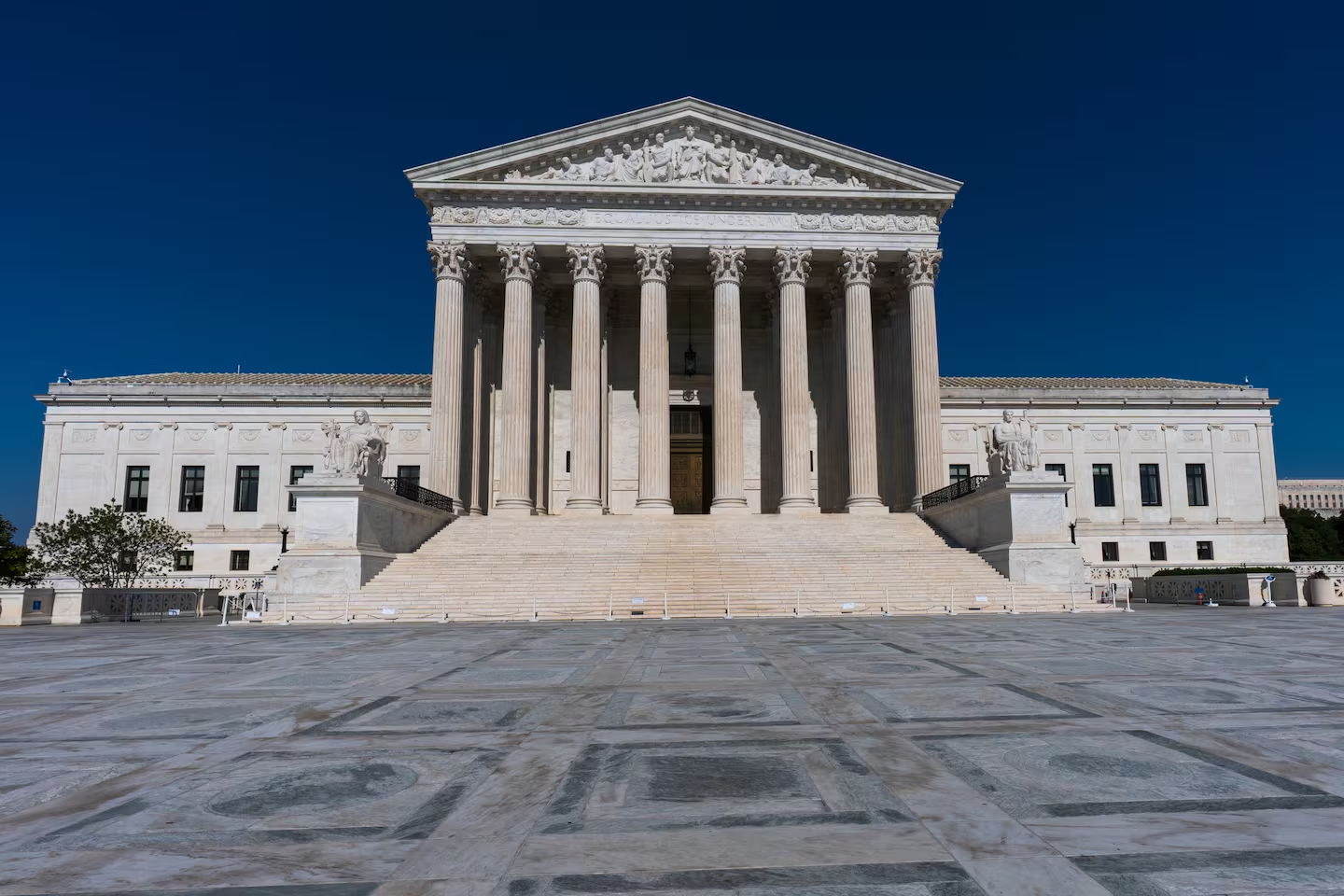
Supreme Court reverses ruling in immigration judges’ free speech lawsuit
WASHINGTON — The Supreme Court on Monday dealt a setback to immigration judges challenging restrictions on their ability to speak out on public policy.
Read more Five races to watch in the Texas runoffs on Tuesday
With the ruling, the justices sided with the Trump administration and reversed a lower-court decision in the case that had allowed the challenge to proceed in federal court.
A group of immigration judges filed suit in 2020 over a government policy limiting their work-related public statements, saying it violated their free speech rights. The National Association of Immigration Judges said such restrictions interfered with their ability to guest lecture at universities and to speak to community groups about matters of public importance, an issue that has taken on greater significance as President Donald Trump has put new pressure on the immigration system.
The judges are part of an administrative court system and make decisions about asylum claims, deportations and other related matters. They are overseen by the Executive Office for Immigration Review, a division of the Justice Department.
The legal issue in the case centers on the proper venue for resolving such employee complaints. Typically, internal government bodies would weigh complaints first, including the Office of Special Counsel and the Merit Systems Protection Board. But Trump fired leaders of both of those offices last year.
In June, a three-judge panel of the 4th U.S. Circuit Court of Appeals said that because it was not clear that those independent bodies are currently able to handle federal employee claims, a district court should reconsider whether immigration judges could instead make their case in federal courts that would otherwise be initially closed to them.
On Monday, the Supreme Court disagreed. The justices’ unsigned ruling was a procedural one and allows the litigation to continue in the lower courts. But the justices said the 4th Circuit had overstepped and essentially decided the case on grounds not raised by either of the parties.
“The court did so without giving either side a chance to address its theory,” they wrote in an five-page opinion. Federal courts are not “roving commissions” licensed to “sally forth each day looking for wrongs to right,” the court said, quoting from earlier opinions.
There were no noted dissents.
Justice Clarence Thomas, joined by Justice Amy Coney Barrett, would have gone further and found that the 4th Circuit was also wrong on the underlying legal merits.
Read more PWHL Players Association discloses salaries for the first time
Todd Blanche, the acting attorney general, praised the court’s ruling and reversal of the 4th Circuit.
“Judges should be judges resolving the case before them, and should never try to seize Congress’s role,” he wrote in a post on the social media platform X. “This opinion sends a clear message: lower courts must accept that the law is the law, no matter the ‘political controversies of the day.’”
The decision comes as the Trump administration has fired immigration judges across the country and put pressure on those remaining to deport more people, according to a recent New York Times investigation.
Before Trump returned to office, a district court judge had initially dismissed the association’s case in 2023, saying the immigration judges were required by law to channel their complaints through an administrative agency process.
But the appeals court had revived the matter, writing that political realities called into question whether the administrative process was “functioning as Congress intended.” The panel said it would not allow its “black robes to insulate [it] from taking notice of items in the public record.”
The Trump administration then filed an emergency request asking the Supreme Court to intervene and review the case. The justices decided the matter without holding oral arguments.
Alex Abdo, litigation director at the Knight First Amendment Institute, who represents the immigration judges, called the Supreme Court’s decision disappointing.
“Public servants shouldn’t have to wade through cumbersome and futile administrative procedures before challenging broad restrictions on their speech,” he said. “Now more than ever we need the insights of public servants into the work of the government.”
Read more Reyna, Berhalter, Zendejas on US World Cup roster, while Luna and Tessmann left off by Pochettino
This article originally appeared in The New York Times.


Post Comment