The myth of the tortured artist comes to a head in ‘Frank’
In our weekly series, One Special Thing, the Globe arts staff highlights something timeless — movies, books, TV shows, albums, paintings, plays, symphonies, dishes — that we return to in good times and bad. Something we’re just dying to tell you about. The only parameter is passion.
Read more Matthew Perry’s family trusted his assistant to help keep him sober. He instead helped him overdose.
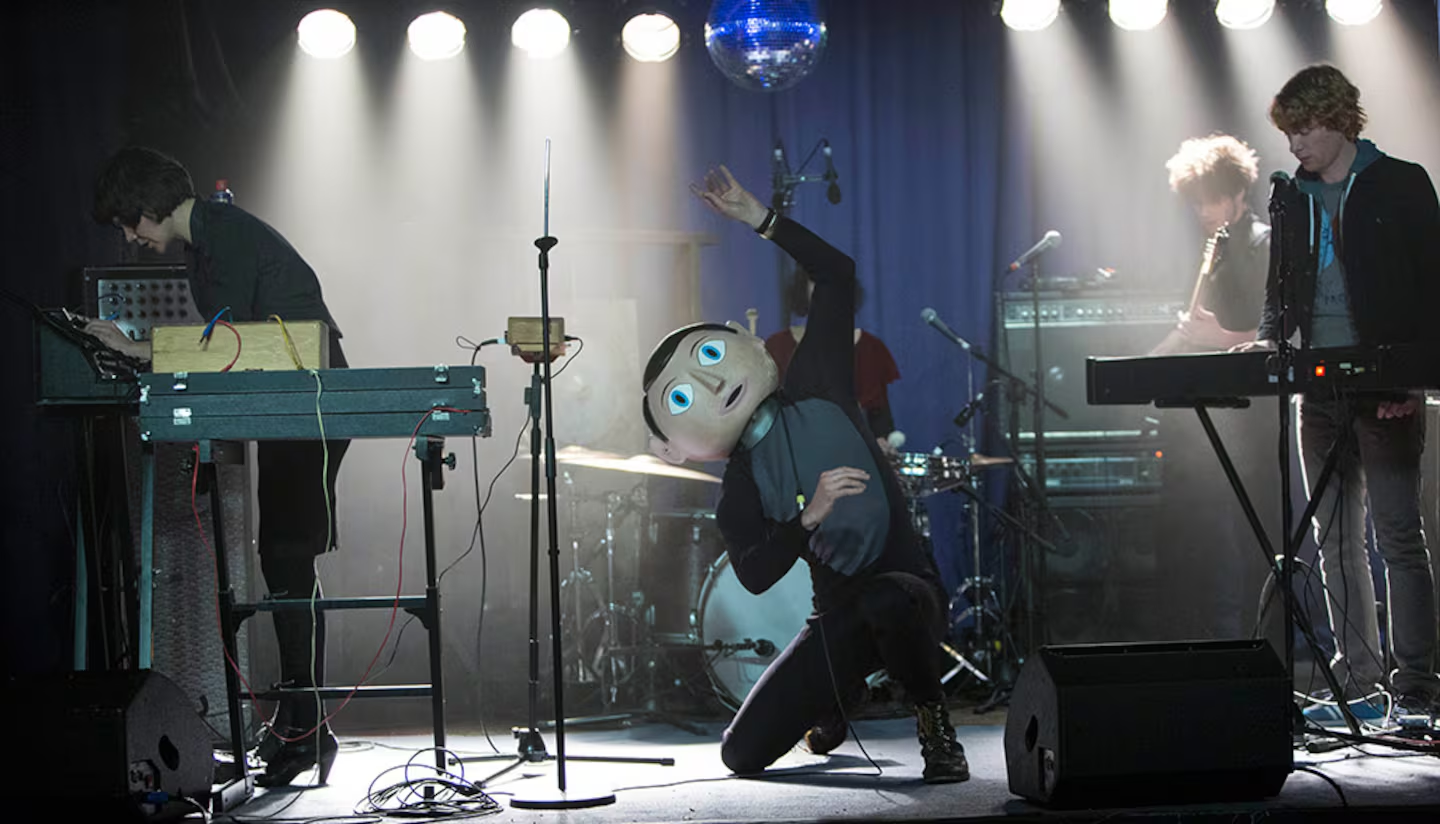
The problem with a movie about a character with a papier-mâché head … is that it’s very difficult to talk about anything other than the character with a papier-mâché head. And in the case of Lenny Abrahamson’s 2014 dark comedy, “Frank,” why would you? Michael Fassbender, who plays the film’s titular musician, is like a full-time mascot in his character’s oversize mask. Frank sleeps in it, showers in it, uses a straw through the mouth hole to eat liquid food in it. Frank would be a horrifying figure if Fassbender didn’t infuse him with such disarming, childlike wonder.
That head — with its blank eyes, shellacked hair, and a gaping mouth that Frank manages to sing through — was destined to be the centerpiece of the film. But it’s also a bit of a red herring. “Frank” is a takedown of the “tortured artist” trope, which is how I interpreted the film when I first saw it as an impressionable 19-year-old, although its legacy is often reduced to “that movie with the kooky guy and the fake head.”
Cue the film’s other main character, the far less interesting Jon (Domhnall Gleeson). He’s also a musician and he’s feeling tortured, all right. In the opening scene, Jon strolls through his hometown, searching for inspiration in the quaint surroundings. He churns out dud after dud — “Lady in the red coat/ Whatcha doin’ with that BAG?” is a choice lyrical lemon. When he does manage to cobble together a decent melody, he realizes he’s ripping off a tune by the English ska band Madness and folds in frustration. (On the soundtrack, a compilation of these clunkers is called “Jon’s Crap Songs.”)
But Jon’s luck turns around as someone else’s plummets. On another stroll, shortly thereafter, he passes a man attempting to drown himself. As paramedics fish him from the water, a group of eccentrics watches from the shore. They’re a (deliberately unpronounceable) band called The Soronprfbs, who are now short a keyboard player for their show tonight.
Well, shucks, Jon plays the keyboard, he mentions, and suddenly he’s thrust into a bar gig with no setlist, no rehearsal, and no context. The show ends early due to technical difficulties, but the band’s desperate enough for a keyboard player that their manager, Don (Scoot McNairy), immediately invites Jon to join them for a “major thing” in Ireland — and Jon is desperate enough for a big break that he agrees.
That “major thing” is holing up in a cabin to write and record a new album, a project that will ultimately take 11 months. In close quarters, Jon struggles to connect with his new bandmates, who are clearly more adept musicians. Drummer Nana (Carla Azar) barely speaks, and guitarist Baraque (François Civil) speaks almost exclusively in French. He receives constant ire from Clara (Maggie Gyllenhaal), the band’s prickly synth and theremin player who gets a thrill from demeaning Jon.
“You are fingers being told which keys to push, 10 little bits of bone and skin” she tells him in private one evening. Translation: You couldn’t write a good song to save your life.
For Jon, Frank is the only friendly figure in the band, as well as an endless source of awe. Off the cuff, Frank can write songs — great songs — using even more mundane inspiration than Jon ever found in his hometown: a creaky door, a tuft in the carpet, the sound of using a toothbrush.
Desperate to know the secret to the group’s creativity, Jon begins analyzing patterns in his bandmates’ backstories like a man putting together an evidence board. Don, who was also the band’s original keyboardist, previously spent time in a mental hospital after pursuing romantic relationships with mannequins. The second keyboard player was obviously troubled, considering that he attempted to drown himself. Frank grew up in Bluff City, Kansas, which Jon assumes is a grim place that must have torpedoed his psyche. And everyone else in the band must also be off their rocker — why are they so standoffish otherwise?
Read more 80 fun concerts, festivals, shows, and more to check out around Boston this summer
Over the course of those 11 months, Jon concludes that artistic genius is the product of intense misery, which — rats! — he’s managed to sidestep his entire boring life. He latches on to this notion like a life raft for his creative aspirations: “I’ve come to realize that this is my Bluff, Kansas,” he thinks, “that here … I have found my abusive childhood, my mental hospital, that which pushes me to my furthest corners.”
Except the band ultimately uses none of Jon’s compositions for the album, even though he ponied up a portion of his nest egg to maintain the cabin rental. He does manage to make one contribution to the group’s trajectory. Jon’s been posting videos of The Soronprfbs online without their knowledge, and the invasion of privacy has racked up enough views to earn them a performance at South By Southwest.
Frank is thrilled by the idea of reaching a wider audience; the rest of the band reluctantly agrees to the gig. A disgruntled Clara warns Jon that she’ll stab him if he “[messes] everything up in America.” Which is exactly what he does.
The film’s climax is the band’s unraveling in Texas. When Frank flees the scene and loses his head in a car accident, Jon tracks him down in — where else? — Bluff City, Kansas. He blanches at what he sees: quaint homes, nice landscaping, friendly neighbors.
The now-maskless Frank isn’t particularly interested in talking to Jon, so he sits down with Frank’s parents instead. He asks them what happened to Frank to “make him like that,” prodding about the “torment” Frank must have endured to make him such a capable musician.
“Nothing ‘happened to’ him,” says Frank’s father. “He’s got a mental illness.”
His mother chimes in: “The ‘torment’ didn’t make the music. He was always musical. If anything, it slowed him down.”
There is no abusive childhood in Bluff City, no mental hospital. There’s only a home just like Jon’s.
And Jon’s music still stinks.
In an act of penance, Jon reunites Frank with the rest of The Soronprfbs at a bar, where his bandmates are performing to an empty dancefloor. They wordlessly rekindle their prior chemistry — Frank starts ad-libbing lyrics about the grimy dive, and the rhythm section matches his melody. Overcome with emotion, Clara stumbles to her synthesizer to join in.
The last shot shows Jon leaving the bar, walking away from the camera, facial expression hidden. Left out once again, he’s probably miserable.
Read more The best local book events this week
At least now he knows he doesn’t have to be.



Post Comment