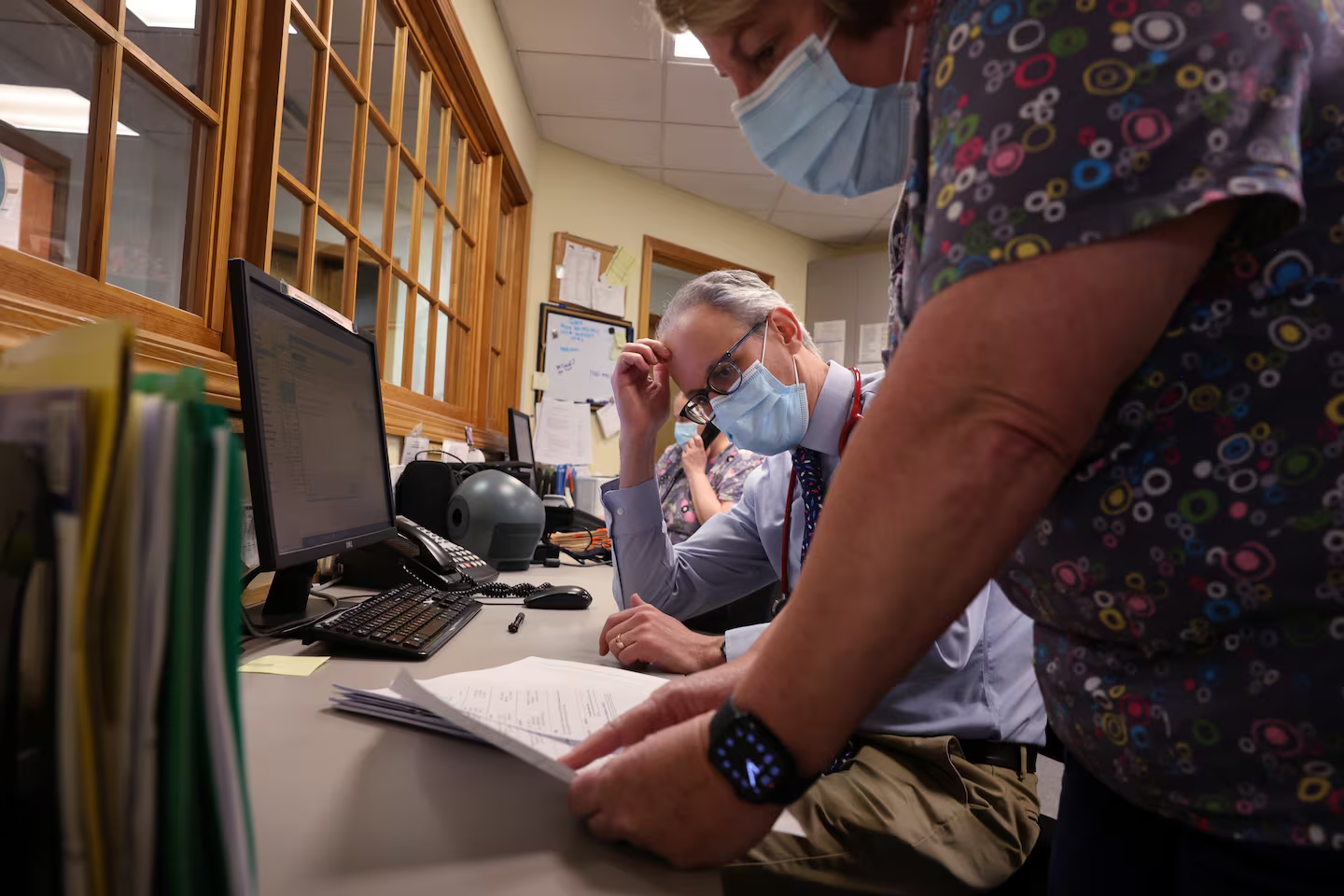
Mass. pediatricians saw uptick in mental health concerns, especially anxiety, study shows
Massachusetts families increasingly sought mental health care, especially for anxiety, during visits with their pediatricians, according to a new studythat reviewed a decade’s worth of insurance claims data.
Read more India calls US ‘reliable’ energy partner as it seeks more fuel
Researchers found that 9.7 percent of the state’s pediatric visits included a mental health diagnosis in the first quarter of 2023, up from 5.9 percent in the same period in 2014.
Visits for anxiety grew more than any other prominent mental health diagnosis. They accounted for 6.1 percent of pediatric visits in 2023, up from 1.7 percent in 2014.
Study authors were particularly struck by the extent to which mental health concerns were raised at primary care visits.
“[It’s] both surprising and consequential, in part because primary care is a setting that could very well address mental health issues, but where there isn’t always sufficient provider training or staffing to adequately address these needs,” said report author Megan Cole Brahim, an associate professor in the Department of Population Medicine at Harvard Medical School.
The study, which included insurance claims for more than 1.8 million children and adolescents in Massachusetts, was published May 18 by local researchers in the journal JAMA Open Network.
Screening for anxiety and other mental health conditions has increased in primary care settings in the last decade as national recommendations have shifted, which could affect the data, Brahim said.
“Some of the increases we see may be due to the fact that primary care clinicians are now better equipped to identify mental health needs in kids that were otherwise always there,” Brahim said. “But this is unlikely to explain the magnitude of the increase we see.”
Sarah Tannenbaum, senior director of outpatient clinical services at the Baker Center for Children and Families in Boston, said the study results reflect the trends she’s seen over the last decade. Children are increasingly aware of stressors in the world: political strife, economic pressure, war.
“They look to the grownups in their life, or they look to older kids in their life, and when they’re getting more stress signals, it makes a lot of sense that that starts to manifest as anxiety,” said Tannenbaum, who was not involved in the study.
Anxiety is often “a canary in the coal mine” that shows up before other mental health symptoms in kids, Tannenbaum said. It can be a precursor for other conditions, such as depression.
The study found other diagnoses increased between 2014 and 2023, although less dramatically than anxiety.
Read more Trump touts imminent Iran deal that would reopen Hormuz Strait
The share of all visits that related to Attention-Deficit/Hyperactivity Disorder, the most common mental health diagnosis noted among children, increased to 6.7 percent from 5 percent. For depression, that share grew to 1.6 percent from 1.2 percent. Meanwhile, trauma and stressor-related disorders were addressed in 1.6 percent of visits, up from 0.8 percent. The portion of visits that were for autism spectrum disorder increased to 2 percent from 0.5 percent.
These results are perhaps unsurprising, given the ongoing mental health crisis among US children that experts say was exacerbated by the pandemic and the pervasive rise of social media. At the same time, awareness of mental health needs has never been higher, Tannenbaum said.
“One of the upsides of COVID and social media is that there’s been a move toward destigmatizing talking about mental health and accessing mental health treatment,” Tannenbaum said.
Obtaining mental health treatment for children can be difficult, if not impossible. Massachusetts has a shortage of mental health care providers, and not all mental health visits are covered by insurance. Children increasingly receive mental health services through their pediatrician or school, although Massachusetts schools have fewer school psychologists than the ratio recommended by the National Association of School Psychologists.
In 2022, Massachusetts launched a pilot program to support free mental health clinics inside 23 public schools. The program, run by the Massachusetts Association for Mental Health, supplemented staff and offered free therapy sessions for students. Grant funding for the program is set to end in June, but program organizers are in the process of securing additional foundation backing.
Post-pandemic financial woes have limited mental health care access in schools, where children spend most of their time, Tannenbaum said.
Study authors said the results suggest the need for additional training and capacity to catch and treat mental health conditions in primary care offices. Integrating mental health providers into primary care teams is one way to do that, Brahim said.
“The ability to access mental health services within the walls of pediatric primary care could especially benefit lower-income or publicly insured children, who often face heightened barriers to accessing mental health services,” Brahim said.
As for patients with more emergent mental health needs, the state is working to reduce the number of pediatric patients sitting in emergency departments while waiting for psychiatric beds.
In 2023, 44 percent of children who visited the emergency room for behavioral health reasons waited more than 24 hours for a psychiatric bed. That rate dropped to 30 percent in 2024, according Massachusetts Health Policy Commission data.
Boston Children’s Hospital announced in December plans to open a new $640 million pediatric psychiatric hospital in Brighton, doubling Children’s inpatient hospital capacity. The 116-bed building is expected to open by 2029.
Read more Scott McLaughlin, Team Penske head into Indianapolis 500 looking to rewrite the 2025 script





Post Comment