Employers face another unemployment tax rate hike as Healey slow-walks a financial fix
This column is from Trendlines, my business newsletter that covers the forces shaping the economy in Boston and beyond. If you’d like to receive it via email on Mondays and Thursdays, sign up here.
Read more Game 108: Red Sox at Athletics lineups and notes
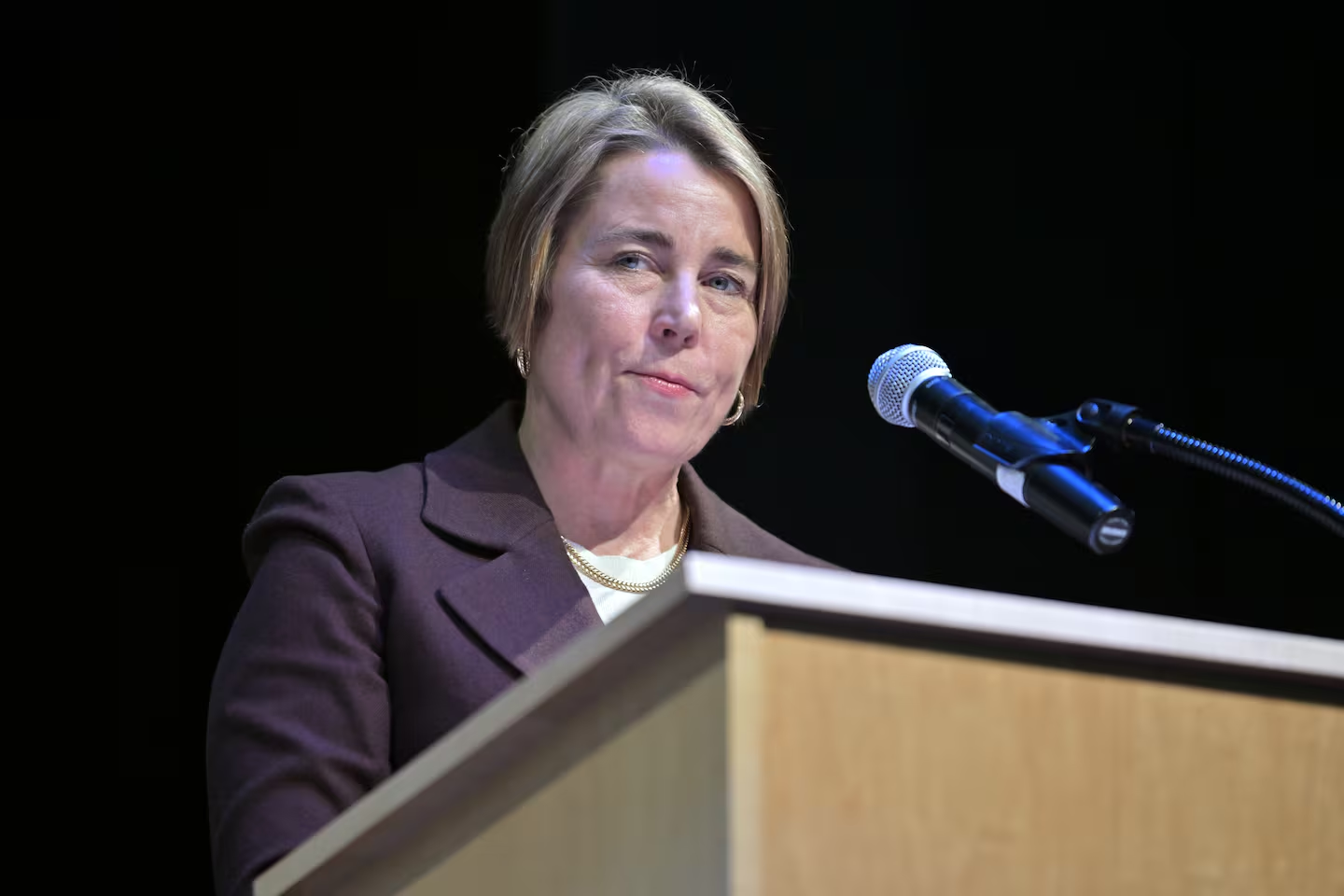
It was January 2025, and Governor Maura Healey had just hit employers with bad news: they were on the hook for $2 billion to resolve a jobless claims blunder made by the previous administration.
To soften the blow, she vowed to work with business leaders on proposals to overhaul the state’s financially shaky unemployment insurance system. Massachusetts employers often cite high unemployment taxes — which fund some of the nation’s most generous benefits — as an obstacle to job creation.
At the time, I cautioned that meaningful change was unlikely because there was scant consensus among employers, labor, and lawmakers on how to fix the safety-net program even though all sides agreed it was broken.
And sure enough, 18 months later, with the threat of AI job losses looming, the governor has put no reforms on the table and employers face yet another tax increase triggered by declining unemployment trust fund reserves.
“There have been off-the-record meetings with interested parties in attendance. . . but to date no recommendations, no report,” Jon Hurst, chief executive of the Retailers Association of Massachusetts, told me in an email.
Why it matters: Now is the time to bolster the unemployment system’s finances — while unemployment is low by historical standards and potential AI-related layoffs are in the future.
Local employers pay higher unemployment tax rates than their counterparts in most other states, but they’re still not enough to cover benefits. It’s a structural deficit — $970 million last year alone — that Healey, like Charlie Baker before her, seems in no rush to close.
Asked about the lack of progress on reform, a spokesperson for the Executive Office of Labor and Workforce Development said the administration “continues to engage key stakeholders while it works to identify long-term solutions focused on the stability of the [unemployment] trust fund and the system as a whole.”
The big picture: Most economists don’t expect AI to cause widespread unemployment, but some jobs are more vulnerable than others.
These include relatively high-paying fields such as software development, accounting, finance, and law — all big sectors in the state.
Since weekly benefits are pegged to a laid-off worker’s income, an increase in job cuts among higher-paid workers would drain the unemployment trust fund more quickly. So would longer stretches of unemployment, which might be the case if AI permanently disrupts specific occupations.
Read more US economy grows a sluggish 1.5% second-quarter with inflation remaining stubbornly high
The state projects the will drop into the red by the end of 2028. But that estimate assumes a relatively stable unemployment rate; that is, no recession or AI Armageddon.
Rewind: During the crush of COVID layoffs, the state inadvertently tapped $2.5 billion in federal money to pay jobless claims that should have been covered by the unemployment trust fund.
After negotiating with the feds to lower the amount owed, Healey said the trust fund would have to repay about $200 million a year for 10 years.
Employers were livid. They don’t want to put more money into the system until the state lowers unemployment benefits to be more in line with other states and makes it harder for people with erratic work histories to qualify.
The governor knew she had to offer the prospect of relief.
“This presents an opportunity for us to come together and have those conversations about what needs to happen with [unemployment] going forward,” Healey said after the repayment deal with the federal government was announced.
Employers were skeptical; Beacon Hill had repeatedly broken promises to fix unemployment. Today, they are angry.
“Very disappointed to see no action taken yet,” Christopher Carlozzi, Massachusetts director of the National Federation of Independent Business, said in an email.
Final thought: The state has improved unemployment operations.
The Department of Unemployment Assistance, which handles claims, rolled out a new online benefits system, cut telephone wait times, and reduced incidents of fraud. However, it still struggles to process claims within the 21-day window the US Department of Labor considers timely.
But the politics of unemployment benefits reform are difficult. Reducing payments and eligibility — the two obvious places to start — will never be popular among voters, even if the trust fund is running out of money.
Beacon Hill has kicked the can down the road for years. It’s going to take a fiscal crisis to spur an overhaul.
Read more As deadline nears, Red Sox postseason ambitions hinge on adding offense




Post Comment