If NCAA’s proposed eligibility rule passes, college hockey could be among the sports hardest hit
It can be tough to build consensus on just about anything these days, but when it comes to the NCAA’s proposed “5-in-5” rule, the hockey community, from junior programs up to the NHL, appears to be unified: It would be bad for the sport.
The rule would permit five years of eligibility beginning the academic year after athletes turn 19 or graduate from high school.
It’s a proposal that seems to be in direct response to the strange goings-on in college football and basketball. Just this week, Yam Madar, 25 and a second-round pick of the Celtics in 2020, and RJ Luis Jr., 23, who was briefly on the Celtics’ G League team, committed to play basketball at LSU, according to multiple reports.
But the rule would have a negative impact on hockey, which has been allowed to use delayed enrollments as most players compete in juniors after finishing high school before heading to college, some for as many as three years.
Players may still elect to do that, but they would lose years of eligibility, depending on when they finally do enroll. Others might eschew juniors in order to get the full eligibility, and proceed to the college game, ready or not.
The rule was understandably a hot topic at the American Hockey Coaches Association convention in Bonita Springs, Fla., three weeks ago. The overwhelming sentiment from the coaches, assistant coaches, and conference commissioners? Angst.
“Simply put, it would be significantly detrimental to something that’s working, and working well,” one attendee told the Globe. They pointed to, among other things, the sport’s 93 percent graduation rate, which, according to the most recent report from the NCAA ranks in the top five of all sports. In Division 1, 38 men’s programs, nearly two-thirds of the teams included in the report, .
For many coaches and administrators, the game has never been better. Six programs — Western Michigan, Quinnipiac, UMass, Providence, Union, and Yale — have, since 2013, captured their first national championships. But they fear that if the rule is put in place, it could widen the gap between the top programs and the rest of the field.
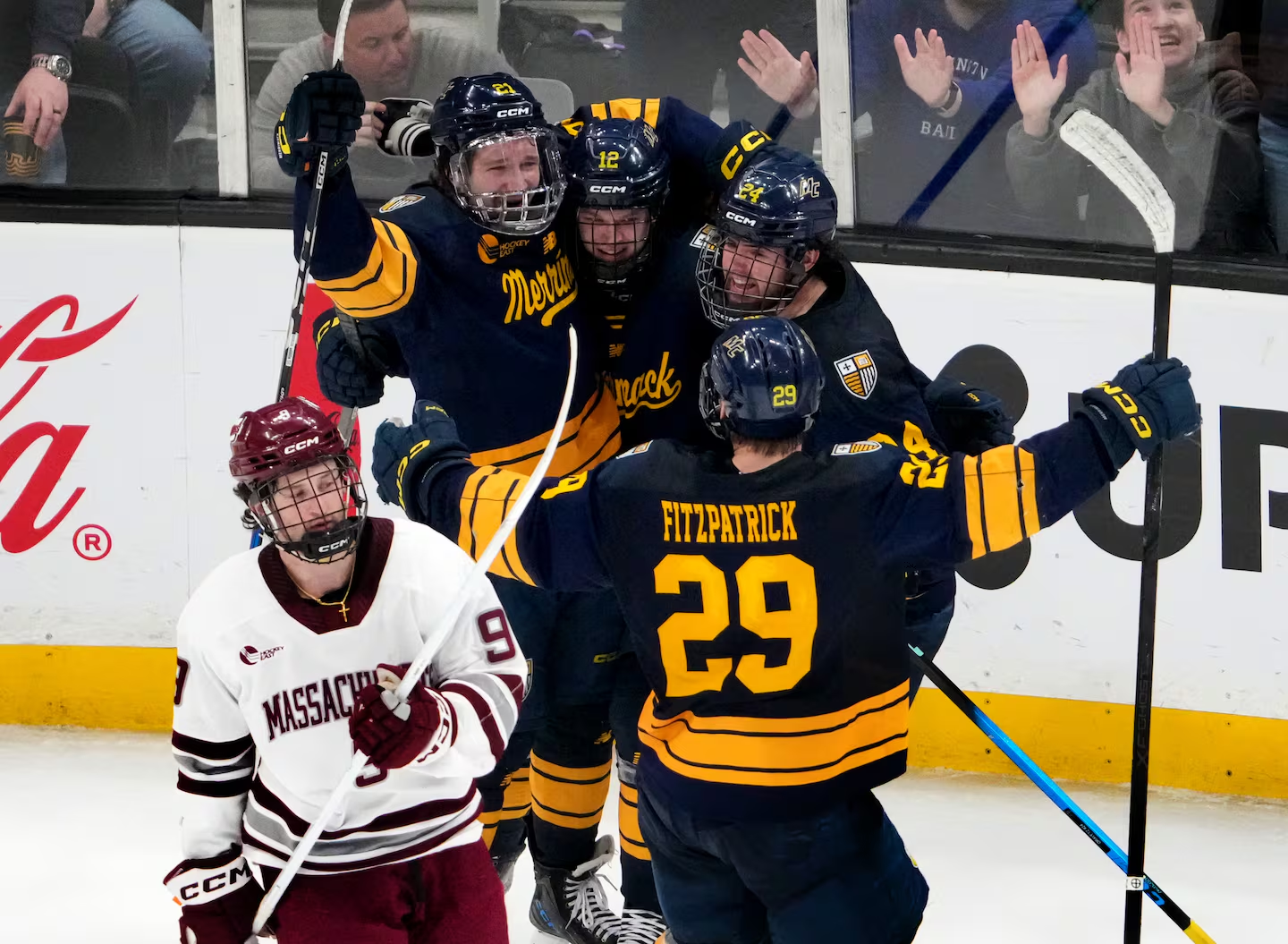
While blue bloods such as Boston University and Boston College draw some of the top 18-year-olds on their path to the NHL, other programs have relied on older players. Merrimack, which broke through to capture its first Hockey East tournament championship in March, had on its roster a 21-year-old sophomore, as well as a pair of freshmen that turned 22 and 23 midway through the season.
Read more Nine Red Sox thoughts, leading off with Roman Anthony being asked to be great a little too soon
It’s part of the reason why the NHL would also prefer to keep the status quo. Organizations know their young prospects taking the college route will be battle-tested going up against older players, while honing their skills and getting ready for the next level.
But that’s not to say traditional hockey powers would not be affected, as well. Consider the case of 2009 Hobey Baker Award winner Matt Gilroy. The North Bellmore, N.Y., native was 21 when he arrived on BU’s campus in the fall of 2005 and introduced himself to coach Jack Parker. He made the hockey team as a walk-on as a freshman and eventually earned a scholarship and started receiving NHL offers after his sophomore season.
But Gilroy stayed with the Terriers and was named captain his senior year, helping to lead the program to its fifth national championship and earning a business degree. He went on to play professionally in the NHL and Russia, and skated for Team USA at the 2018 Olympics in PyeongChang.
Now an assistant coach at Harvard, Gilroy shared that journey on a visit to the Boys & Girls Club in Charlestown this week with his wife, Fox Sports reporter Jenny Taft. The couple participated in a Q&A session as part of a Soccer Forward Fest ahead of the FIFA World Cup, for which Taft will be embedded with the US men’s team.
Gilroy’s message to the kids was that hard work and perseverance pays off. After the event, he talked about what the passing of the rule would mean.
“With all the new rules, there’s so many unknowns,” said Gilroy. “I had the unique opportunity of aging out of junior hockey. That story is probably never going to be told again. There’ll never be another Matt Gilroy. There’ll be different stories or great stories, but my unique story that I was able to get a chance as I got older, matured more, is probably not going to happen anymore, so it’s kind of sad to see that go.”
But it’s not a done deal. The NCAA is set to begin meeting on the proposal Friday, with a vote possible in June.
“It’s hard to say what’s going to happen,” said a source in college hockey leadership. “Are they going to listen to the hockey community and make an adjustment or an exception. Might they pivot a little bit for everyone? We’ll have to wait and see.”
Read more Who leads the latest version of Boston’s men’s pro sports head coach power rankings?





Post Comment