Governor Healey urged to push for ban of Native American sport mascots in Massachusetts schools
A state committee is urging Governor Maura Healey to take executive action to ban Native American sport mascots in Massachusetts public schools, according to a letter sent earlier this month.
Read more Connecticut Sun trade forward Aneesah Morrow to the Toronto Tempo
The Steering Committee of the Massachusetts Mascot Coalition wrote to Healey July 23 in support of a senate mascot bill, which “has been stuck in the ways and means committee for multiple years now,” the letter said.
The bill would prohibit the use of Native American mascots by public schools across Massachusetts.
Healey’s office did not immediately respond to a request for comment Friday night.
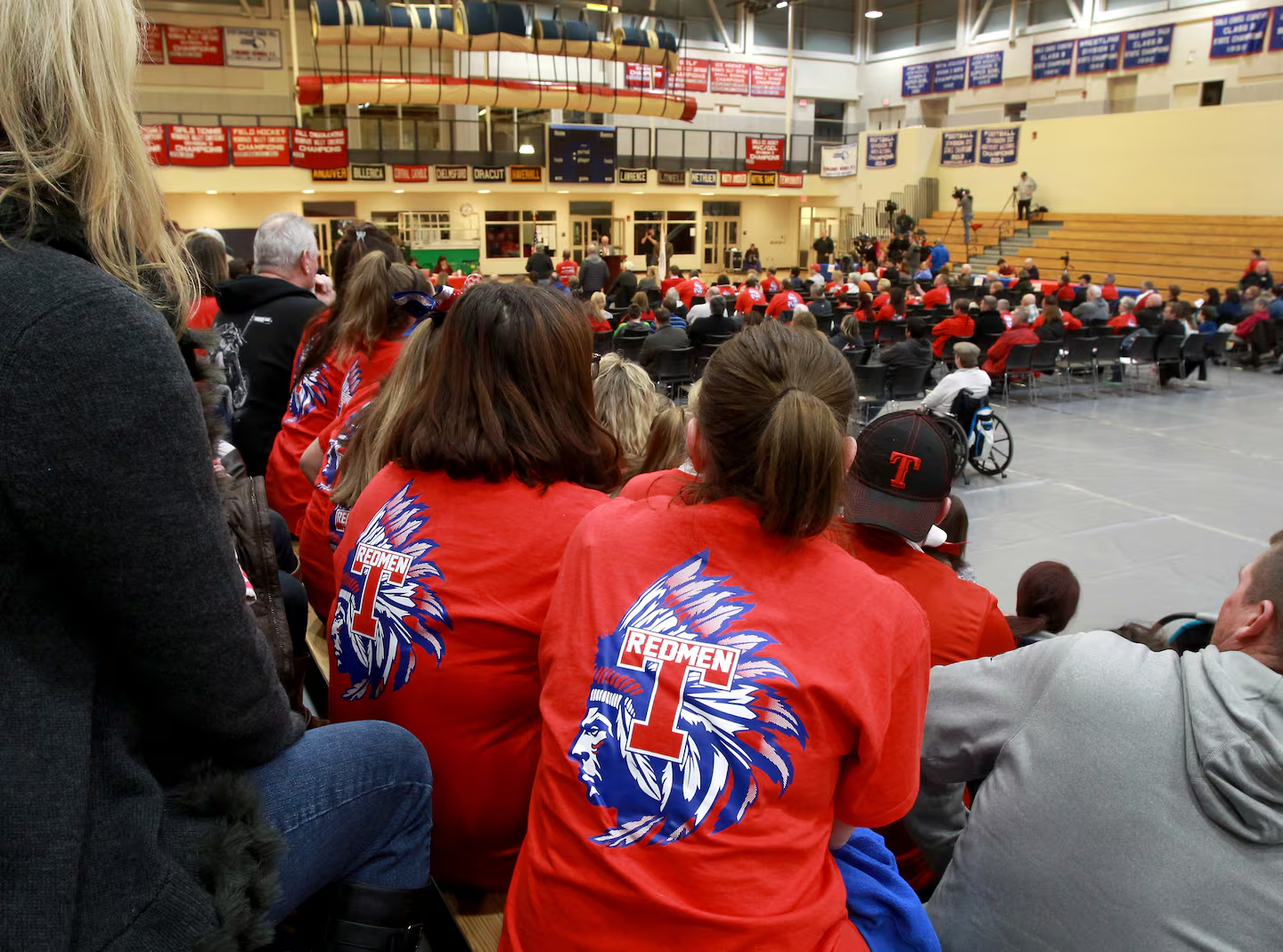
For years, some local school districts have grappled with whether or not to keep their longtime Native American logos. In 2016, for example, Tewksbury school officials voted to keep its Redmen mascot, the Globe reported. In 2020, Barnstable and Hanover high schools, for example, dropped their respective nicknames of the Red Raiders and Indians, the Globe reported.
Just a year later, however, Wakefield residents voted to keep their Warrior logo/nickname in a referendum that divided the town north of Boston.
In its letter, the steering committee noted the harm and offense caused by Native American imagery, such as in high school sports.
“Academic research reveals that Native mascots are educationally harmful,” the letter said. “This research reveals that Native American mascots create a hostile climate for Native American students, and increase bias among non-Native people.”
According to the letter, there are an estimated 25 communities in the state, each with a very low percentage of Native American residents, who continue to use Native American mascots.
These communities have “not listened to requests” from tribes throughout the state and from the National Congress of American Indians asking that they desist.
The NCAI has been working for more than 60 years to put an end to the use of Native American mascots, the letter said.
The eight Massachusetts tribes that support the mascot bill are:
● Chappaquiddick Tribe of the Wampanoag Nation
● Chaubunagungamaug Nipmuc Band
● Hassanamisco Nipmuc Band
● Herring Pond Wampanoag Tribe
● Mashpee Wampanoag Tribe
● Massachusett Tribe at Ponkapoag
● Pocasset Wampanoag Tribe
● Wampanoag Tribe at Gay Head (Aquinnah)
“It is ironic that supporters of Native mascots claim they honor Native Americans, and yet do not honor Native American tribal requests for the elimination of these mascots,” the steering committee’s letter said.
Read more Senior FIFA executive says staff were deceived over Gianni Infantino’s World Cup sell-off plan
Among the steering committees members are representatives of six Massachusetts tribes, some of whom said they have have chosen not to live in New England communities with Native mascots.
They also said they felt “mocked, stereotyped, objectified, and dehumanized,” and powerless to “stop non-Native people from using their cultures and identities for their own purposes,” the letter said.
When Native American students are exposed to these mascots, it “decreases self-esteem, capacity to imagine future achievements, and faith that their Native communities can make a difference,” the letter said.
The mascots also increases negative feelings among Native American students, including distress, depression and hostility while simultaneously increasing negative stereotyping of Native Americans, the letter said.
At one school that has a Native mascot, researchers found that Native American students tended to avoid athletic events, the letter said.
A large number of state educational organizations, including the Massachusetts Teachers Association and Massachusetts Center for Native American Awareness also support the elimination of Native American mascots, the letter said.
Nationally, the mascot bill has found support from the National Education Association, Indigenous Journalists Association, and the U.S. Commission on Civil Rights, among others.
The letter laid out a range of reasons why the issue of Native American mascots should be handled at the state level rather than the local level.
The primary reason, the letter said, is that there is an unwillingness to make such changes at the local level where non-Native people predominate in the decision making, and face backlash from the public if they speak out.
“Eliminating Native American mascots in Massachusetts public schools is imperative to ensure diversity, civil rights, human rights, racial justice, and quality education,” the steering committee’s letter said. “Thank you for your support of civil rights and racial justice.”
Read more Justice Department drops criminal case against ex-Olympian charged with damaging Reflecting Pool


Post Comment