Rivers rounds up business leaders to support housing ballot push
In this edition: Healey celebrates upgrade to Springfield arena, AIM talks tariffs redux, and what’s Panera’s hometown anyway?
Jon here. We’re missing Shirley for the next week or so while she takes some well-earned time off. Rent control and the income tax cut are off the table now, but today I dive into another ballot question that has the business community’s attention.
If someone has been sending you this newsletter, it’s time to get your own copy. Sign up at globe.com/powerplay.
Featuring: Andrew Mikula, Brooke Thomson, Adam Chapdelaine, Paul Carbone, John Barros, Bob Rivers, Lee Kennedy, Peter Picknelly, Domenic Sarno, Alan Leventhal, Jason Robins, Ron Shaich, and more.
Bob Rivers has rallied business leaders to support any number of causes in recent years: transgender rights, early childcare, Boston’s 250th celebrations, to name a few.
Now, the Eastern Bank executive chair has turned his focus to a new one: getting tens of thousands of starter homes built in the state, to help relieve our housing crisis.
Rivers summoned leaders from major business groups to a downtown lunch on Wednesday, asking for political and financial support for a ballot question slated for November that would require most communities to allow single-family homes on lots as small as basketball courts.
Those in the room had probably hoped for a break from ballot questions for the summer. After all, the state Supreme Judicial Court had rejected one question that would have trimmed the income tax rate and another that would have instituted statewide rent control; the business community was mixed on the former and roundly opposed to the latter.
Rivers believes everyone dodged a bullet with the court’s blocking of rent control; he thinks this would have led to less housing getting built, exacerbating the crisis. Finding and keeping employees who can afford to live here remains a top problem for members of the groups around the table on Wednesday. Rivers wants them to get behind a viable proposal that could help.
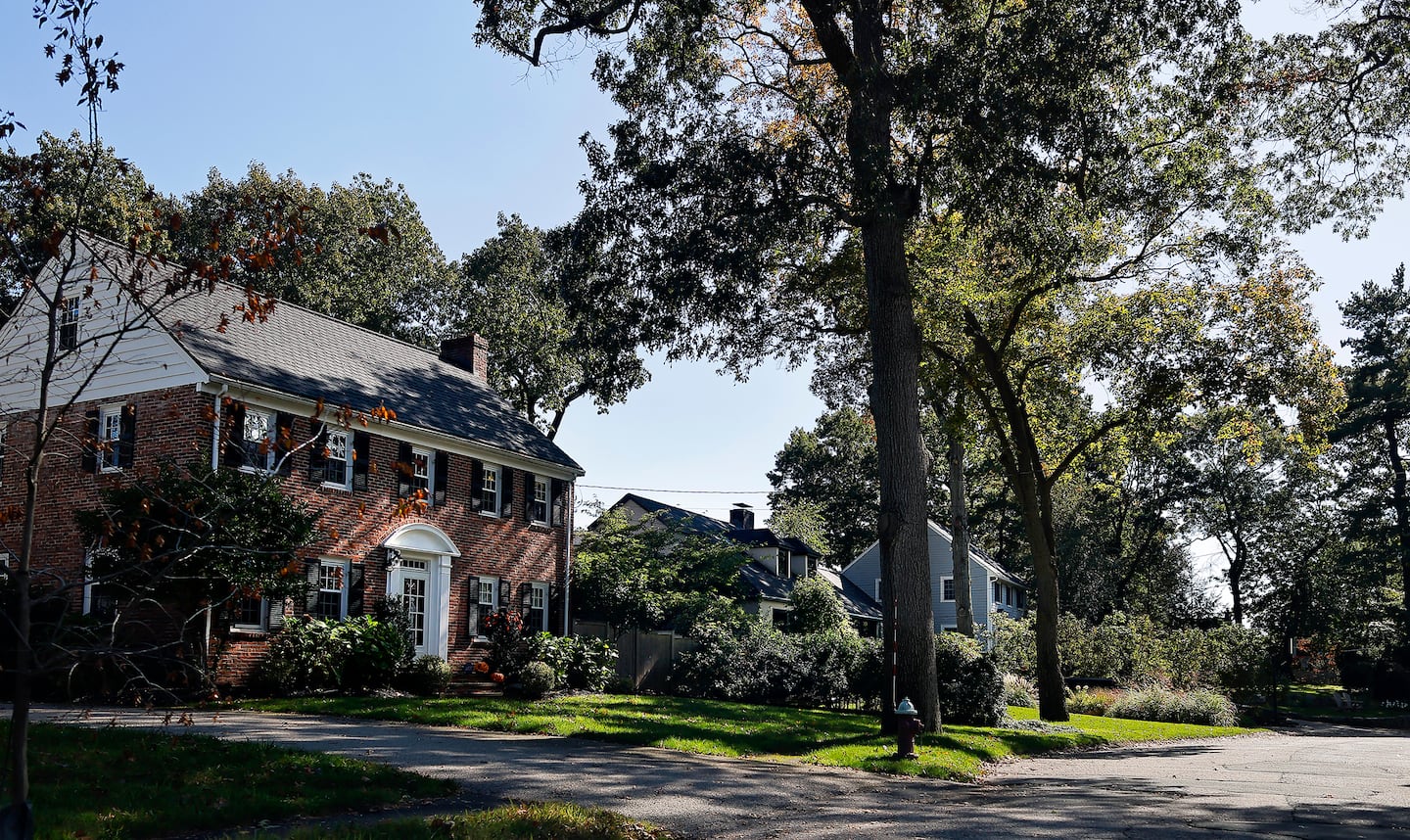
Enter Andrew Mikula, a housing economist at the Pioneer Institute. He’s been obsessing about housing and planning issues since graduating from Bates in 2019. Last year, Mikula crafted a seemingly simple fix: a proposed law that, if approved, would allow single-family homes on lots as small as 5,000 square feet — smaller than an eighth of an acre — if the parcels are in a residential zone with water and sewer service. It’s a way of opening up land in towns with relatively restrictive zoning; many places require lot sizes of a half-acre or more.
Mikula estimates 2,000 to 6,000 homes would get built each year on these smaller lots, depending on market conditions. It’s a significant number, though the Healey administration’s target for new home construction is more like 20,000-plus each year.
To make it to the statewide ballot, Mikula needed tens of thousands of signatures. Translation: He needed hundreds of thousands of dollars to pay signature collectors.
Mikula’s campaign received donations from several major real estate groups, including the Massachusetts Association of Realtors and the Greater Boston Real Estate Board, as well as firms such as Marcus Partners, Redgate, and National Development. Eastern Bank kicked in, too. Individual donors included Beacon Capital founder Alan Leventhal and Harvard economist Ed Glaeser.
As of Dec. 31, Mikula’s campaign raised $1.3 million. The number, he says, is up to $1.7 million now, with another $400,000 so far this year. But to run a solid TV ad campaign, he needs an additional $3 million to $5 million.
Fortunately for him, no opposition campaign has emerged, or is likely to appear at this late date.
The most prominent criticism comes from the Massachusetts Municipal Association, which represents cities and towns. Executive director Adam Chapdelaine has been vocal about the concerns: It could erode local control, there’s no guarantee these homes will be affordable, and water and sewer services may get overtaxed. But Chapdelaine says the MMA has no plan to mount a formal campaign against the measure. It’s costly, and the MMA tries not to get involved in political campaigns, anyway.
That should lessen the pressure to raise millions, though supporters still need to persuade voters. Thus, the fund-raising push.
Rivers says attendance Wednesday was better than he expected, particularly during the dead of summer: He moved the lunch from Eastern’s boardroom to a conference room at One Federal Street, a few blocks away, to fit the 30 or so attendees. (Among those on hand: JD Chesloff of the Mass. Business Roundtable, Jim Rooney from the Greater Boston Chamber, Brad Papalardo at the Mass. Bankers Association, and AIM’s Brooke Thomson and Stephanie Swanson.)
The lack of affordable housing isn’t just a problem for these business groups. Riverssays it’s theirnumber one problem.
It’s such a big issue, it will take more than one or two policy changes to fix it. The Legislature passed a few this year already; others, such as a measure allowing duplexes in single-family zones, are still up for debate.
Rivers’sparents bought a starter home in Stoughton nearly six decades ago, a common occurrence back then. Few small single-family homes get built around here today; land availability and zoning are huge obstacles. That could change if Rivers and his team succeed in helping shake some trees and get out the vote.
No take from Shirley today, as she’s traveling. But what’s your take? Join the conversation in the comments here.
HEARD AROUND TOWN
UPGRADES AT LAST FOR SPRINGFIELD ARENA
Governor Maura Healey trekked to Springfield today to announce some long-awaited upgrades to the MassMutual Center, home of the Thunderbirds minor league hockey team. Some $93 million in renovations are planned at the Massachusetts Convention Center Authority-owned complex, the largest such investment in its history, with improvements to everything from scoreboards to concession stands. The timing is curious though: Healey’s trip comes a day after MCCA head John Barros announced he would divest his investment in a partnership that just won a bid to build a new state courthouse nearby; the divestment follows a lawsuit from two losing bidders accusing state officials of giving the Barros team favorable treatment. Mayor Domenic Sarno was upset because the Healey administration picked an out-of-town development team — Sarno preferred yet another bid, from local businessman Peter Picknelly — but apparently that didn’t prevent him from joining the governor at her big event.
KENNEDY GETS IN NANTUCKET SCUFFLE
Next time you see a group of protesters that you disagree with, maybe consider just crossing the street or letting them march on by. That might be the takeaway for Lee M. Kennedy, the Quincy-based construction magnate who found himself in trouble with Nantucket police, who charged him with assault and disorderly conduct after a disturbance at an anti-ICE protest that left one woman on the ground. The march in question was organized by Indivisible Nantucket, a progressive activist group with ties to the Indivisible Mass Coalition; Kennedy, chief executive of Lee Kennedy Co., is due to be arraigned in September. A spokesperson for Kennedy says he didn’t shove anyone, and he’s confident that when the facts come out, the truth will be clear.
AIM IS STILL NO FAN OF TARIFFS
Who likes tariffs these days? Not Massachusetts manufacturers, judging from what their most prominent advocate has to say about them. Brooke Thomson, chief executive at Associated Industries of Massachusetts, sent a message to members this week lamenting President Trump’s latest levies on US trading partners, announced a few days earlier. One set of tariffs expired, so Trump turned to a new mechanism, one that involves citing unfair labor practices within the exporting countries, and imposing levies of either 10 or 12.5 percent. Trump argues that this can help rebuild US manufacturing or at least get better deals with other countries. AIM disagrees.
“The tariffs were a bad idea last April,” Thomson wrote, referring to the controversial “Liberation Day” tariffs in spring 2025, “and remain a bad idea today.” AIM members say the uncertainty surrounding tariff policies has made long-term planning “virtually impossible” while taking some overseas markets completely off the table.
SPORTS BETTING BY ANOTHER NAME?
Prediction market operators Polymarket and Kalshi have faced legal questions over whether they are technically gambling and should be regulated at the state level, or treated as trading, which is regulated by a federal agency. Now, rival DraftKings faces litigation over the same issue. The Boston-based sports gambling business has rolled out prediction-market technology in states that don’t allow sports betting, like California.
On Tuesday, a gambler there sued DraftKings, basically accusing it of going around its own safeguards for the sportsbook business. In their suit, the plaintiff’s lawyers repeatedly cite chief executive Jason Robins’s remarks in earnings calls, boasting that predictions contracts and sports bets are so similar, customers can’t even tell the difference. The company’s riposte? A spokesperson says its prediction markets operate under all applicable laws, including the regulatory framework for commodities trading, and it is confident in its legal position.
DOUBLE TAKE
The St. Louis Business Journal lamented it as a corporate departure. The Healey administration celebrated it as a big economic win for Team Massachusetts. The truth is this: The news that Panera is “moving” its “headquarters” to the Boston area from Fenton, Missouri, isn’t as big a deal as either claims it to be.
The company has roots in both regions.Panera’s chief executives have been based in Greater Boston for years, in Needham, and then in West Newton, dating back to when Ron Shaich ran Panera as a public company and after its 2017 sale to European investment firm JAB. So has much of the C-suite.
Panera has had two corporate “support centers” – one in Missouri, and one in Massachusetts. Chief executive Paul Carbone announced this week that the West Newton operation is relocating to Weston next July, and that office will become the official HQ at that point. Some remote and Missouri jobs will move there as well, while Panera keeps a support center in Missouri. (We’re relieved to hear its St. Louis-area locations will retain the original St. Louis Bread Co. name.)
Employees haven’t been told where in Weston the new office will be. But the town only has a few options. And none of them have the charm of the brick-and-beam building that Panera uses today, or the same proximity to restaurants, the commuter rail, or the local Dunkin’.
YOUR TURN
On Tuesday, to accompany Shirley’s essay on the struggles of a downtown lunch spot, we asked how you take your lunch when at the office these days. But due to technical glitches, our survey didn’t take. So let’s try again.
THANKS FOR READING POWER PLAY.
This newsletter was edited by Greg Huang and Tim Logan, and produced by Jack Osmond.
Read more Employers face another unemployment tax rate hike as Healey slow-walks a financial fix
Have a question for the team? Email us at [email protected].
Delivered Tuesday and Thursday (in summertime).




Post Comment