Senate squashes Healey’s bid to strengthen noncompete law
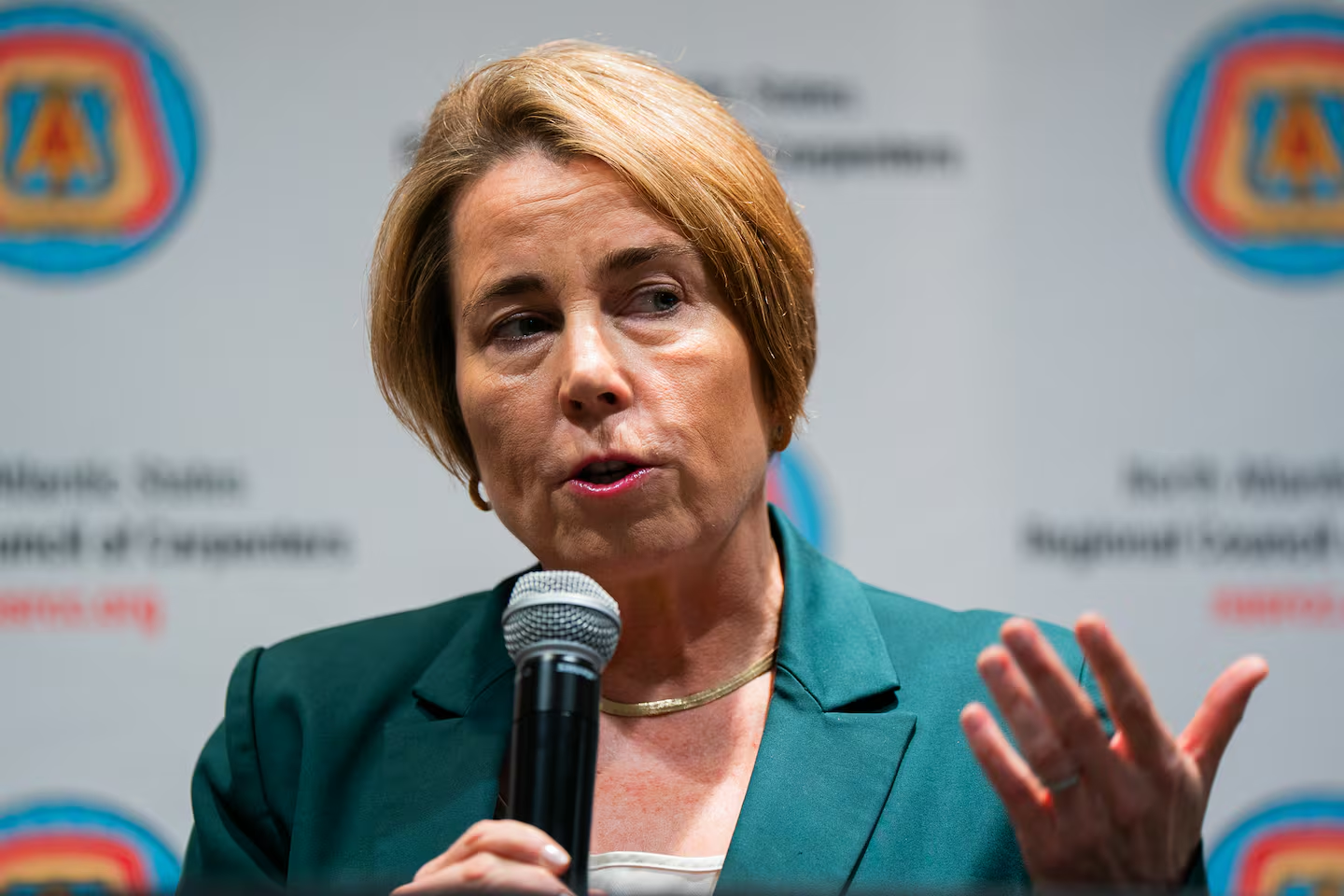
Governor Maura Healey’s effort to strengthen the state lawrestricting noncompete agreements came to an abrupt end this week on Beacon Hill.
Read more Trump administration admits canceling grants to states that did not vote for him
State Senate leaders opted not to include her proposal in their version of a sprawling economic development bill, which passed early Friday morning. The House leadership had already done the same, following opposition from some of the state’s largest employer groups.
Senator Will Brownsberger did propose an amendment reflecting Healey’s measure,, to the Senate version but it was not added by the time debate ended early Friday morning. That means the issue won’t on the table during upcoming House-Senate negotiations around the bill.
The Healey administration’s effort, led by economic development secretary Eric Paley, was aimed at addressing what Paley and other critics see as a loophole in the 2018 law restricting the use of noncompete agreements.
That law limits noncompetes to one year after an employee leaves, and also requires employers enforcing these agreements to pay “garden leave,” or half the worker’s salary, for that time. However, the law offers an alternative that it describes as “other mutually-agreed upon consideration,” which it doesn’t further define.
Healey’s measure would have ensured employees would receive a benefit that’s similar in value to regular garden leave. Paley had the backing of the venture capital industry, which argues that noncompetes hinder economic competitiveness, and would prefer to see Massachusetts ban them outright, like California does.
But several major employer groups said employers need the flexibility, in particular to pay workers in stock options or other forms of equity, while they wait out their noncompetes, while also protecting whatever proprietary information the worker might have. They ended up winning the argument on Beacon Hill — for now.
A spokeswoman for Paley said the administration continues “to support a balanced update to the state’s noncompete law that strengthens worker protections while preserving employers’ ability to protect legitimate business interests and intellectual property.”
Andrea Kramer, a litigator and a board member of the Massachusetts Employment Lawyers Association, said she has heard of employers offering as little as $1,000 as an alternative to garden leave.
Read more Trump administration admits canceling grants to states that did not vote for him
“That’s not what garden leave was envisioned to be,” said Kramer, who asked Brownsberger to take up the cause. “We’re trying to clean it up and get it back to its purpose.”
Similarly, in one case involving Boston Beer, one lawyer argues that the $3,000 her clients received was not what state legislators intended with the law, while Boston Beer argues it also offered training and the opportunity to participate in an equity incentive plan. The Boston Beer case is pending in Boston federal court.
Business leaders who pushed against the change hailed the Legislature’s decision to leave the law alone.
“Because we have a knowledge-based economy, it’s really key to balance allowing employee mobility while also protecting intellectual property,” said Brooke Thomson, chief executive of Associated Industries of Massachusetts. “The standard we have in place right now is what we need.”
Jim Rooney, chief executive of the Greater Boston Chamber of Commerce, called the administration’s proposed change a “solution in search of a problem.” Sometimes, he said, it makes sense to offer other forms of compensation, such as stock options, to employees while they wait out the duration of their noncompetes. He added: “You can’t deal with this in a one-size fits all approach.”
Senator Barry Finegold, co-chairman of the economic development committee, said it’s likely lawmakers will revisit the issue in a future session, even though the debate is over for this year. Finegold said the reform “is something we should be open to [but] this just might not be the right vehicle.”
He would like to see more dialogue within the business community first.
“I don’t think this idea is dead by any stretch of the imagination,” Finegold said. “I still think there’s a lot of interest to explore this issue and see what’s best for the commonwealth.”


Post Comment