Democrats to finalize their 2028 presidential nominating calendar, led by more diverse states
WASHINGTON (AP) — Democrats are poised to lock in the party’s 2028 presidential nominating schedule on Friday, likely cementing a dramatic break from decades of tradition by keeping Iowa off the top of the calendar and elevating more racially diverse states.
Read more New US tariffs aimed at over 80 countries go into effect
Either South Carolina or Nevada is expected to go first, and each state has aggressively campaigned for the coveted spot.
The decision by the Democratic National Committee’s Rules and Bylaws Committee will need to be approved by the full organization, which is scheduled to meet in August.
The overhaul reflects Democrats’ effort to give greater influence to states that better mirror the party’s diverse coalition, particularly Black and Latino voters, after years of a calendar led by Iowa and New Hampshire, two states with overwhelmingly white electorates.
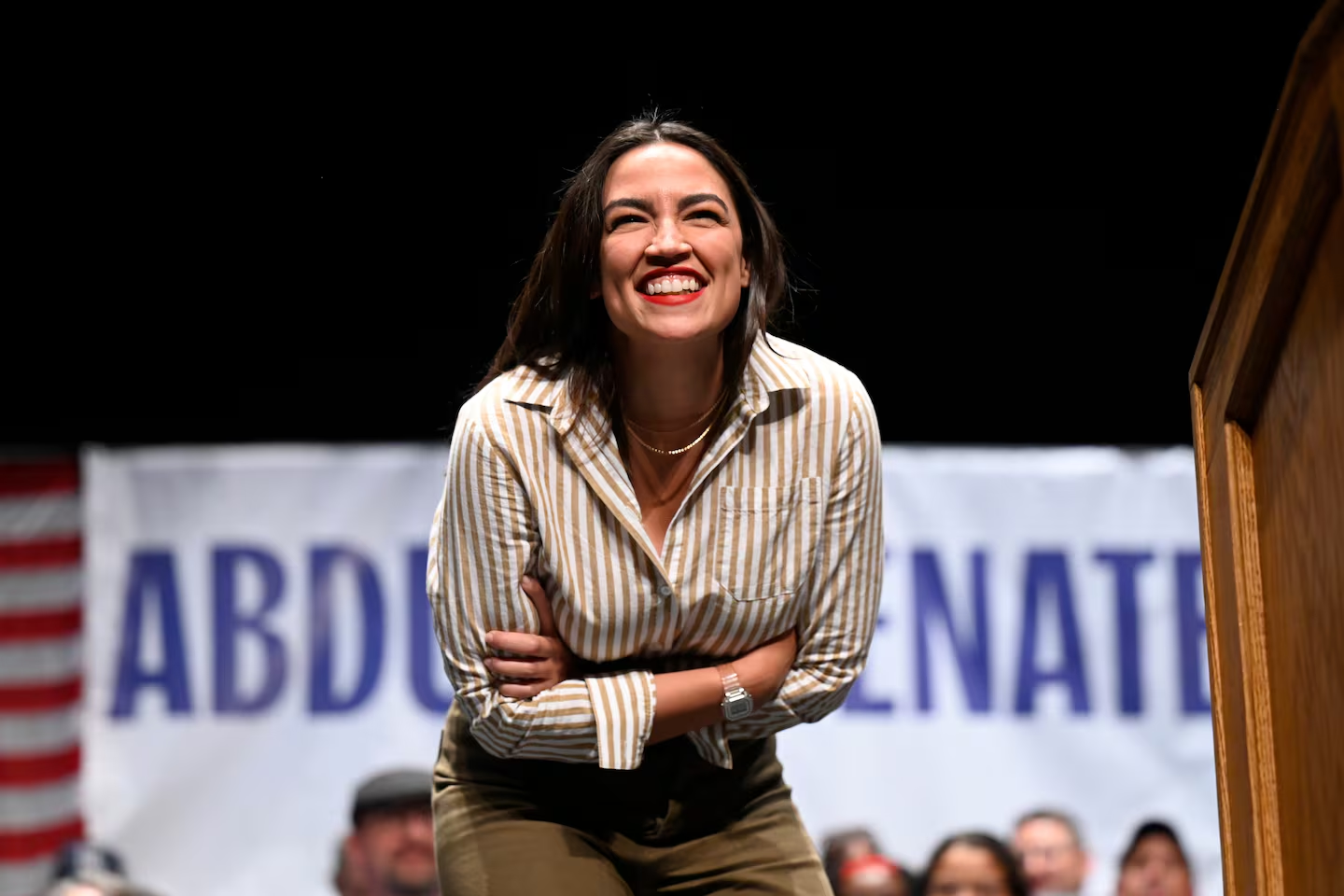
“I think that it is good that we don’t take the order for granted, and just copy and paste it every cycle,” said New York Rep. Alexandria Ocasio-Cortez, a progressive considered a potential 2028 candidate.
The decision will also shape the opening stage of what is expected to be a crowded Democratic presidential primary. Without an incumbent or clear frontrunner, the states that vote first could once again play an outsized role in determining which candidates gain momentum, attract donors and emerge as viable contenders.
Republicans still need to do their calendar. They’re expected to stick with their traditional early-state lineup led off by Iowa and New Hampshire.
South Carolina and Nevada compete for the top spot
President Joe Biden successfully pushed to move South Carolin a to the front of Democrats’ 2024 calendar after the state revived his struggling 2020 presidential campaign. South Carolina has long been the first Southern contest and has served as a key test of candidates’ support among Black voters.
But with Democrats now preparing for a wide-open presidential primary, the fight over the calendar has become more contentious.
In May, Democratic leaders in a handful of southern states lobbied for South Carolina to reprise its role as the party’s first-in-the-nation contest holder, arguing in a letter to the DNC that the state best represents the initial playing field for presidential candidates to build the coalitions needed to win and serves as “a moral and political compass for our party and our nation.”
Nevada has mounted an equally aggressive campaign, arguing that it better reflects the modern Democratic coalition by combining racial diversity, a strong union presence and battleground-state status.
Read more US strikes Iran and Bahrain warns of incoming fire as clashes over shipping routes escalate
Nevada has one of the nation’s largest Hispanic populations, a sizable Black electorate and is home to the influential Culinary Workers Union, giving candidates an early test with key Democratic constituencies.
“If you want to have a robust indicator of what an American electorate will be like, that will put us in the strongest position to put forth a primary candidate, I think it’s pretty clear that Nevada should be first,” Nevada Rep. Susie Lee said this week.
Black leaders have pushed back, arguing that moving South Carolina aside after just one cycle would diminish the power of Black voters in the Democratic Party. Roughly one-quarter of South Carolina’s population is Black, according to the U.S. Census.
“If South Carolina gets quietly bumped after one cycle of convenient praise, that sends a message louder than any speech at a Democratic dinner: the gratitude was performance, not policy,” Rev. Al Sharpton said in a statement.
The DNC has opted to select four early states — one from each region of the country — while also considering whether to add a fifth.
For the Midwest slot, Illinois, Iowa and Michigan submitted bids. Michigan is viewed as a leading contender for the regional position but did not seek the first overall spot.
Order could shape wide-open presidential race
The calendar decision is one of the first major milestones in what’s expected to be a tumultuous two-year sprint to the Democratic nomination.
There has not been a truly open Democratic presidential primary — without an incumbent president or a dominant frontrunner — in almost two decades.
Potential White House hopefuls have already begun laying the groundwork in South Carolina. Many have partnered with the state Democratic Party on listening tours, appeared alongside influential Rep. Jim Clyburn at his annual fish fry, spoken at party fundraisers and held meet-and-greet events with activists.
Michigan has also become an increasingly attractive destination for prospective candidates. Former Transportation Secretary Pete Buttigieg moved to the state several years ago and has steadily built political relationships there, making an early Michigan primary a potentially significant boost to his prospects and those of other candidates focused on battleground states.


Post Comment