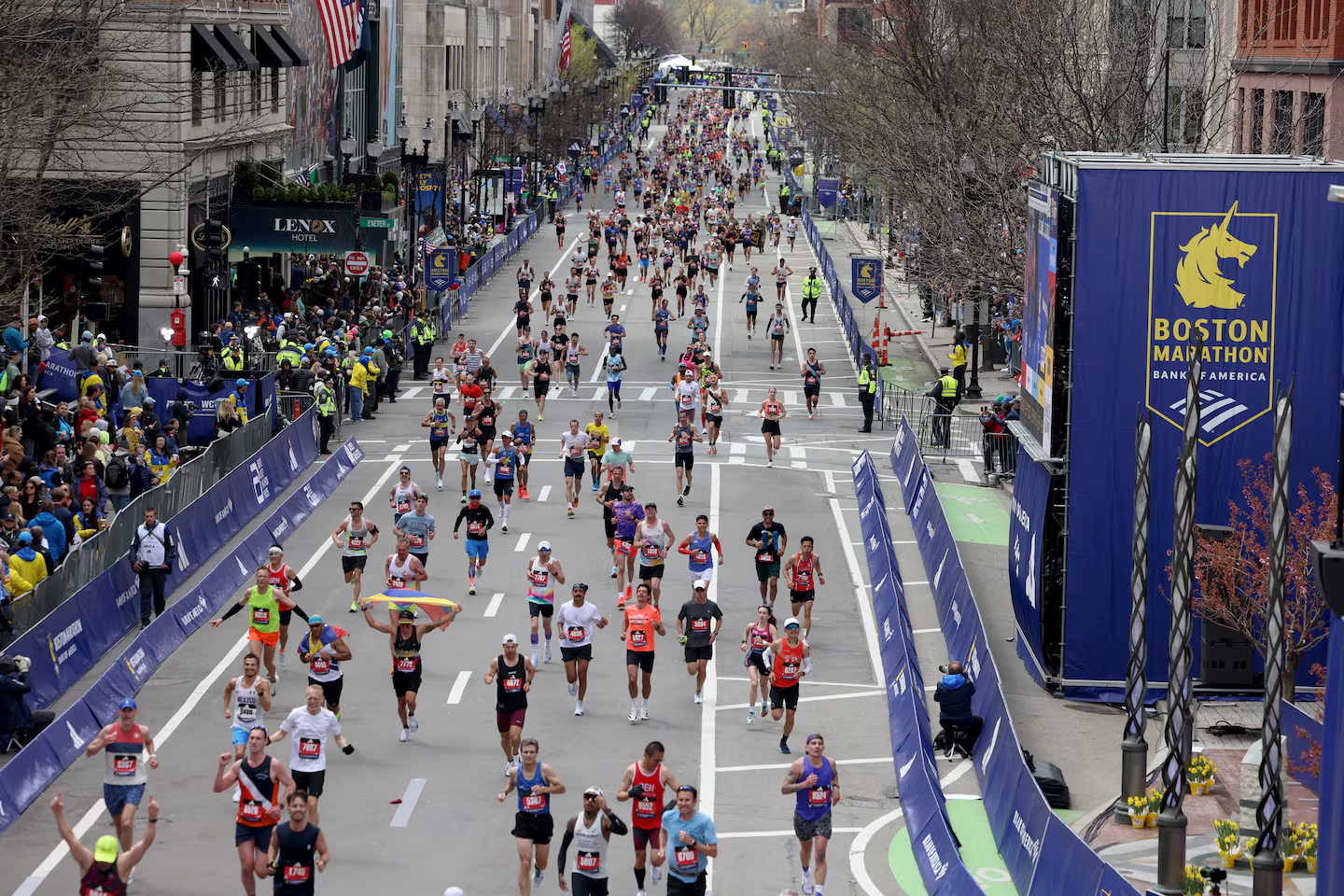
‘An element of hope’: BAA adding new ‘random selection’ component for qualifiers for 2027 Boston Marathon
As the post-COVID running boom continues, qualifying for the Boston Marathon is getting more difficult every year.
Read more Government overhauls teen pregnancy program to focus on marriage and starting families
Even after the Boston Athletic Association tightened its qualifying standards for 2026, the race still received huge numbers of registrations. Nearly 9,000 runners who hit the qualifying standard for their age group were turned away.
Starting next year, those disappointed runners will get a second chance.
With the “cutoff” times getting faster and faster, the BAA is adding a “random selection component” to its registration process for 2027 for those who achieved the qualifying standard for their age group but didn’t make the cutoff time. Around 1,000 athletes will be randomly selected from that pool to be accepted into the Marathon.
“After COVID‚ and looking at the trends, even after adjusting the qualifying times … we see that the demand for the Boston Marathon and in the sport is continuing, which is great,” BAA CEO Jack Fleming told the Globe. “So we wanted to implement something that was consistent, simple, and most importantly offers hope for those runners who did meet the qualifying time for their age group, but don’t make the cutoff.”
For the last few years, the number of qualifiers who submitted registrations have outweighed the available spots in the race. That’s led to the cutoff times — in 2026, athletes had to run 4 minutes, 34 seconds faster than the nominal qualifying standard for their age group to make the cut.
For men ages 18-34, who face a qualifying standard of 2 hours, 55 minutes, that meant needing to run 2:50:26 or better to get a bib for the 2026 race.
The cutoff times have been a source of discouragement for some, in particular those who managed to achieve that qualifying standard but knew they had little chance of getting a spot if they weren’t a few minutes under the mark.
“We were putting ourselves in the position of a runner who worked hard to meet their standard, knowing that it’s very difficult to, once you meet that standard, to continue that progression of improving even more,” Fleming said. “We think that this new component to registration will offer that element of hope.”
Fleming stressed that the number of qualifiers under the typical process — those who were under the cutoff times — will remain in line with previous years.
The cutoff times also have complicated a system that was, for a time, fairly simple — hit the time, and you’re in. But in recent years, as more and more runners get faster and faster, getting into the Boston Marathon has been a bit of a guessing game, as athletes won’t truly know where the bar for entry is set until after registration closes in September.
The BAA has been between a rock and a hard place on that front, working with a course that winds through small towns west of Boston rather than the wide city streets that other major marathons traverse.
The field size can’t simply be drastically increased, from its current cap of around 30,000, to accommodate more runners that are hitting the qualifying standard.
“I just got back from a meeting with my colleagues from New York, Chicago, London, etc., and more than ever, as they talk about huge numbers that are oftentimes double what we have … that’s never going to be Boston,” Fleming said. “We have a different course. The course is very important to runners and our tradition, as are the qualifying times.”
That field size has crept up over the years, as the introduction of chip timing, earlier start times, and improvements in wave and corral setups have helped make the race more efficient. The BAA worked with crowd scientists for the first time ahead of the 2026 race to help streamline that process.
“We have an obligation to the running world to optimize what we do,” Fleming said. “But the Boston Marathon is not going to see a dramatic increase in the field size. We’re just becoming more efficient and better at the process going from registration to starting line … We don’t want to approach a situation where we introduce the possibility of too much congestion and not being able to run freely.”
Some will argue that if the race can open up another 1,000 spots for qualifiers, it should just accept the next 1,000 fastest runners under that cutoff system. But there is an element of this new initiative that seeks to protect the race’s tradition and its qualifying standards.
A “BQ” (Boston qualifier) means something in the running world, and adding another 1,000 spots for a lottery means that everyone who hits that qualifying standard, even by only a second or two, has a chance.
“This consistent, simple component adds an element of hope,” Fleming said. “It’s another way of having more qualifiers. Yes, we would have been able to keep what we’ve always been doing exactly the same. I think that this is somewhat innovative. It’s certainly innovative for us.”
Read more Journalists urge correspondents’ association to stand up to Trump at rescheduled press dinner


Post Comment