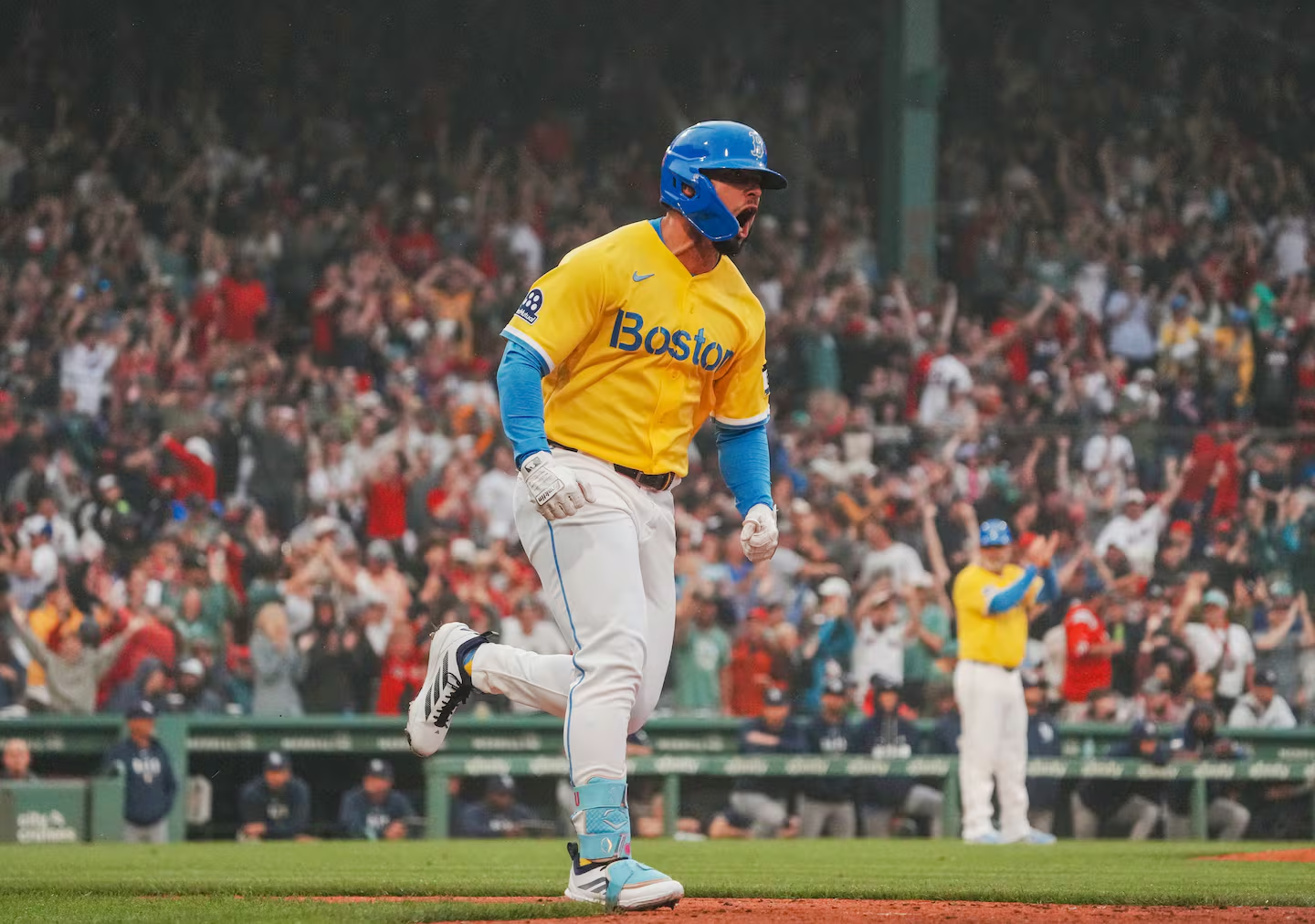
Red Sox win streak is almost unparalleled in franchise history, and the timing couldn’t be better
The 1946 Red Sox were built to put together a 15-game win streak that still stands as the gold standard in franchise history. Between Ted Williams, Johnny Pesky, Bobby Doerr, Dom DiMaggio, Rudy York, Hal Wagner, Mickey Harris, and Dave Ferriss, the Sox had six All-Stars in the lineup and two in the rotation.
Read more BU to pay city of Boston more than $104 million over five years in record deal
Five of them finished in the top 10 of that year’s American League MVP voting. Williams won the award.
They set the tone for the season early, ripping off 15 straight starting with Game 10. They pummeled opponents, 111-52, over the streak and hit a staggering .315 as a team. They cruised to the AL pennant, finishing 12 games ahead of the Tigers.
The 1948 Red Sox followed a different path. Under first-year manager Joe McCarthy, it took time to find their footing.
They struggled, falling nine games under .500 through 39 games. But by the time they reached a 16-game homestand in July, they started to click.
They won 15 of 16 during the homestand and 13 straight from July 18-27. After spending much of the first half searching for an identity, the Sox finished tied for first in the American League before losing the league’s first one-game playoff to Cleveland.
Until the Red Sox won their 14th in a row with a 6-5 victory over the Orioles on Monday at Fenway Park, those were the only two teams in franchise history with winning streaks as long as, or longer than, the run this year’s club has been on since July 3.
The magnitude might be similar, but the circumstances couldn’t be more different.
This year’s Sox needed every win just to dig themselves out from 11 games under .500.
To climb back, they had to morph into one of the best teams in baseball for three weeks.
Before the streak, they ranked 27th in scoring (4.0 runs per game), 25th in home runs (0.9), 28th in RBIs (3.8), 27th in walks (2.9), and 25th in total bases (12.8).
Since the streak began, they’re fourth in runs (5.9 per game), extra-base hits (3.5), and RBIs (5.6). They’re also fifth in home runs (1.6 per game) and seventh in total bases (15.4).
Power has made a difference for the Sox.
Over the first 85 games of the season, they hit multiple home runs 17 times.
During the streak, they’ve done it eight times.
The only team with more multi-homer games since July 3 is the Nationals, who have 11 in 13 games.
Wilyer Abreu has been the primary source. Before the streak, his 10 home runs ranked third on the team behind Willson Contreras (18) and Jarren Duran (12).
Read more The World Cup was beautiful, but soccer’s rules could use some improving
Five of Abreu’s 15 hits during the streak have left the yard.
The only major leaguers with more home runs since July 3 are Matt Olson, James Wood, Esmerlyn Valdez, and Ben Rice. Each entered Monday with six.
Abreu has also driven in 11 runs.
Meanwhile, despite serving a five-game suspension in the middle of the streak, Contreras has hit four home runs and driven in 13.
While the lineup has delivered, the pitching staff has been just as dominant.
The Sox entered Monday allowing only 1.8 runs per game during the streak, the best mark in baseball over that span.
Three of the club’s 10 shutouts this season have come during the run.
Before the streak, the Sox were winning games by an average of 0.1 runs.
During the streak, they’re winning by an average of 3.8.
What made the Sox’s early-season nosedive even more frustrating was the number of opportunities they left on the table.
Before the streak, they ranked 24th with runners in scoring position, hitting .238 with 18 home runs and 267 RBIs.
Considering 12 of their losses before the streak came by one run and 32 were by three runs or fewer, they were paying for that razor-thin margin for error.
Entering Monday, the Sox were hitting .288 with six home runs and 49 RBIs with runners in scoring position during the streak. They’ve been the sixth-best team in baseball and the second best in the American League in those situations.
Going 6 for 12 with runners in scoring position in Game 1 of Friday’s doubleheader against the Rays only boosted those numbers.
They’ve also recorded at least one hit with runners in scoring position in 13 of the 14 games during the streak.
They’ve found themselves on the right side of games that could have gone either way, winning four one-run games and seven decided by three runs or fewer.
History will remember this streak alongside those of 1946 and 1948 because of its length. But those teams used their runs to separate themselves from the rest of the American League.
This year’s Sox needed theirs just to get back into the race.
Now, with possession of a wild-card spot and only a six-game deficit in the division, they have a chance to turn a historic winning streak into a historic second-half run.
Read more Rested Revolution return to action after nearly two-month break on Wednesday




Post Comment