Tinder usage, beer sales, and train ridership: World Cup’s impact by the numbers
With the final whistle for the 2026 World Cup soon to be blown, a billion-dollar question remains: How did the international tournament impact the state’s economy and culture?
Read more Games 95 and 96: Red Sox look to stay hot in doubleheader against first-place Rays
Ahead of the games, Massachusetts officials and regional business groups projectedan economic impact of $1.1 billion from roughly 2 million visitors, more than 5,000 new jobs, and $60 million added to city and state revenues.
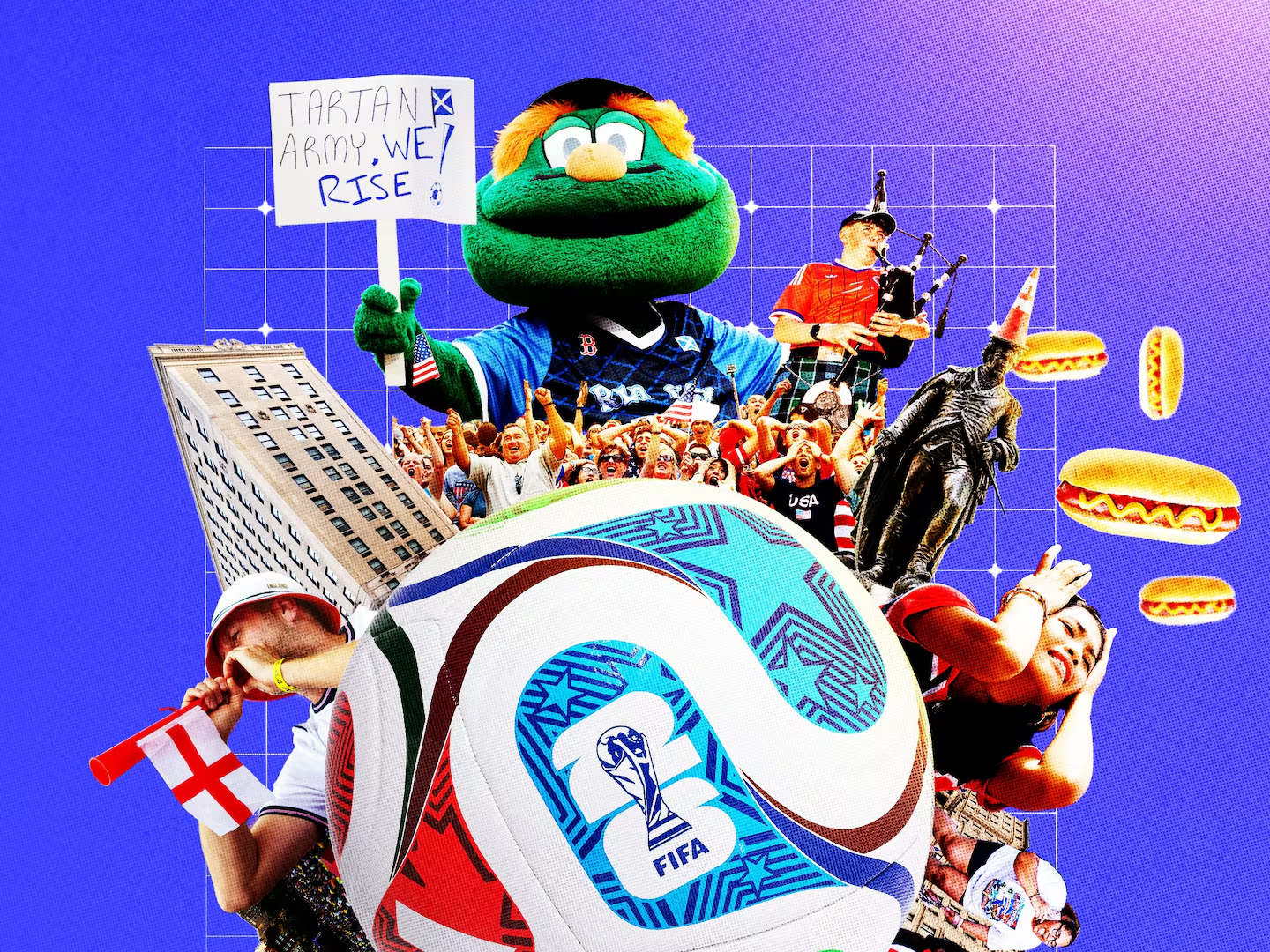
It is still too early to determine whether these figures are accurate, but preliminary reports indicate that despite internal turmoil leading up to the tournament,the World Cup transformed Boston into a 27-day celebration that became a boon for businesses, transportation, and even the dating scene.
Here is how the 2026 FIFA World Cup took over the region, by the numbers.
Overall spending across the city jumped 15 percent during the June 13 to 26 period, with some match days seeing as much as a 45 percent climb in spending compared with the same time last year, according to Visa data shared with the Globe.
Some of that surge in spending was easy to spot at the tap. By the end of the tournament’s first two weeks, Massachusetts had seen a 12 percent jump in beer sales — the biggest increase of any of the 11 US markets hosting World Cup matches, according to the Beer Institute, a national trade association for brewers. Sales at on-site venues like bars and restaurants jumped more than 27 percent.
The Scots did their part. On opening day, as the Tartan Army packed Boston bars for Scotland’s match against Haiti, beer sales soared 50 percent over the average of the previous eight Saturdays, according to data from Toast, a Boston-based restaurant software company.
Beer was clearly the beverage of choice for soccer fans(Beer? For soccer? Groundbreaking). Rum, meanwhile, climbed 37 percent, and gin rose 16 percent. Wine, apparently not a beverage of choice, fell 17 percent, while whiskey dropped 2 percent.
The Toast data, which come from businesses that use the company’s sales platform, show that some classic American bites saw a bump: hot dog orders were up 35 percent, chicken tenders were up 25 percent, and wing orders were up 12 percent.
Some Boston businesses flourished thanks to the crowds. The eatery JM Curley, for instance, saw a 20 percent increase when downtown Boston’s social district opened on June 19, the most in the restaurant’s 14-year history, according to data shared by the Downtown Boston Alliance.
“We already have abundant clarity that social districts should remain,” said Michael Nichols, president of the Downtown Boston Alliance. “It has been really helpful to what we’re trying to build downtown.”
Culture shift
It’s safe to say that football (er … soccer) was never counted among Boston’s sports religions. That was, until locals came down with a serious case of World Cup fever. Troves of international visitors radiated their love for the game and cultural exchange sprouted.
Viral videos won the hearts of millions, including a Boston cop showing off his ball juggling skills, Norway fans’ viking row chant deafening Boston Stadium, and, of course, the jubilant Tartan Army’s countless videos bringing the party and orange traffic cones everywhere they set foot.
More than a quarter of Google searches in the Boston area since the tournament started were related to the World Cup. Among some of Google’s “breakout searches” in the area, meaning they increased more than 5000 percent, were “how to wear a kilt,” “bagpipe lessons near me,” and “where is the cop slide.” Searches related to the World Cup surpassed historical peaks for the New England Patriots, the Red Sox, and the Celtics.
Read more The Yankees’ Aaron Judge’s rib still not healed, delaying his return
World Cup fans also revived Boston’s nightlife and dating scene.
Tinder activity from out-of-town users spiked 40 percent around Scotland’s opener and 47 percent around the Iraq–Norway match, according to data the company shared with the Globe. Most of those visiting users came from the UK, Brazil, and Ireland.
No vacancy
Throngs of fans landed in Boston for the games, crowding hotels, watch parties, and MBTA cars. Boston Stadium sold out each of the seven games, with a total of 447,283 fans in attendance. In the city, rambunctious crowds, roughly 160,000 strong from 108 countries, visited the FIFA Fan Festival near City Hall, according to figures shared by the state.
The day before the first group play between Scotland and Haiti, Boston saw 237 percent higher hotel stays than the daily average of the first half in 2026, and 25 percent increase from the comparable Friday last year, TripAdvisor data show. Meanwhile, hotel prices soared by 35 percent compared to the same time last year.
On the day before, the day of, and the day after the France-Norway match, hotels saw a 40 percent increase in revenue per available room, compared with 2025 numbers, and a 30 percent increase during the Scotland-Morocco game, according to Meet Boston.
But packing hotels is one thing. Transporting hordes of fans to Foxborough is another.
“The first match was our biggest test,” said MBTA chief operating officer Ryan Coholan in an interview. His staff mulled over a plan for a year and a half in preparation for the games. But plans, he said, require a degree of flexibility. “By the time we get into game two, game three, we’ve adjusted things, tailored it based on lessons learned,” he said.
The MBTA, in partnership with commuter rail operator Keolis, debuted an express line to and from Gillette Stadium andSouth Station.
A total of 98 roundtrip event trains (14 per match) hauled a sum of nearly 109,000 fans, with the most tickets sold being 19,900 for the Scotland vs. Haiti game – nearly double its previous record of 11,000 tickets for the Army-Navy game in 2023, and just 100 tickets shy from its 20,000 cap.
Fans faced long queues after the first match, averaging 40 minutes at Foxboro Station – an issue that was ultimately resolved, with the following games seeing between 20-28 minutes of average queue wait times.
“The feedback has been phenomenal, and it’s been great to watch people from all over the world treat our transportation system like it’s theirs,” Coholan said.
And soccer, of course
For the most part, the matches at Gillette delivered a show – if you ignore the England vs. Ghana game that concluded with a snoozy 0-0 draw. A total of 16 goals were netted throughout the seven games. Most notable are French forward Ousmane Dembélé’s 32-minutes hat trick against Norway, and Norwegian sensation Erling Haaland’s two goals against Iraq.
And the weather also mostly played in fans’ favor. Boston averaged 81.3°F throughout the tournament — breezy compared to Arlington, Texas’ 93.8 degrees.
Read more Rest did the road-weary Red Sox good during the All-Star break
Globe meteorologist Ken Mahan contributed to this story.


Post Comment