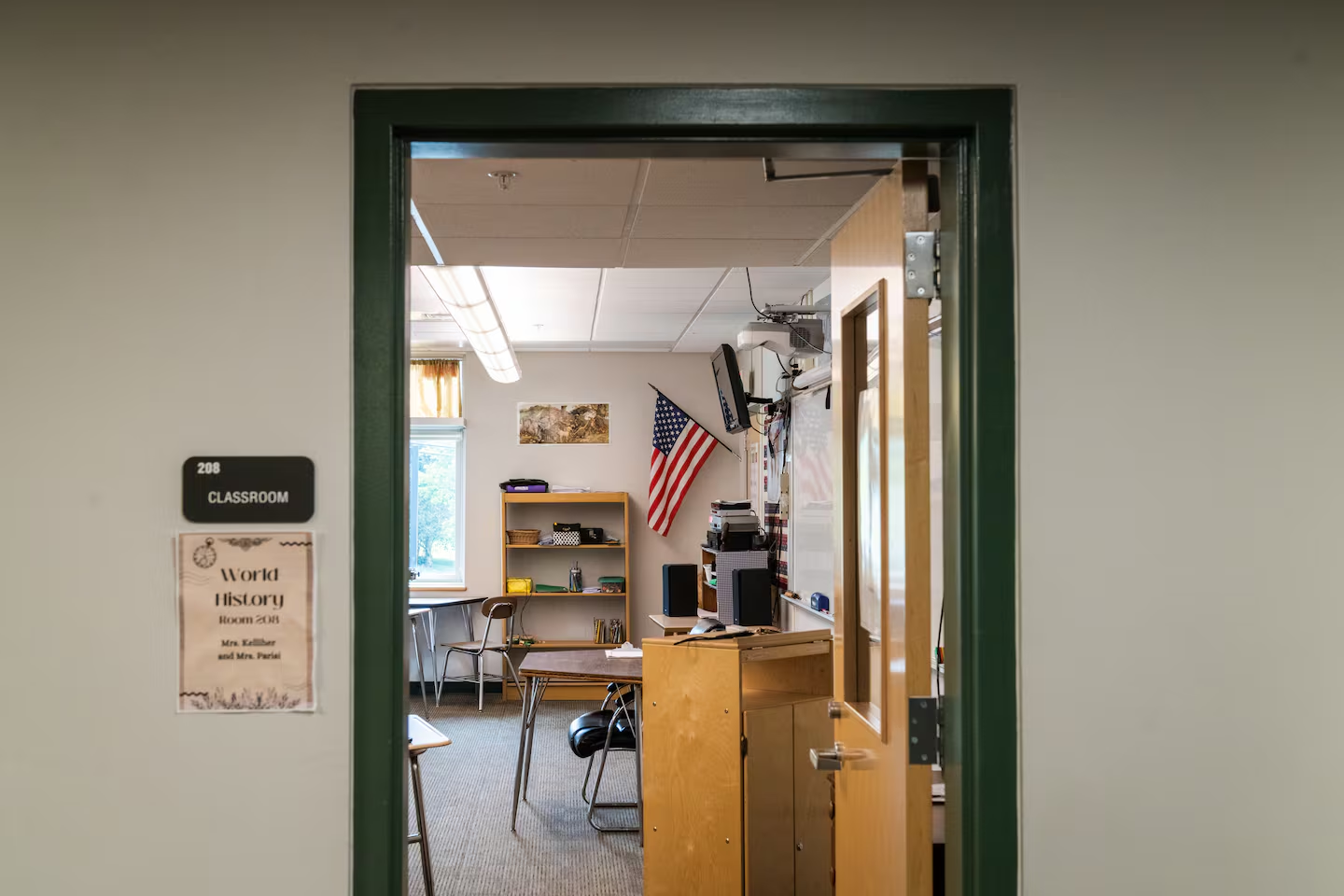
New law puts question to N.H. voters: Should a property tax cap apply to your local schools?
When voters in New Hampshire head to the polls for the general election in November to choose which candidates will represent them in state and federal office, they will also decide whether to impose a tax cap on their local school district.
Read more Red Sox pitcher Payton Tolle just got married and celebrated at this North End restaurant
That’s because Governor Kelly Ayotte signed legislation (House Bill 1300) on Wednesday to require that the local tax cap question be added to ballots across the state, as part of a Republican-led effort to rein in the cost of public education.
“New Hampshire is at its best when we’re putting decision making power in the hands of the people,” Ayotte said. “This bill gives voters a say about their local property taxes and ensures Granite Staters’ voices are heard.”
Under the new law, a school district will be subject to the inflation-adjusted tax cap for two years if at least 60 percent of local voters approve it. School districts subjected to the cap will also be prohibited from spending more than 6 percent of their appropriations on central office administrative budgets. The cap excludes bonded capital costs.
While most cities and towns vote on their school budgets each spring, New Hampshire House Election Law Committee Chairman Ross Berry, a Republican, said putting this question on the November ballot will maximize the number of voters weighing in, and give them “the opportunity to take back control.”
Berry said “outrageous” increases are “taxing people out of their homes.”
Critics contend this law distracts from systemic flaws in the state’s K-12 school funding model. Per-pupil funding remains relatively high in New Hampshire, but the state ranks dead last in terms of the percentage of that money coming from the state itself, which leads to disparities as communities rely heavily on their local property taxes.
“Republicans are making it impossible to provide the quality education students deserve and are blaming local voters — the people they’re supposed to represent — for the property tax crisis that Republicans created,” said Alexis Simpson, the Democratic minority leader in the House.
Christina Pretorius, a campaign director for the progressive advocacy group Engage NH, said presenting this tax cap question in a vacuum serves the interests of those who wish to gut public schools.
“Forcing voters to consider this without the context of their regular school budget discussions is just another attempt to cut funding for public education that will have lasting, harmful impacts on our children’s education and future,” she said.
The legislation that Ayotte signed into law isn’t nearly as strict as what some Republican lawmakers had initially wanted. An earlier proposal would have imposed an inflation-based spending cap on all school districts without putting the question to voters. But the House balked at that idea in January, sparking a mad dash to draft a backup plan.
Megan Tuttle, president of the National Education Association in New Hampshire, noted that voters already had the option to propose local caps before this new law was signed, and most towns have rejected such efforts in recent years. In anticipation of November’s vote, Tuttle said her team “will work to ensure every Granite Stater knows how these ballot measures will harm their local public school.”
This story appears in Globe NH | Morning Report, a free email newsletter focused on New Hampshire, including great coverage from the Boston Globe and links to interesting articles elsewhere. Sign up here.


Post Comment