The NBA is satisfied with salary cap system that led to the Celtics trading Jaylen Brown
LAS VEGAS — The first major negotiating point between the NBA Players Association and the league’s governors is developing three years before the players can opt out of their current agreement.
Read more Governor Ayotte again vetoes ‘poorly drafted’ N.H. bill that sought sex-separated bathrooms
Four days after NBPA executive director David Kelly expressed concern with the impact of the controversial second apron, commissioner Adam Silver said Tuesday the revamped salary cap system that places major constraints on high-spending teams is working as the league anticipated.
Teams that enter the second apron with their spending, which is $221 million or more in salaries, are limited by several restrictions, such as the inability to aggregate salaries for trade, use trade exceptions, conduct sign-and-trade deals, limits on signing buyout players, and the inability to trade draft picks seven years into the future. Finally, if teams are in the second apron three times in a five-year period, their next first-round pick is moved to the end of the round.
The Celtics were a second-apron team in 2024, but president of basketball operations Brad Stevens made several moves in the summer of 2025 to get the club out of the apron and save millions in luxury taxes. While Kelly said breaking up teams for salary reasons negatively impacts fans, Silver said after the Board of Governors meeting that it was “certainly not an unintended consequence” of the CBA.
“When you have a salary system in place as we do, every general manager is going to need to make mixed basketball and business decisions,” he said. “Frankly, they make them regardless of whether you have a cap. You see that in other sports. People manage to budgets. People recognize that you can’t — at some point, you can’t have unlimited resources, whether it’s for a team or any business.
“In the case of a league, it’s in essence zero sum. So to the extent that [a team] doesn’t re-sign a player or chooses to trade a player, of course that player goes to another team.”
The NBA has had eight different champions the past eight years, and this salary system was implemented to create more parity. Silver pointed out market size wasn’t discussed in the San Antonio-New York NBA Finals because each team has equal resources to succeed.
“The purpose of the system is ultimately to create competition throughout the league, and from that standpoint, I think the system is working incredibly well,” Silver said. “The goal isn’t necessarily to have a different champion every year, but we’ve had eight different champions over the last eight years. As I’ve said previously, one of the things we were hoping to accomplish in this latest collective bargaining agreement was to dispel this notion that only certain markets were in a position to truly compete.”
Read more R.I. judge denies Trump administration’s bid to reinstate ban on immigrants
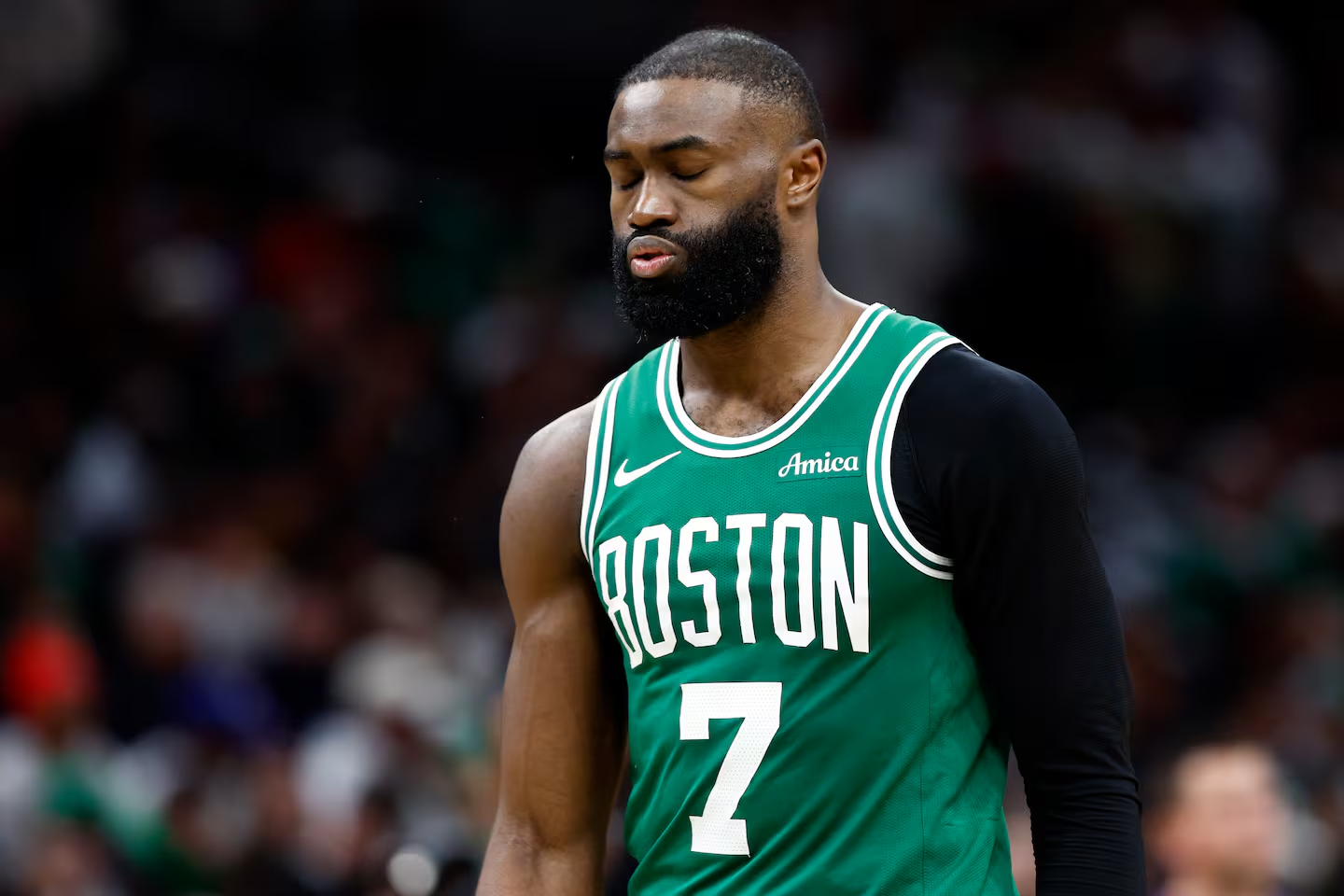
Since that has been established, summers are filled with considerable player movement and teams looking to manage their salary structure to avoid limitations. Stevens said on July 6 that if Jaylen Brown’s salary counted less against the cap because he was a Celtics-drafted player, the franchise may not have felt it needed to trade him for a more manageable contract.
While such an adjustment appears sensible — such as lowering the maximum salary cap hit from 35 percent to 25 percent for homegrown players — Silver wasn’t so convinced that move would be a minor change.
“One person’s tweak is another person’s overhaul to the system,” he said. “I think at the time we sit down to negotiate a new collective bargaining process, a new collective bargaining agreement, my hunch is there will be things that the players will want, and as usual, there will be things that the teams want. And once again, we’ll look at all those issues in totality and see what makes the most sense. But as I always have, we’ll begin by stating our objectives.
“Our objective here is to have a system financially that makes sense for the league and fairly rewards the players. That’s just sort of the pure remuneration. But then also have a system that enables every team, regardless of market size, regardless of the depth of the pockets of the ownership group, to compete on a level playing field. The system is not perfect, far from it. There’s always things that both sides want.”
The NBPA has a right to opt out of its agreement with the league in 2029, and it’s become apparent the players have an issue with the second apron and players being moved because teams refuse to deal with those repercussions. In the Celtics’ situation, they acquired Paul George, whose contract is nearly the same as Brown’s, but Brown was due for a two-year, $142 million extension that the Celtics said they couldn’t afford if they wanted to field a championship-level team and avoid major luxury taxes.
According to Silver, these are the conditions every team is going to have to accept, and the league is satisfied with the results.
Read more After six years, Trump brings his election obsession to primetime at the White House



Post Comment