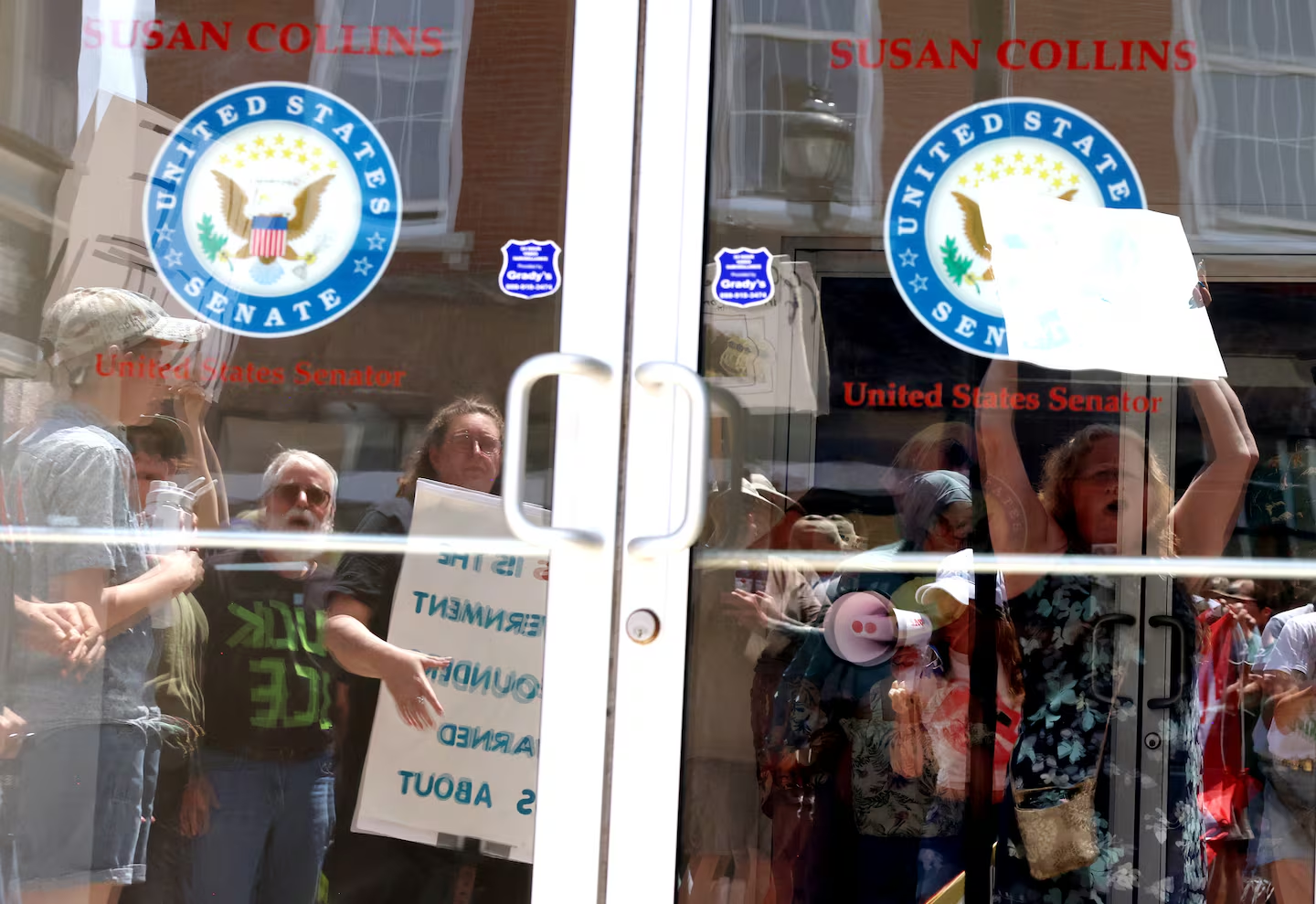
How a tragedy changed the timeline — and the politics — of Maine’s Senate race
In the past week, Maine Democrats have gone from heartbroken and divided during the final days of Graham Platner’s tumultuous Senate campaign to heartbroken and united following the death of a 26-year-old Colombian national who was killed by an Immigration and Customs Enforcement officer in Biddeford on Monday.
Read more Shakeup in Bruins’ front office includes hiring of Kevyn Adams as a senior advisor to GM Don Sweeney
All of the candidates competing to take Platner’s spot as the Democratic nominee have called for ICE to leave Maine or to be dismantled altogether.
But no one set themselves apart as the pragmatist. No one as the liberal firebrand. Most spent Monday evening and Tuesday in and around Biddeford with the community, expressing outrage at the latest death of an individual at ICE’s hands.
And while this is the role that many Democratic leaders would be expected to play in this situation, this crop of candidates has an added challenge.
Because this also means there are no meaningful distinctions among the candidates to help guide the eventual 601 delegates who will decide who should run in one of the most closely watched Senate contests in the country.
Indeed, the practical political impact of the tragic situation in Biddeford on the Maine Senate contest is this: What was expected to be an intense two-week primary campaign has effectively been reduced to one week. And the week currently being overtaken by the shock and anger is likely the most crucial.
That’s because 5 p.m. Wednesday is the deadline for supporters to sign up to become delegate candidates for the July 25 statewide convention in Bangor.
Those delegate candidates will then be elected at caucuses held in each of the state’s 16 counties over this coming weekend. From that process will come the 601 delegates who will decide which Democrat will challenge five-term Republican incumbent Susan Collins this fall.
In fact, the best organized campaigns will likely know by Sunday who has already won the contest because they can simply add up how many of their own supporters became delegates.
In other words, the contest could be effectively over before most Mainers even begin to really pay attention.
Read more Scottie Scheffler and Rory McIlroy are chasing a second British Open title, but dismiss legacy talk
Further, unlike some major news developments that provide a moment of political clarity, this tragic situation in Biddeford resolves nothing. Instead, it raises the stakes for Democrats to make the right choice.
What that means in the context of choosing between a more progressive populist candidate in the mold of Platner or a more traditional Democrat in the mold of this year’s Democratic nominee for governor, Hannah Pingree, remains an open question.
There is simply less time now to discuss it.
Now, none of the above is meant to take away from the discussion about a husband and father who was killed by the government and whatever circumstances led to that tragedy.
To be sure, the moment a Democratic nominee is selected, the role of ICE will immediately become the first real dividing-line issue in the Senate race. After all, Collins oversees ICE’s budget as chair of the Senate Appropriations Committee and has been actively involved in conversations with the administration about enforcement in Maine.
But as to who should face her, the clarity and contrasts that campaigns tend to reveal are not currently there among Democrats at a time when they would be most helpful. As it stands, all of the candidates oppose the Trump administration’s overall agenda, oppose the Iran war, promote some version of an affordability message, and, above all, oppose Collins.
Nor is there an obvious choice if Maine Democratic delegates decide electability should be their highest priority.
Campaigns rarely unfold on the timetable candidates expect. Outside events intervene, reshaping what voters hear, what campaigns can talk about, and, ultimately, what party insiders have to evaluate.
In this case, Democrats face the unusual challenge of selecting a Senate nominee while the issue dominating the public conversation is one on which nearly all of the candidates already agree. That may produce unity after a bruising week, but it also leaves delegates with fewer opportunities to distinguish between the people asking for their votes before making one of the biggest political decisions in Maine this year.
Read more Dylan Cease, bullpen combine on 3-hitter in AL’s 4-0 win, first All-Star shutout since 2013


Post Comment