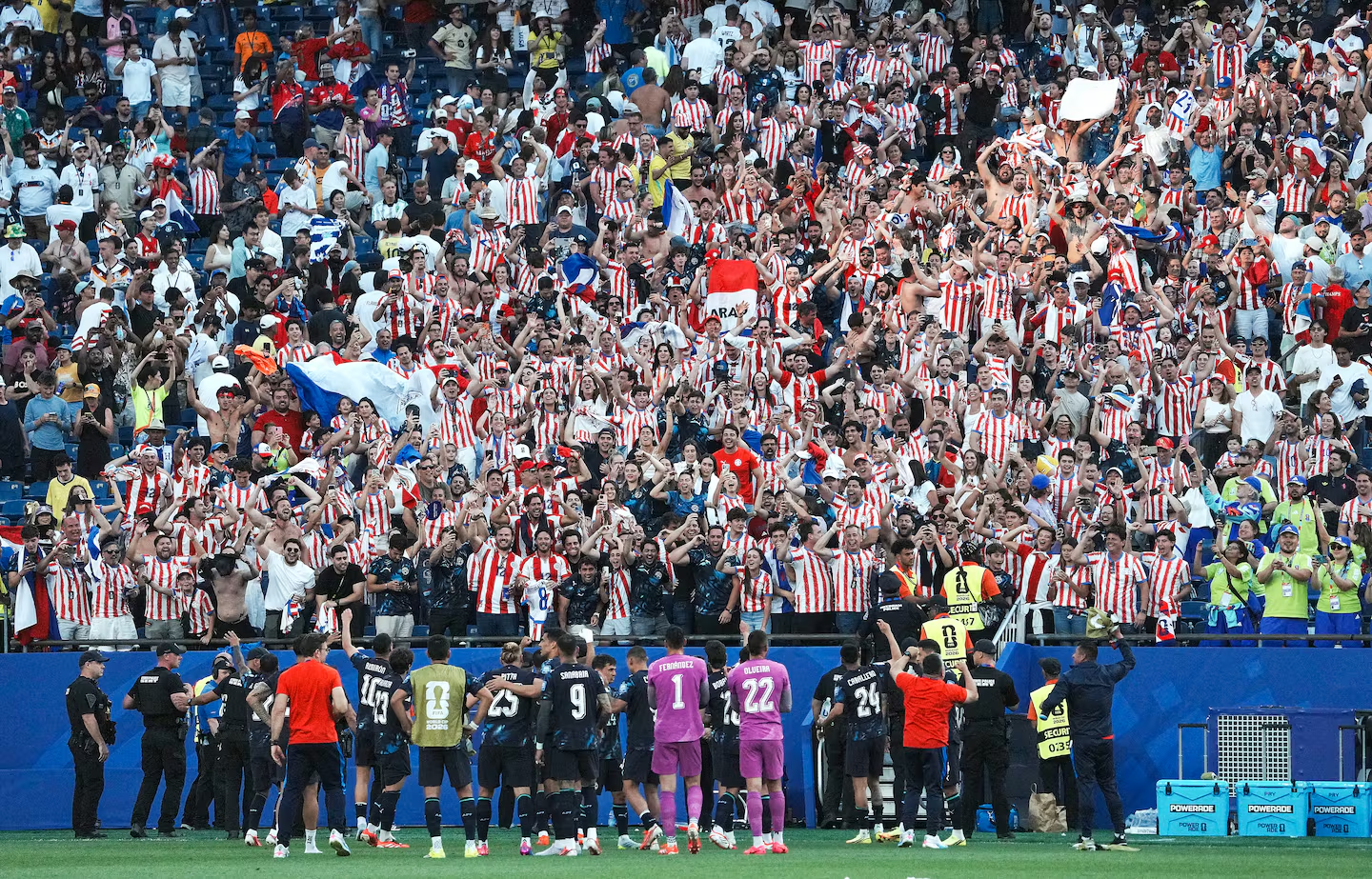
In Foxborough, the fans were the best part of the World Cup. The soccer was a little underwhelming.
The World Cup is almost complete, and its impact on Boston and the country has been profound. The influx of visitors and blending of disparate cultures made for one of the most distinctive and enthralling sporting events in American history.
Read more Falling gas prices likely cut inflation last month but renewal of Iran war could undo progress
The World Cup experience in Foxborough was top-notch. The World Cup soccer could’ve been a little better.
The seven local matches were terrific live events — the stadium energy, the stakes, the graceful play. The region was treated to a handful of the world’s top stars — Kylian Mbappé, Erling Haaland, and Harry Kane among them.
But for the fans who spent thousands on tickets, the matches were a little dry, particularly the five in group play. Scotland, Haiti, and Iraq were, in retrospect, a little minor league. There wasn’t much scoring, for the most part. The two matches that could have delivered, didn’t; England-Ghana was a 0-0 snoozer, and Norway benched Haaland and 10 total starters against France.
Blame tournament expansion to 48 teams for eliminating premier matchups in the group stage. Now FIFA is considering expansion to 64, which will turn it into the preseason.
Thankfully, Paraguay’s upset over Germany in the round of 32 made up for a sleepy group stage. Mbappé also came through with a highlight-reel goal in the quarterfinals, though France’s 2-0 win over Morocco was another match that lacked drama.
But it was the fans, more than the soccer, that made the World Cup unforgettable.
Other takeaways from what used to be known as Boston Stadium:
⋅ Best crowd: Scotland, followed closely by Paraguay. Scotland, which played Haiti and Morocco here, was remarkable for its size — seemingly 40,000-plus Scots at each match, wearing kilts, playing bagpipes, and breaking decibel records when singing their anthem.
Paraguay had a small but boisterous group that did not stop dancing and drumming for the entire 120 minutes. Norway didn’t have the most raucous crew, but the Viking row chant was mesmerizing.
⋅ Worst crowd: England, followed by Germany. The best fan bases were the “happy to be here” countries. The Brits, saddled with high expectations and years of frustration, packed the stadium but brought zero energy to a nil-nil draw with Ghana. Germany was about the same in the round of 32.
⋅ Best individual performance: Paraguay goalie Orlando Gill, the hero of the big upset win. He thwarted corner after corner, then made two incredible saves in penalties to set up his country for the win.
France’s Ousmane Dembélé gets consideration for scoring the quickest World Cup hat trick (32 minutes) since 1954, but gets downgraded for it coming against Norway’s “B” team.
⋅ Best goal: Haaland’s second tally against Iraq at the end of the first half was pure hustle. Putting on a full-court press, Haaland chased down a lazy pass back to the keeper and deflected the goalie’s clear attempt into the net to make it 2-1, Norway.
Honorable mention to Mbappé’s rocket through a defender and into the upper corner of the net against Morocco, and Paraguay’s Julio Enciso’s beautiful header against Germany.
⋅ Best story: It had to be Iraq, the 48th and final team to qualify. Made up of players who grew up in a war-torn country, Iraq had the longest road of any World Cup qualifier, playing 21 matches across the world, from Basra to Jakarta, Manila, Seoul, and Monterrey, Mexico. Tournament expansion is a mixed bag: Great for the smaller teams, but bad for the soccer product.
⋅ Worst non-call: The one when England’s Ezri Konsa tackled Ghana’s Price Adu from behind without any semblance of playing the ball. It was an obvious penalty in the 79th minute of a 0-0 match.
“The VAR referee was on vacation in the second half apparently, because we had a clear goal and we could have won the game,” Ghana manager Carlos Queiroz said.
⋅ Biggest surprise: How little respect was shown for the US national anthem. A recording was played at each match about 45 minutes before kickoff, and most foreign journalists (and some domestic ones) didn’t bother standing or pausing their conversations. The fans in the stands barely paid attention, too.
⋅ The natural grass, planted for this tournament only, performed quite well throughout the seven matches. The only hiccup was a sprinkler malfunction in the second match that spouted a few gallons of water and sand on the pitch, but otherwise the field looked and played perfectly. Of course, the Patriots will be back to playing on artificial turf in a few weeks.
⋅ The France-Morocco match featured a couple of unusual pauses. Mbappé was forced to wait more than three minutes to take his penalty kick so the VAR official could twice review his foul, and the result was a poor attempt that was easily saved.
Morocco then took an unusually long time coming out of the locker room for the second half, with France and the referees waiting on the field for what seemed like five minutes. The Moroccan mind games didn’t work, as they conceded two goals not long thereafter.
⋅ A World Cup moment: Walking into the press box bathroom and seeing a presumably Moroccan journalist washing his feet in the sink. I did not realize this at the time, but was later told he was most likely performing the Islamic ritual of Wudu, typically done before worship or reading the Quran.
Read more Patriots quarterback preview: There’s every reason for Drake Maye to excel again in 2026. Will he?



Post Comment