Mass. high court rules GOP candidate accused of submitting fake signatures can stay on primary ballot
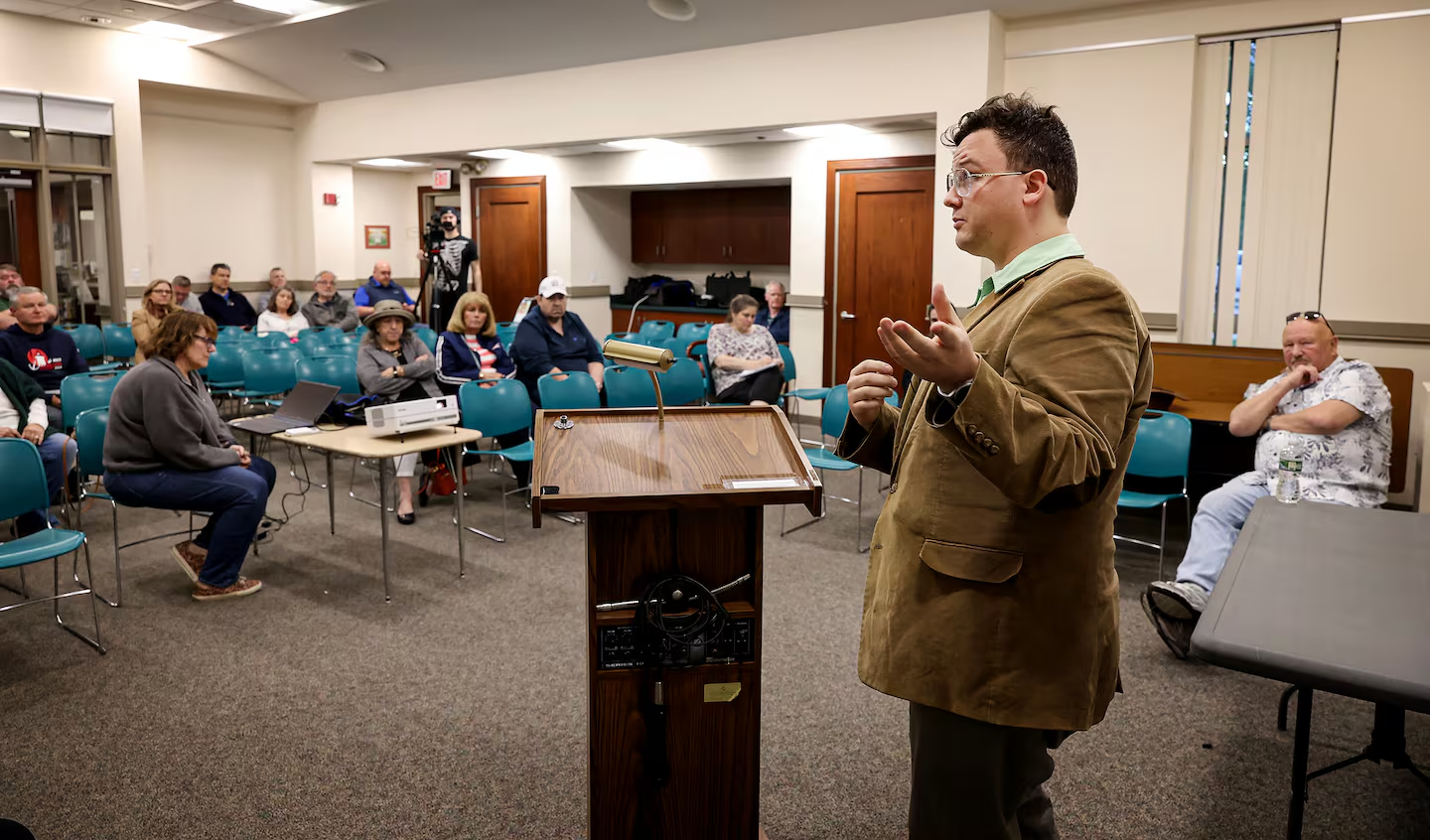
Massachusetts residents who vote in the Republican primary this September will see Michael Walsh, the state GOP’s endorsed pick for attorney general, on their ballot after all.
The state’s highest court Monday ruled that Walsh can have his name appear before primary voters despite a lower court judge saying there was “substantial evidence” his campaign submitted fake signatures in order to help qualify.
A Supreme Judicial Court justice upheld an Essex County Superior Court ruling reinstating Walsh, and in turn, denied an appeal by the state commission that initially blocked him from the ballot.
The ruling comes amid a months-long signature fraud controversy that has prompted district attorneys in Norfolk and Plymouth counties to open investigations into allegations of fraudulent signatures.
In the nine-page ruling, Justice Frank M. Gaziano wrote that he agrees with the judge’s decision that while Walsh’s campaign may have submitted fraudulent signatures, the state Democratic Party official, Adam Roof, who originally challenged Walsh’s place on the ballot did not correctly submit his objection. State law requires it to be sent via registered or certified mail. He instead sent it by email and through first-class mail.
The State Ballot Law Commission, “in essence, asks the court to ignore the last sentence of [the relevant law],” Gaziano wrote. “I am unwilling to do so.”
Secretary of State William F. Galvin told the court he needed a final decision before Tuesday, so officials can prepare Republican primary ballots for local clerks to send to overseas and military voters by Saturday.
Galvin declined to comment Monday through a spokesperson.
The ruling overturned a decision handed down last month by the State Ballot Law Commission, which blocked Walsh and another statewide candidate, Anne Manning Martin, from the ballot. The lower court judge upheld the commission’s decision on Manning Martin, noting that Shawn Oliver, a fellow lieutenant governor candidate who challenged her place on the ballot, had “complied” with state law in submitting his objection.
Neither Walsh nor David Mackey, a lawyer for the commission, immediately responded to requests for comment Monday.
Read more Governor Ayotte’s transportation plan veto slammed as ‘short-sighted’ and ‘reckless’
The allegations center on the work of Joe Bronske, a paid signature gatherer hired by Walsh, as well as Manning Martin, a Republican lieutenant governor candidate facing similar fraud allegations, and Anne Brensley, the Wayland Republican who, just weeks after winning her party’s endorsement, said she had not collected enough signatures to qualify for the September ballot.
Brensley accused Bronske of failing to gather the number of signatures she had paid him for, and turning in some that were forged — including some, she told the commission, that belonged to voters who had long since died.
Manning Martin also appealed the Superior Court decision to the SJC, but the high court had yet to rule Monday afternoon on her case.
In interviews with the Globe, a dozen people whose signatures appeared on Manning Martin and Walsh’s nomination papers said they did not sign the sheets.
With his place on the ballot confirmed, Walsh’s campaign could also be financed by taxpayer dollars. Both Walsh and Manning Martin opted into the state’s campaign financing program, where state officials said roughly $1.4 million in public funds had been set aside for candidates, evenly split between the primary and general elections.
Manning Martin and Walsh were the only candidates to join the program, which offers candidates public funds if they agree to limits on spending. The money comes from taxpayers who voluntarily divert $1 to the program from the state income taxes they owe.
Walsh doesn’t have a primary election opponent, so he would not be eligible for public funds until after the Sept. 1 primary.
Read more Maine Democrats to Chuck Schumer: Stay out of our Senate race
Chris Van Buskirk of the Globe staff contributed to this report.


Post Comment