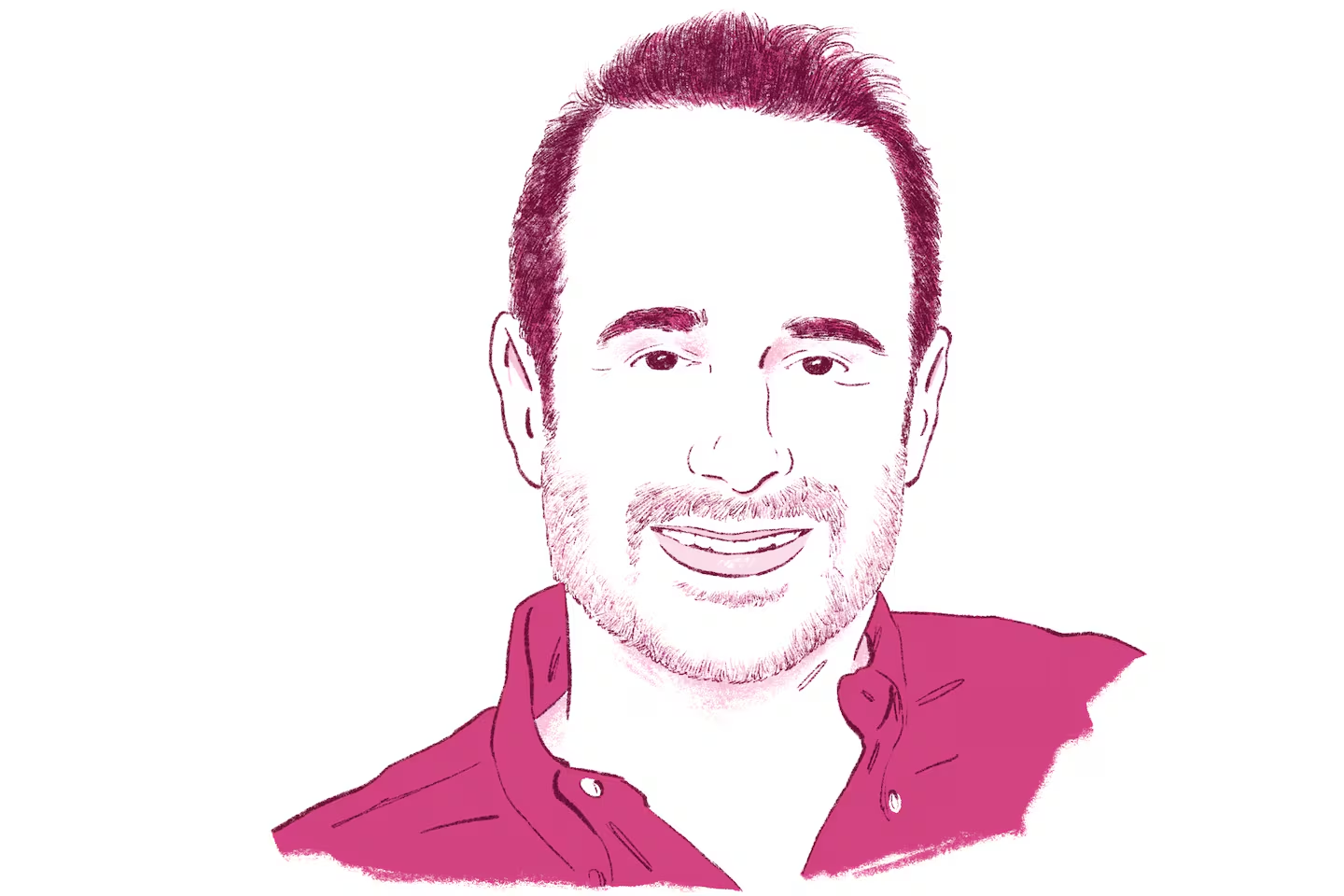
In his book ‘Summer of ‘71,’ veteran Washington journalist John A. Jenkins says we’ve been here before
John A. Jenkins was freshly graduated from college and not yet 21 when he arrived in Washington, D.C., to begin work as a reporter in May, 1971. It was the beginning of an eventful season in American history. As he chronicles in his new book, “Summer of ‘71: Five Months That Changed America” (Citadel), Americans 55 years ago were arguing about an ill-defined war on the other side of the world, inflation, abortion rights, and a United States president who seemed to be dragging the nation into authoritarianism. Sound familiar?
Read more Before Walter White was a killer, he was just a desperate man with a plan
When Jenkins arrived at his first job, he says, “everybody else in the newsroom was on vacation and the entire city was probably either on Nantucket or in Martha’s Vineyard. I’m in the throes of this amazing political maelstrom every day, beginning in late May of 1971.” It was an exhilarating time to be a political journalist, but, Jenkins says, “at the same time, it’s almost like I’m covering a crime scene.”
One of the most consequential stories of the summer was the New York Times’ publication of the Pentagon Papers, the government’s secret history of American involvement in Vietnam, which had been leaked by economist and analyst Daniel Ellsberg. Ellsberg was among the “really compelling characters” Jenkins profiles in the book, including reporter Neil Sheehan, activist Angela Davis, Roe v. Wade attorney Sarah Weddington, Attica prisoner George Jackson, and then-national security advisor Henry Kissinger.
Kissinger exemplified the paranoia of the Nixon administration, Jenkins recalls, “going after his enemies” using illegal wiretaps. “I think the Kissinger wiretaps were really quite amazing. In some respects, we haven’t gotten to the point on this sort of continuum of autocracy that I think we were on … under Nixon.”
How bad did things get? Well, Jenkins recalls, there was the time Vietnam War protestors were camping on the mall in D.C. and future Supreme Court justice William Rehnquist revoked their permits in the middle of the night, invoking what he called “limited undeclared martial law — this is like the double secret probation in Animal House!”
Jenkins says he found it “deeply offensive” when the vice president recently underplayed Nixon’s actions during his presidency.
“We have a guy that was born in 1984, and he has the audacity to say that it was a blip on the radar,” he says. “I don’t know who buys that.”
Read more Jacob’s Pillow is in full swing, and more local arts news
Jenkins hopes his book will provide readers with enough facts to make up their own minds. “I think it’s very important to have that political history nailed down,” he says. “But the most important thing is, I want them to have some hope. Ultimately, democracy endures. We have been here before. We have survived it, and we will do so again.”
John A. Jenkins will read at 6:30 p.m. on Tuesday, July 7, at Sandwich Public Library on the Cape. He will be at Harvard Book Store later in the month.
And a few more book notes …
“Everything Was Beautiful and Nothing Hurt” (Avid Reader Press/S&S) by Ben Reeves is a nifty novel with a killer concept. The protagonist, named Travis, has a job as the grim reaper, doling out death to those whose time has ended. It’s not a lifestyle that lends itself to friendship and connection, so when Travis meets a neighbor and her young daughter, he (and readers) will be forced to re-examine the gifts of life itself.
Three new books demonstrate the range of what nonfiction can do. Anna Thomasson’s “A Vast Horizon: Friends and Lovers, Freedom and War” (Pegasus) covers familiar ground in the group biography of avant-garde artists in Europe summering in the French riviera as the continent careens toward World War II. And yet, can we ever really get enough of Man Ray, Picasso, and Lee Miller? This new entry into an admittedly crowded bookshelf looks good enough to earn its spot, and its readers.
Rachel Aviv’s New Yorker essays are always worthwhile, and a new book, “You Won’t Get Free of It: Stories of Mothers and Daughters” (Knopf) gathers some of the most emotionally resonant she has ever written, including her masterful account of the writer Alice Munro’s failure to protect her own daughter from a partner’s sexual abuse.
Finally, in “Good Morning Moon” (Harper), novelist and biographer Brad Gooch examines his own life as a gay man surviving the AIDS crisis and becoming a father in middle age. Writer Andrew Solomon calls this brief, beautiful book “a beacon of hope and discovery.”




Post Comment