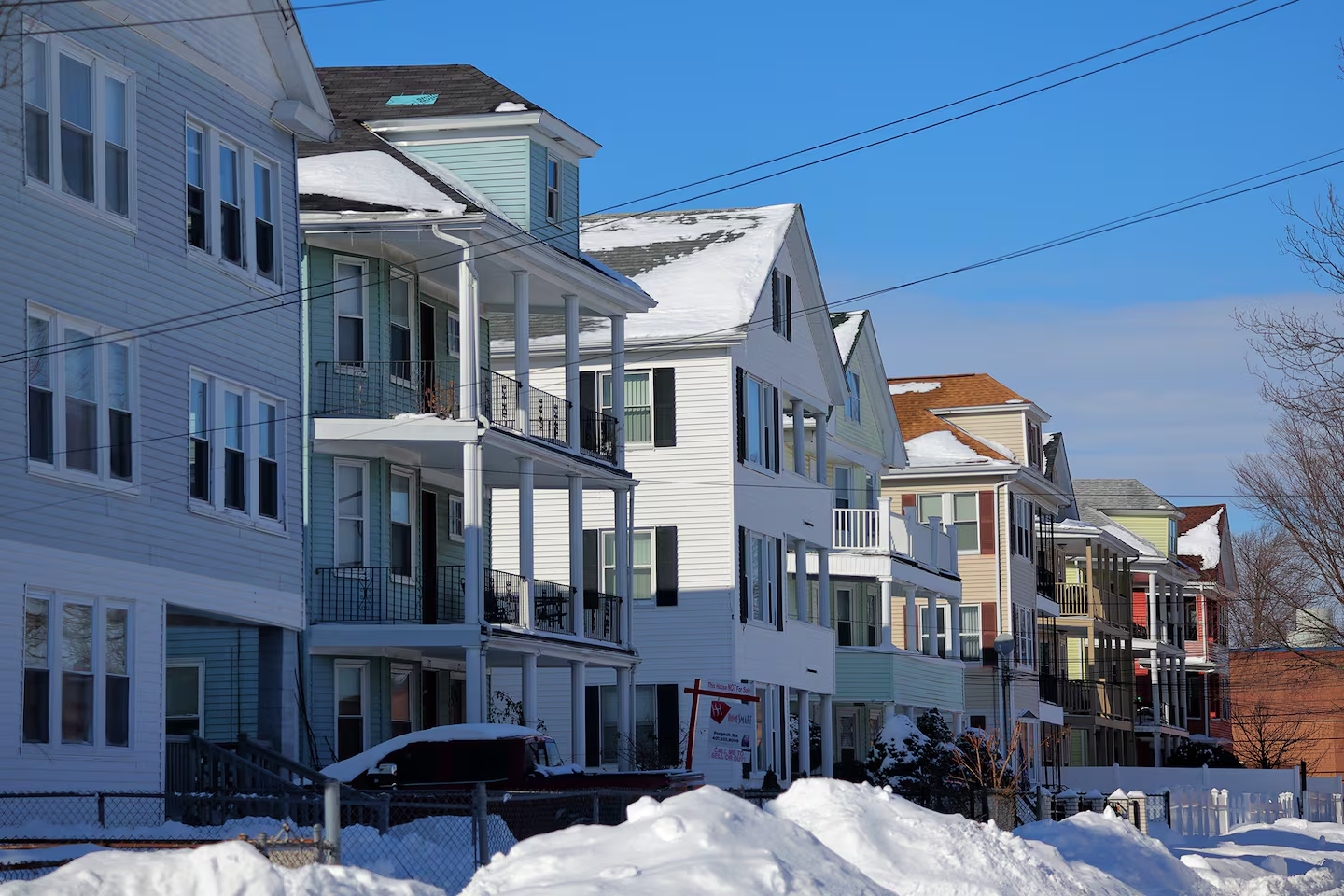
Rent control is dead in Providence, for now, after failed veto override
PROVIDENCE — The Providence City Council failed to override Mayor Brett Smiley’s veto of its rent stabilization plan on Friday night, killing the proposal for now.
Read more Golden Knights docked second-round pick, coach John Tortorella fined $100K for breaking media rules
Supporters of the plan hope the failure will help bolster progressive campaigns this fall, when every City Council seat and the mayor’s office are on the ballot.
City council leaders did not have the votes to overturn the veto going into the rare Friday night meeting. Two previous votes on the matter were 9 to 6, enough to pass the measure but not enough to override the veto, which requires a two-thirds majority of the council.
The same 9 councilors voted to override the veto on Friday, short of the 10 needed. Only one of the councilors in opposition, Councilwoman Jo-Ann Ryan, showed up to the meeting, and voted no again.
The clock runs out on the ability to reverse the veto this weekend.
Despite failing to flip any votes, Council President Rachel Miller said it was important to continue the debate up until the deadline.
“Rent stabilization is bigger than the 15 councilors,” Miller said. “It has brought hundreds of residents into the conversation, and people whose future depend on this policy deserve as much time as possible to speak with their councilors and communicate why it’s so important to them.”
Miller previously said if the override were to fail, “landlords will continue to be allowed unlimited increases that price families out of their homes and neighborhoods.”
The proposed ordinance would have set a 4 percent cap on annual rental increases in the city, but with a expansive set of exemptions.
Landlords who live in one of their properties would be able to exempt two buildings of four units or fewer, and newly constructed apartments would be exempt for up to 20 years. Existing apartments would not be subject to the rent limits until five years after they were constructed.
The council was never able to calculate what percentage of the city’s apartments would be actually be rent stabilized, citing a lack of available data. The mayor’s office estimated it would be fewer than half.
Most of the landlords on the council, and Smiley himself, would not have been subject to the rent control rules in their properties.
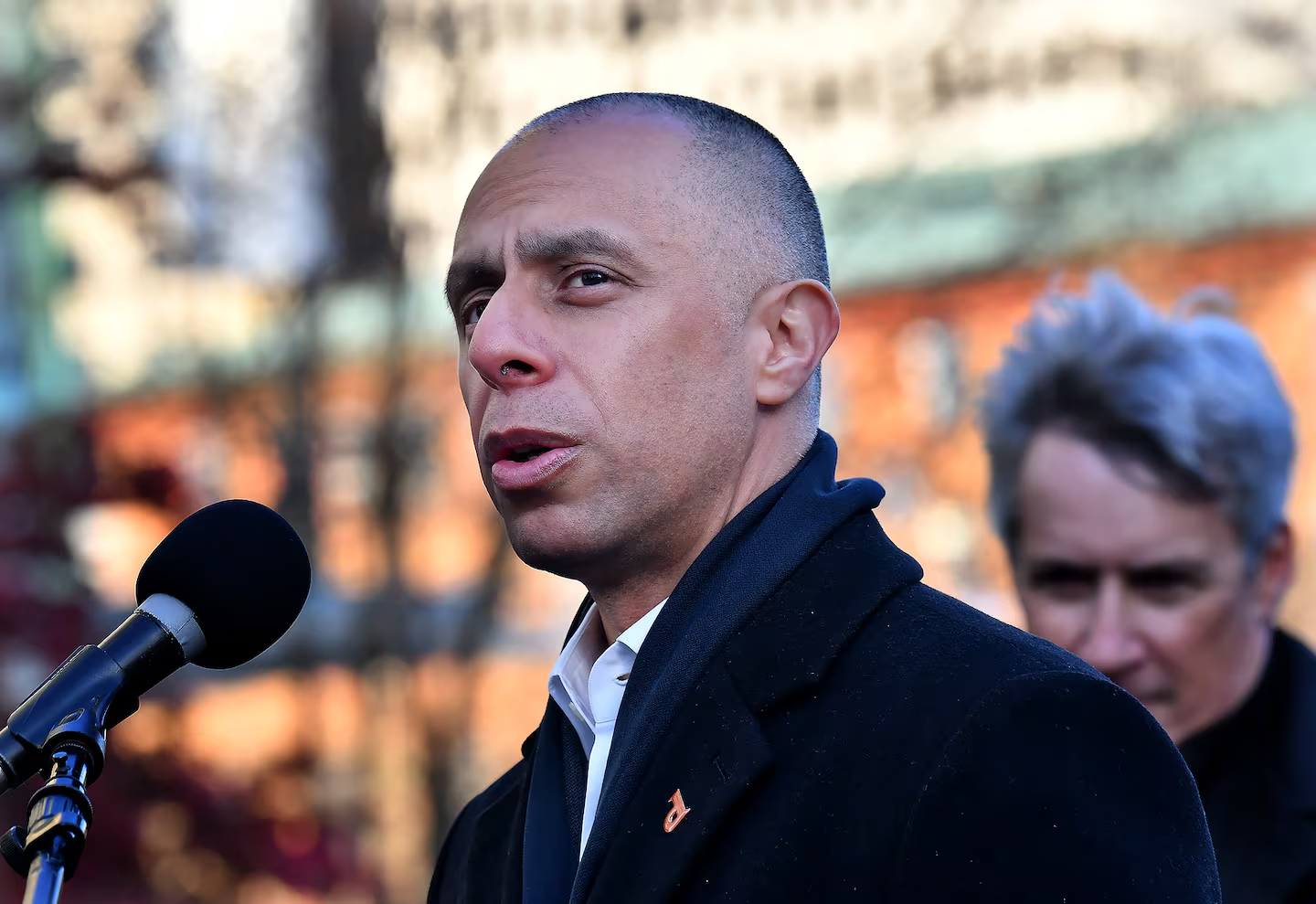
The September Democratic primary could be a litmus test for how important the issue is to voters. Smiley is facing a challenge from State Representative David Morales, a Democratic Socialist who has promised to sign rent stabilization into law if elected.
Reclaim Rhode Island, a progressive group focused on housing, is targeting its political efforts towards the mayor’s race and the race for Ward 1, currently held by Councilman John Goncalves.
Read more Just about anything could happen when the 151st Preakness is run at Laurel Park on Saturday
“I think that both Mayor Smiley and Councilman Goncalves have sided with powerful real estate interests over the working-class people of Providence,” chair Dan Denvir said. “They are on the wrong side of an incredibly popular issue, and voters are going to make that clear in September.”
Ward 1 includes Fox Point on the East Side of Providence, and part of downtown. A primary challenger for Goncalves has not yet been announced.
In voting against the ordinance, Goncalves argued the policy moved through the council too fast, and required more analysis. He also expressed concern about shifting the city’s tax burden to homeowners if apartment buildings decrease in value because they are rent controlled.
He did not attend the override vote, nor did Councilors James Taylor, Ana Vargas, Oscar Vargas and Pedro Espinal, all of whom had previously voted against the ordinance. The other 9 councilors were in favor.
All 15 councilors are Democrats.
Ryan, who is running for the state representative seat being vacated by Morales, said the ordinance “threatens to kill” any progress made in housing investments.
She said she supports other affordable housing initiatives including an emergency rent fund proposal proposed by Smiley.
Smiley has acknowledged that rent stabilization is popular in public polling, but argues the policy could slow down housing construction.
“I think on first blush, if you talk to anybody and say ‘I’d like to freeze your rent,’ that probably sounds pretty good,” Smiley said last month. “What a poll doesn’t capture is the reality of these policies.”
“No one’s rent actually gets lower, all it does it slow the rate of growth of some people’s rent,” he said. “Even if you think rent control is a good idea, this is a bad version of a bad policy.”
The two sides have agreed on other housing proposals, including last week’s first-ever enforcement of the city’s ban on rent-setting algorithms. Both the City Council and Smiley touted a new complaint filed against the owner of the 95 Lofts, where tenants reported getting a 44 percent rent increase.
Councilor Justin Roias questioned why those who supported the algorithm ordinance could not support rent stabilization.
“If it is wrong for landlords to use software to drive rents higher, why is it suddenly acceptable when they do it without the software?” Roias said. “That irony is impossible for me to ignore.”
Read more Thursday’s nine HS sports takeaways, with football scholar-athletes and lots of college check-ins


Post Comment