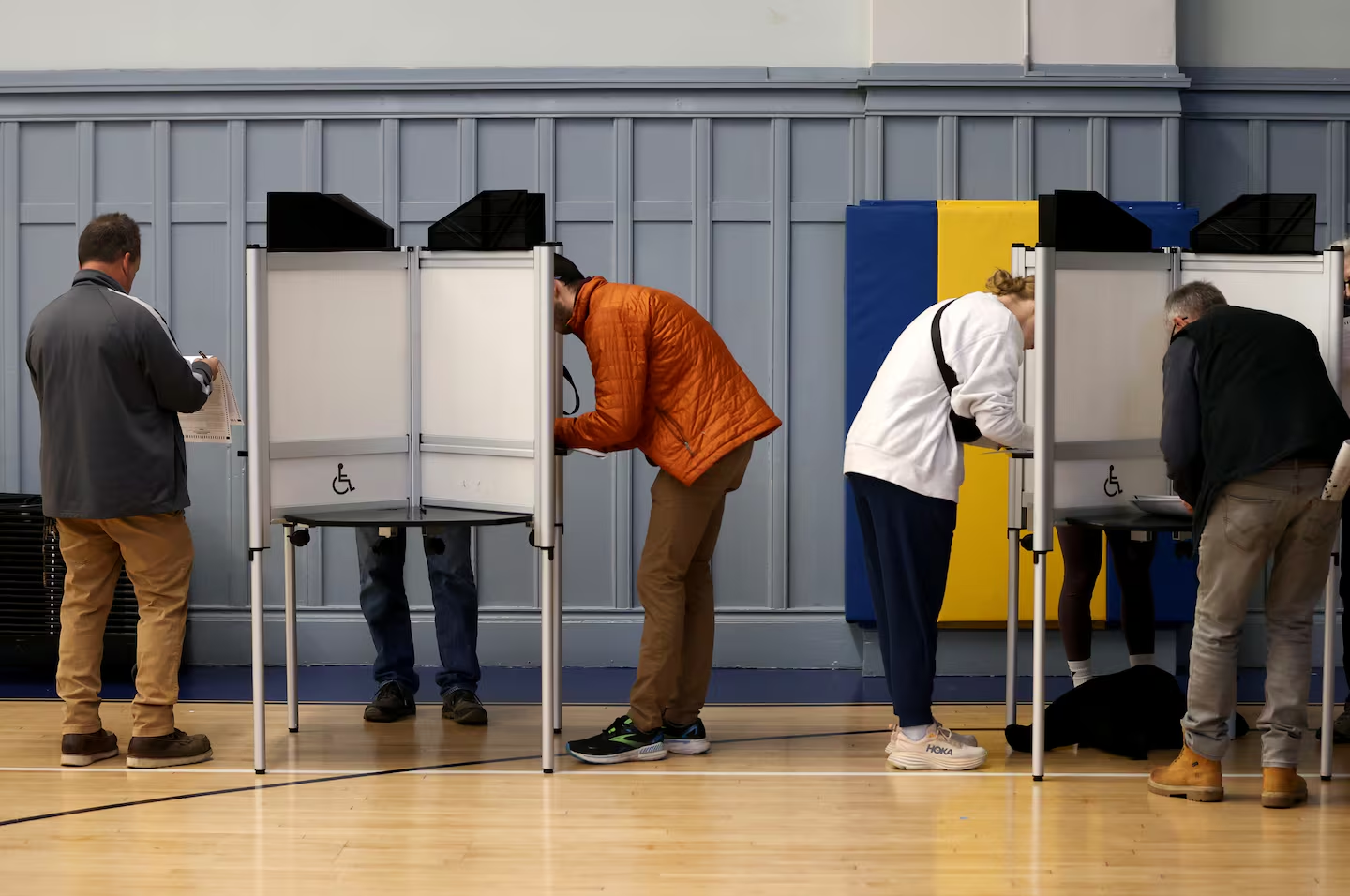
Long vexed by ballot questions, Mass. House Democrats want options for overhauling process
Massachusetts House lawmakers plan to pass legislation Wednesday targeting the state’s ballot question process and the paid signature gatherers who help campaigns get their proposals before voters, acting on long-held frustrations with a system they view as an ineffective end run around the Legislature.
Read more R.I. leaders blast Supreme Court ruling stripping protections for Haitians
Beacon Hill Democrats trained their sights on ballot questions after the state’s highest court blocked two initiative petitions from the ballot and effectively helped sink a third, in part because of errors made by the attorney general’s office.
House Speaker Ron Mariano said Tuesday that the House’s bill is a bid to respond to “widespread concerns” about ballot questions, by requiring campaigns to file financial reports monthly — they currently can go months without having to disclose their donors — and creating a commission to study “broad reforms” to the process.
“Over the past several years, we have seen a growing number of well-funded special interest groups turn to the ballot to advance their agendas through one up-or-down vote, bypassing the negotiation and compromise inherent to the legislative process,” Mariano said in a statement.
Mariano and other legislative leaders have long chafed at lawmaking at the ballot box, arguing the process leaves voters with a binary choice on complicated laws.
The push in the Legislature to reshape the initiative petition process, one of the few direct avenues residents have to propose and pass laws, comes during an election cycle in which a record number of ballot questions have advanced.
Attorney General Andrea Campbell’s office certified 44 proposals in September and ultimately 11 ballot questions, plus a referendum approved two years back that cleared the initial hurdles to move toward the November ballot.
In the span of a week this month, however, the Supreme Judicial Court rejected questions that would establish rent control and slash the state income tax after finding Campbell incorrectly certified the rent control measure and crafted a “significantly misleading” summary of the income tax proposal.
And in an earlier advisory opinion, the high court cast doubt on Campbell’s decision to certify a ballot question that would have reshaped the leadership stipends that state legislators collect.
The House’s bill would create a commission to study the attorney general’s role in the ballot question process and submit recommendations for changing it by the end of 2027.
The panel would consider whether the state’s chief prosecutor should have more say in determining whether an initiative petition is constitutional and “whether adequate mechanisms exist to identify and correct a summary found to be inaccurate or misleading after it has been published or after signatures have been collected.”
State Representative Dan Hunt, a Dorchester Democrat who co-chairs the Legislature’s Election Laws Committee, said Campbell faced a “very difficult job” this year amid the deluge of ballot question submissions.
“That’s the whole point of the commission, is to study the process, hear from experts, hear from attorneys that have worked on these questions for decades, and potentially put together a product for the Legislature to consider,” he said in an interview.
Read more Proposed budget from state lawmakers won’t raise taxes and includes review of school funding
Hunt said lawmakers have been working on the bill for the better part of three and a half years. He said the legislation originally gained steam after the 2020 ballot question battle over expanding the state’s “Right to Repair Law,” which saw tens of millions of dollars in funding flow to opponents and proponents.
In that year’s election, Hunt said the campaign to oppose the measure drew funding from out-of-state auto manufacturers between late January and early September, when ballot question committees are not required to disclose their finances.
“We, as the general public, did not know until … like the first week in September where the money was coming from,” Hunt said.
The House’s bill takes a similar approach to reworking the reporting schedule for ballot question campaigns as a version that passed the Senate earlier this year.
Both bills require statewide ballot question committees to file monthly finance reports until 60 days before an election, and twice-monthly reports during the 60 days leading up to an election.
“This bill would ensure that when powerful interests — whether they’re in state or out of state — spend money to influence our state ballot questions, that the public can clearly and quickly see who’s behind those efforts right now,” said Geoff Foster, the executive director of Common Cause Massachusetts.
The two chambers also take aim at paid signature gatherers by barring campaigns from compensating them based on the number of signatures they collect, including per-signature payments and signature-based bonuses. The two bills would require signature-collection forms used by paid signature gatherers to include a disclosure stating that the petition is being distributed by a paid individual.
Tommy Hickey, who directed the campaign in favor of “Right to Repair,” said paid signature gatherers are “important” for campaigns looking to gain access to the ballot. But he said it’s also “really important to get folks who are signing things to know exactly who’s paying to get these signature gatherers out there.”
Harold Hubschman, the founder of the Massachusetts-based signature-gathering firm SignatureDrive.com, said he has spoken to lawyers about the proposed ban on per-signature compensation and is “confident” the provision would be struck down in court.
He also described the effort to create signature documents with disclosures for paid signature gatherers as a “bad idea” because it would require the secretary of state’s office to create different forms for paid and nonpaid signature gatherers.
“We don’t have a problem with our petitioners being identified as being paid petitioners,” he said in an interview. “But it is a nightmare … to introduce into the process two different versions of the same petition. That’s the problem.”


Post Comment