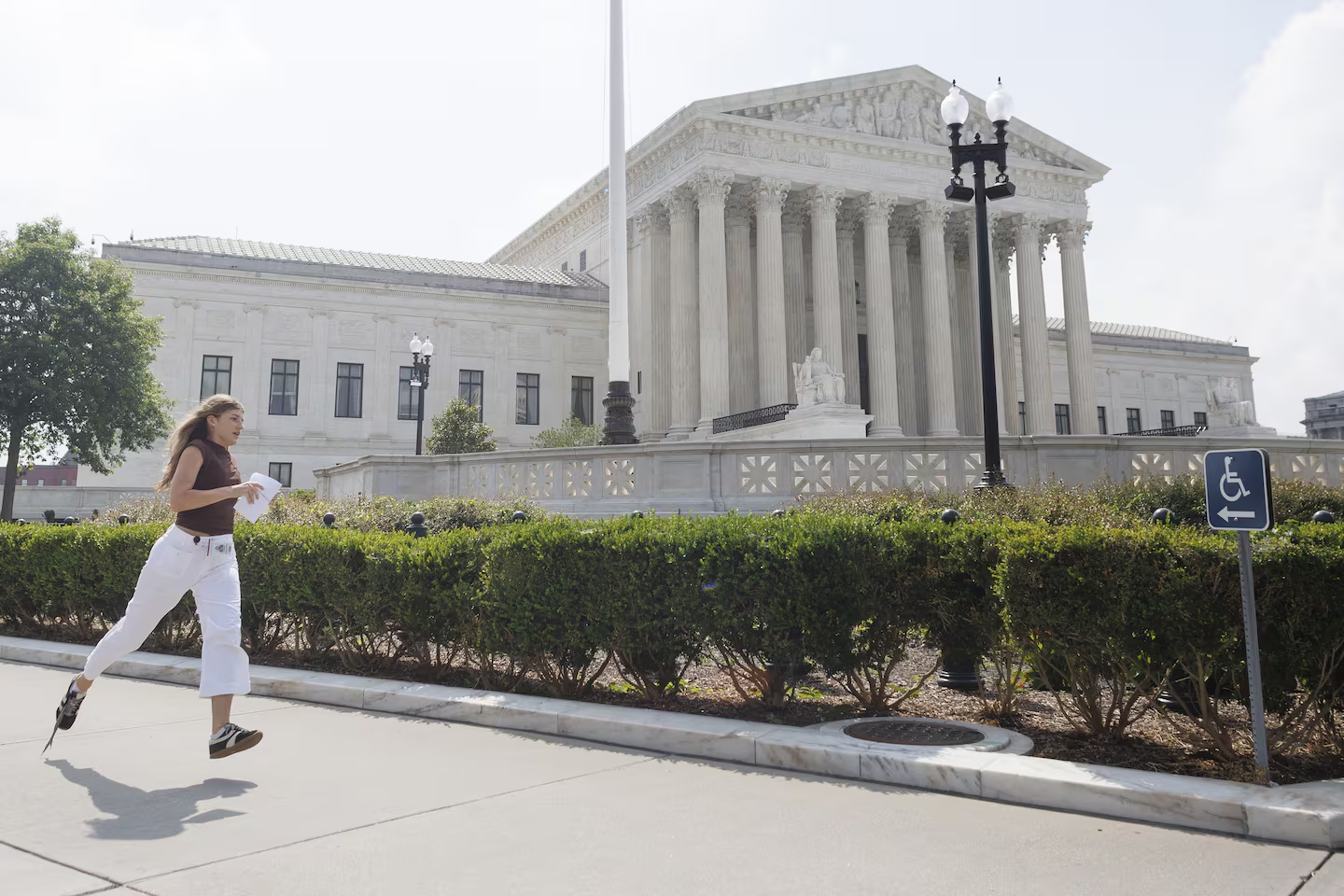
It’s the Supreme Court’s final decision day. Here’s what is left this term.
The Supreme Court’s term is in the homestretch, and several consequential decisions hang in the balance.
Read more Paraguay pulls off biggest win in its country’s history with shocking upset of Germany in Foxborough
Justices already issued major rulings this session on cases involving immigration, voting rights, and global tariffs. Many decisions have been in response to President Trump’s policies that push the boundaries of presidential power.
On Monday, the court expanded the president’s firing power over independent federal agencies — excluding the Federal Reserve — and ruled in favor of states who allow late-arriving mail ballots to be counted after Election Day.
Tuesday is poised to be the final — and potentially the most impactful — day of the court’s term. Opinions are expected on four cases, including ones that could reshape what it means to be an American and protections for transgender student athletes.
Here’s what to know.
Birthright citizenship
In perhaps the most consequential decision of its term, the court is expected to rule on Trump’s executive order that ended birthright citizenship for children who are born to parents in the US illegally or temporarily are not American citizens. If allowed to stand, Trump’s order would impact an estimated 250,000 babies born every year in the US.
Trump’s order has been challenged by advocacy groups across the country and was struck down by a federal judge in New Hampshire. Justices heard arguments on the case, Trump v. Barbara, in May, with Trump attending at least part of the hearing in person.
Justices appeared skeptical on the legality of Trump’s order, including Chief Justice John Roberts, who told a lawyer for the federal administration who argued that modern immigration required a new assessment on birthright citizenship: “It’s a new world. It’s the same Constitution.”
Transgender athletes
Two cases — Little v. Hecox and West Virginia v. B.P.J. — involve laws in Idaho and West Virginia that bar transgender athletes from school athletics.
Justices heard arguments in January on both cases, and conservative justices appeared ready to agree with the states that the bans don’t violate the Constitution or Title IX law, which prohibits sex discrimination in education. More than two dozen states currentlyban transgender athletes from school athletics.
Campaign finance
A decision is also due on a GOP push to lift federal limits on how much political parties can spend in coordination with congressional and presidential candidates.
The lawsuit was brought by the National Republican Senatorial Committee, the GOP’s campaign arm, against the FEC. A ruling for Republicans could swing campaigning power from so-called super PACs,which can raise and spend unlimited money advocating for candidates but cannot directly donate to or coordinate directly with campaigns, toward official political parties.
While hearing arguments in December, both liberal and conservative justices seemed skeptical of paring back campaigning laws.
Read more No. 1 NBA Draft pick and Brockton native AJ Dybantsa honored at Boston City Hall and State House


Post Comment