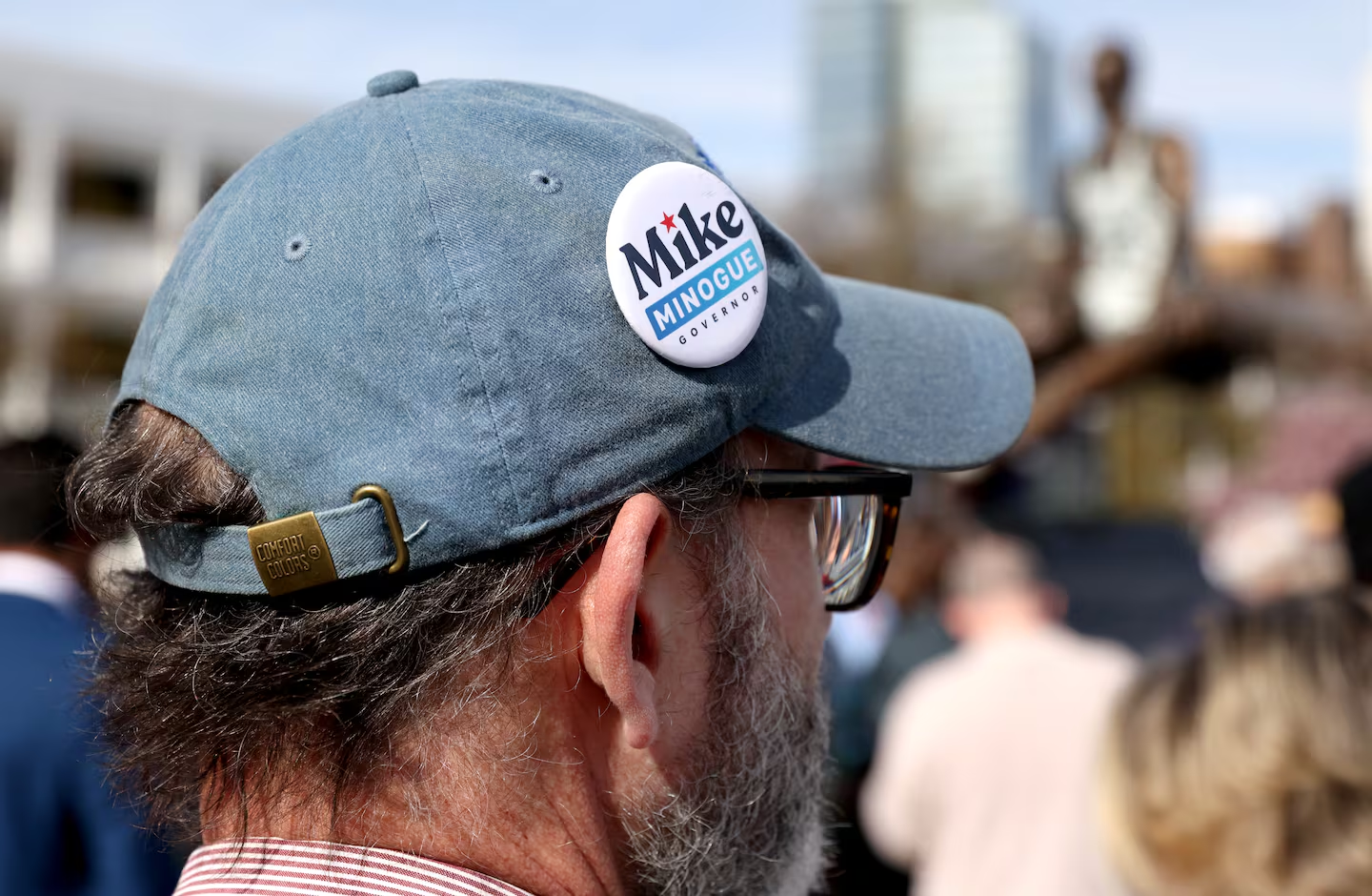
Is the GOP nomination for governor already sewn up? History says, not so fast.
To judge from Mike Minogue’s campaign, the GOP nomination for governor is all settled.
Read more Obama weighs in on Colbert for president, current political climate, and aliens on ‘The Late Show’
Or to speak the language of this very successful businessman, a completed transaction.
After a resounding victory at the state convention in April, Minogue is pushing for his lone remaining opponent, former MBTA head Brian Shortsleeve, to get out of the race.
The power of a state convention win —even by the wide margin that Minogue enjoyed — truly lies in the eye of the beholder. Winners invariably cast it as the expression of the will of the party. Losers tend to see it as an intramural skirmish that has little connection to the final outcome.
Personally, I am a longtime skeptic of the significance of state conventions.
After all, I’ve seen secretary of state candidate Josh Zakim crush a state convention only to get destroyed in a primary a few months later. Some people remember 1990, when the convention-winning candidates for governor from both parties — Steve Pierce and Frank Bellotti — lost their primaries (to William Weld and John Silber, respectively).
As a wise political consultant once said to me, “Conventions are an attempt to impose party unity in a vacuum.” Sometimes the party listens, and sometimes it doesn’t.
Minogue was a political unknown until recently. The longtime head of the medical device company Abiomed, he has already poured millions of dollars of his own money into the governor’s race. He speaks of being a “new kind of governor” who will run Massachusetts like a business.
He speaks of the primary almost as an annoyance, a minor detour on the way to a November showdown with Governor Maura Healey. Considering how little most voters still know about him, his self-assurance is breathtaking.
Shortsleeve — himself a businessman before becoming an insider with Governor Charlie Baker — has shown no willingness to leave the race. Spokeswoman Holly Robichaud insisted that Shortsleeve still has a path to the nomination.
“Mike Minogue’s convention support from party insiders represented less than one half of one percent of the voters expected to participate in the Republican primary,” Robichaud wrote in an email. “The Republican Party leaders at the convention have a terrific record of enthusiastically endorsing general election losers, which they have done in every single statewide election since 2018.”
Robichaud suggested Minogue’s opposition to abortion rights renders him unelectable.
Read more Maine’s Susan Collins reveals she’s long been diagnosed with a benign tremor
“A vote for Minogue in the primary is a vote for another four years of Maura Healey.”
Intraparty skirmishes are nothing new for the Massachusetts Republican Party. Particularly in the decade of Donald Trump, the party has struggled mightily. It can’t thread the needle between the diehard right-wingers that make up its base and the more moderate unenrolled voters it needs to win statewide races.
No surprise then that Minogue seems to want to avoid a protracted battle within the party. But there’s still the pesky matter of the voters having their say in a primary.
Of course, it’s an open question whether either of these guys can make a real run at unseating Healey.
It’s early in the race. But a recent Globe/Suffolk poll indicated that Healey is basically as popular as she’s ever been, with 81 percent of respondents viewing her performance favorably, versus just 12 percent who view it unfavorably.
Though the state’s cost of living is certainly a major concern, knocking her off will be a major challenge, no matter how much the Republican nominee is willing to spend.
Many people in politics would say a robust primary is always a good thing — good for voters and good training for candidates, especially untested candidates like Minogue and Shortsleeve. This race should play out, no matter how much of an edge Minogue seems to have in the moment.
The convention might not be meaningless, but it certainly doesn’t mean he’s won anything real.
It’s been eight years since a Republican won a statewide race in Massachusetts, and there certainly hasn’t been a recent discernible shift in their favor. Truth is, most voters would struggle to name either of the GOP candidates for governor.
Of all the qualities one of them might bring to this contest, overconfidence is probably the most surprising choice.
Read more What do New York, Maine, and Indiana have in common? The ruling class was thrown out.


Post Comment