Pride House Boston brings inclusivity and LGBTQ+ awareness to the World Cup
Pride Month meets the World Cup as Boston’s LGBTQ+ Museum of Art, History & Culture opens Pride House Boston, providing a safe, inclusive space for soccer fans to unite.
Read more Game 81: Yankees at Red Sox lineups and notes
The effort is tied to Pride House International, an organization that began at the 2010 Winter Olympics and was modeled after the hospitality houses typically centered around a nationality or culture. Since then, Pride Houses have been installed at large sporting events to provide a safe space for athletes, fans, and supporters to enjoy the event, particularly in countries more hostile toward the LGBTQ+ community.
Jean Dolin first heard about Pride Houses from a friend at the 2024 Paris Olympics. Dolin, the founder and CEO of Boston’s LGBTQ+ Museum, then immediately began planning to host one for the World Cup, as he saw a need for a flexible space that fosters community.
“There can be a misconception that our culture is either super activist or super nightlife,” Dolin said. “But there’s still queer culture all around, whether that is film, cinema, or sports. So, to me, that was a great opportunity to show what queer culture is.”
Soccer still lags in being an inclusive sport. Out of the 48 teams in the World Cup, zero athletes openly identify as part of the LGBTQ+ community. While Dolin noted Boston is a relatively safe space for queer people, he said the city lacks a strong and centralized community compared to other major cities.
“Massachusetts as a state has played a pioneering role in advancing LGBTQ rights … but in terms of culture, we haven’t made that much progress, and that’s probably what’s lacking, especially I think for this generation of 30 and 20 [year-olds],” Dolin said.
Part of Pride House Boston’s mission is to create a supportive space by properly training staff, using inclusive language, and providing gender inclusive restrooms. “A sports bar is not the ideal place I would tell an LGBTQ+ person to go to,” Dolin said. “But at least here, it’s safe, it’s curated, it’s inclusive, it’s more loving … we carry the responsibility of creating that safe space.”
The Pride House, which will run until the World Cup Final on July 19, is located at Spy Bar in the basement of the Revolution Hotel. Dolin aims to use the House as a relaxed, less institutionalized space for people to enjoy. Alongside watch parties, they have hosted Pride Month events as well, such as their Pride Day Parade and Juneteenth celebration.
Read more We checked out Trump’s Great American State Fair. It is, and isn’t, what you’d think.
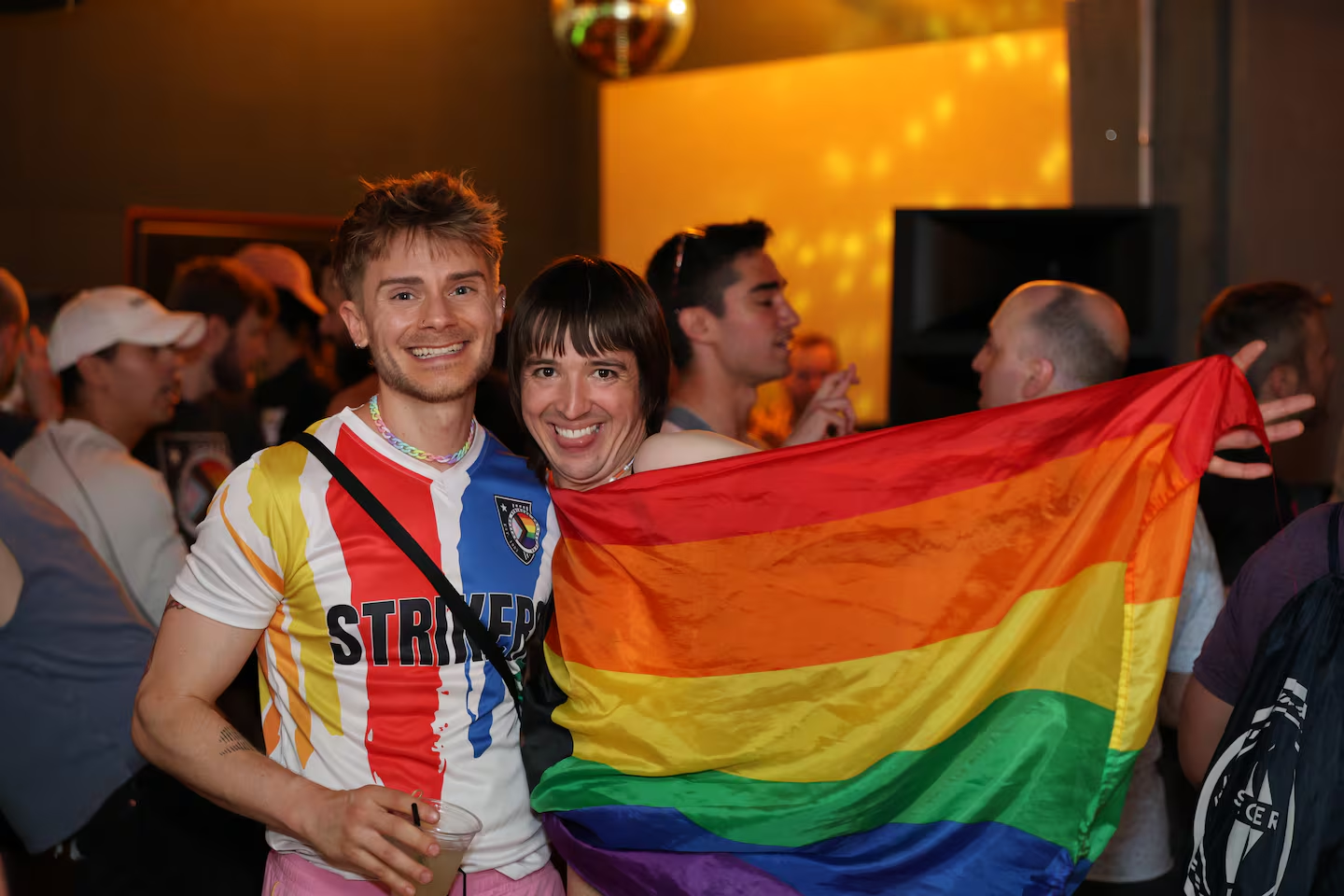
Pride House Boston has also partnered with LGBTQ+ sports groups in the area to bring athletes to the space. The Boston Strikers, a LGBTQ+ friendly soccer club, has come to their watch parties and hosted their own events there as well.
“There’s still work to be done in terms of queer athletes and our ability to play the sport,” Russell Cloon II, president of the Boston Strikers, said to the Globe. “So having that space to talk about the issues, but also celebrating the LGBTQ+ community is really important for the World Cup.”
Cloon himself has gone to several watch parties and events at Pride House Boston, appreciating the friendly environment the space curates. “It’s a very integrated place within the South End community … it’s just really special, and a place that hopefully travelers from all over can circle as a destination,” he said.
While it has primarily attracted Boston and South End residents, international fans visiting for the World Cup have made their way to Pride House Boston as well, helping raise awareness beyond the city.
“You can already feel the buzz in the city around soccer and the beautiful game, and so I think that it’s just an opportunity for us to build on that, and increase awareness for our club, queer individuals, queer athletes, and ride momentum from that,” Cloon said.
Pride House Boston will close its doors once the World Cup comes to an end, but Dolin and Cloon hope its impact will continue the conversation of having a stronger LGBTQ+ community in the area.
“My hope is that we would get to the point where it’s no longer news if someone comes out and plays sports,” Dolin said. “My hope would be, by the next World Cup in the US, whether that takes another eight or 24 years to come back, we will not need a Pride House.”
Read more The Supreme Court just made millions more vulnerable, including the MAGA types who are cheering


Post Comment