Players’ reaction to MLB’s latest labor deal proposals make interrupted 2027 season more likely
Major League Baseball’s pursuit of a sweeping overhaul of its labor deal kicked into an even higher gear Thursday when the league unveiled a new set of proposals it considers friendly and advantageous to both fans and players.
Read more Three things to know about Dillon Mitchell, the Celtics’ second-round pick
Unsurprisingly, the players reacted to the owners’ latest ideas as hostile affronts to both camps.
And while it’s still early, the day’s already familiar rhythm of point-counterpoint ramped up the odds of a significant interruption to the 2027 season after the all-but-inevitable players’ lockout begins in December.
MLB’s package of publicly released proposals was lengthy, and came with the caveat that they would have to be implemented under its earlier salary cap proposal that is the controversial cornerstone of these talks.
Some highlights:
▪ Players at least 30 years old can declare for free agency after five years instead of six.
▪ Free agents can sign a contract with a new team for a maximum of five years and 15 percent of the salary cap.
▪ A free agent re-signing with his old team can ink a six-year contract that exceeds the salary cap, a provision similar to the NBA’s (Larry) “Bird Rights.”
▪ Players with at least two years of service will receive a minimum salary bump of 28 percent from $780,000 this year to $1 million next year.
▪ A 30 percent increase in the pre-arbitration bonus pool, with pre-arbitration players who stay in the big leagues all season earning at least $1 million.
▪ Elimination of the qualifying offer system.
▪ Elimination of deferred compensation.
In addition to last month’s salary cap opening salvo, MLB recently proposed keeping high school players out of the amateur draft as well as establishing an international draft.
As it has from the start, MLB leaned into how the sum total of its proposals will level the playing field among the 30 teams and fix “the payroll disparity that leaves too many fans without hope of their team competing for a World Series title,” said Glen Caplin, MLB special assistant, baseball operations, in a statement. “Every other major US sport has tackled this problem, and every year more small-market teams in those leagues have a chance to win. The salary cap and floor proposal levels the playing field, allowing us greater flexibility to address longstanding player priorities while sharing baseball revenue with the players 50/50.
“Today, in addition to proposing the largest ever increase in the minimum salary, earned by over half of MLB players, we accepted two landmark changes to free agency that have been in place for 50 years. We agreed to both the MLBPA’s proposal to provide earlier access to free agency, and their proposal to eliminate the qualifying offer system, a provision players view as a drag on free agency.”
Read more Trump refuses to sign bipartisan housing bill into law. Here’s what that means for you.
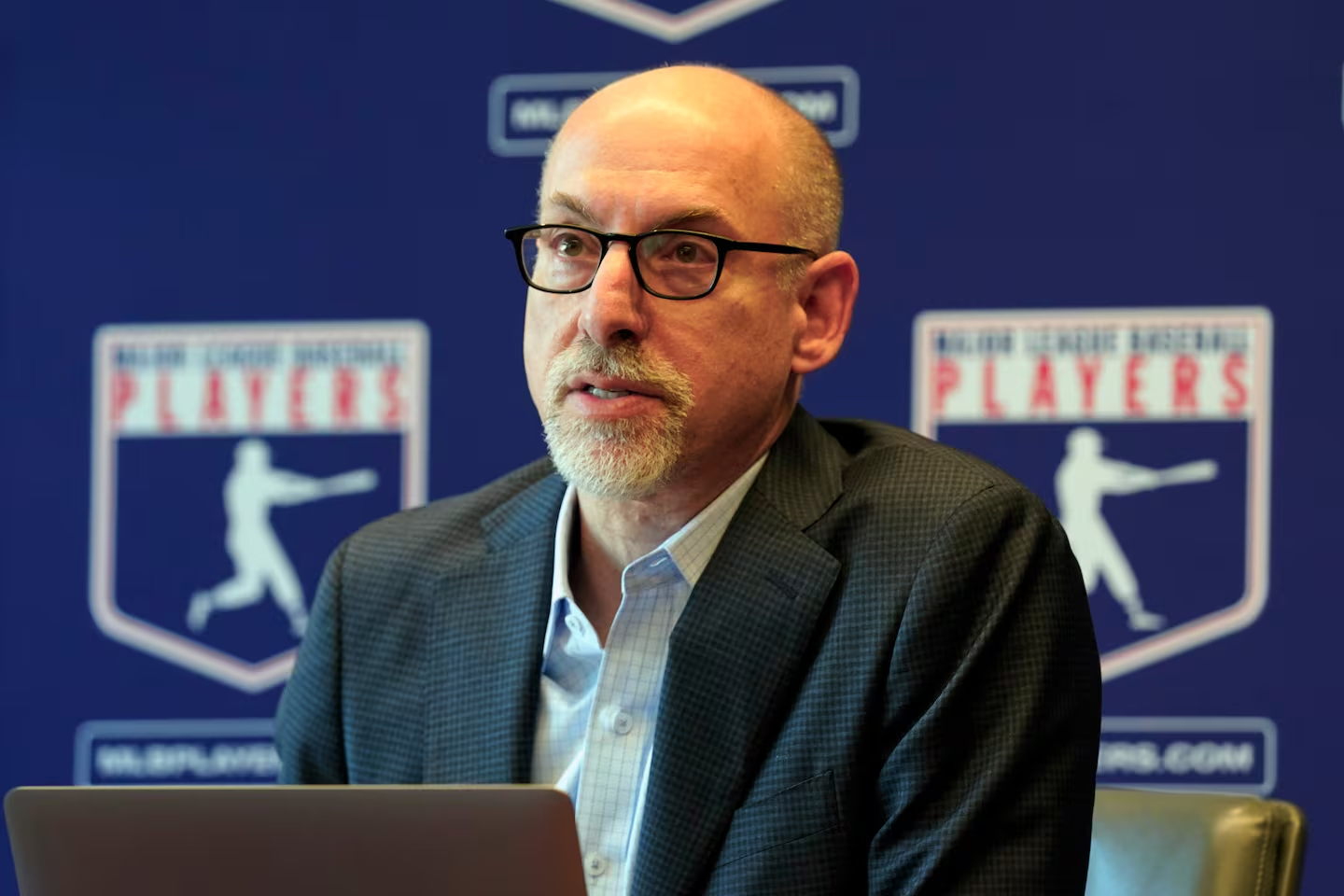
MLBPA interim executive director Bruce Meyer said in a virtual press conference that because MLB’s agreements with the MLBPA’s prior asks came with the condition of agreeing to a salary cap, the net effect of the proposals actually were a “zero sum game.”
“That’s why they’re willing to agree to something that they’ve always been against because they know that in a cap system, it has little or no value and that it’s far outweighed by the negatives of a cap system,” said Meyer.
MLB has relied on third-party independent surveys to conclude that 1) fans believe that payroll disparity creates competitive imbalance and 2) a salary cap similar to other sports will level the playing field.
Meyer said that there is not a single player who is dismissive of fans’ concerns.
But he cited another fan survey conducted by The Athletic that found that despite 74 percent believing the payroll disparity-unlevel playing field argument, 60 percent of fans believe that it’s the owners who spend too little who are responsible.
The overall increase in attendance and franchise valuations depict a game that is doing OK with a cap, said Meyer.
“[Small-market owners] are busy saying to the fans, ‘Wait, wait, don’t go, don’t you realize you have no hope? You should not be so happy about going to a baseball game,’” said Meyer. “It’s really a perverse incentive on their side to try and convince their fans that the product, which is thriving, is broken.”
The sides are expected to meet at least once more before next month’s All-Star Game.
Meyer said the initial wave of proposals has “done us a favor” in terms of allowing player unity to reach unprecedented levels.
“Anybody who’s banking on Major League Baseball players cracking, it’s never happened, it’s not going to happen — that’s why we’re the only ones who don’t have a salary cap,” said Meyer.
Read more Jaylen Brown slams ESPN, Stephen A. Smith in latest exchange of barbs
“Everything that’s playing out is exactly as expected.”



Post Comment