Tariff refunds begin to reach businesses as Trump lashes out at Supreme Court
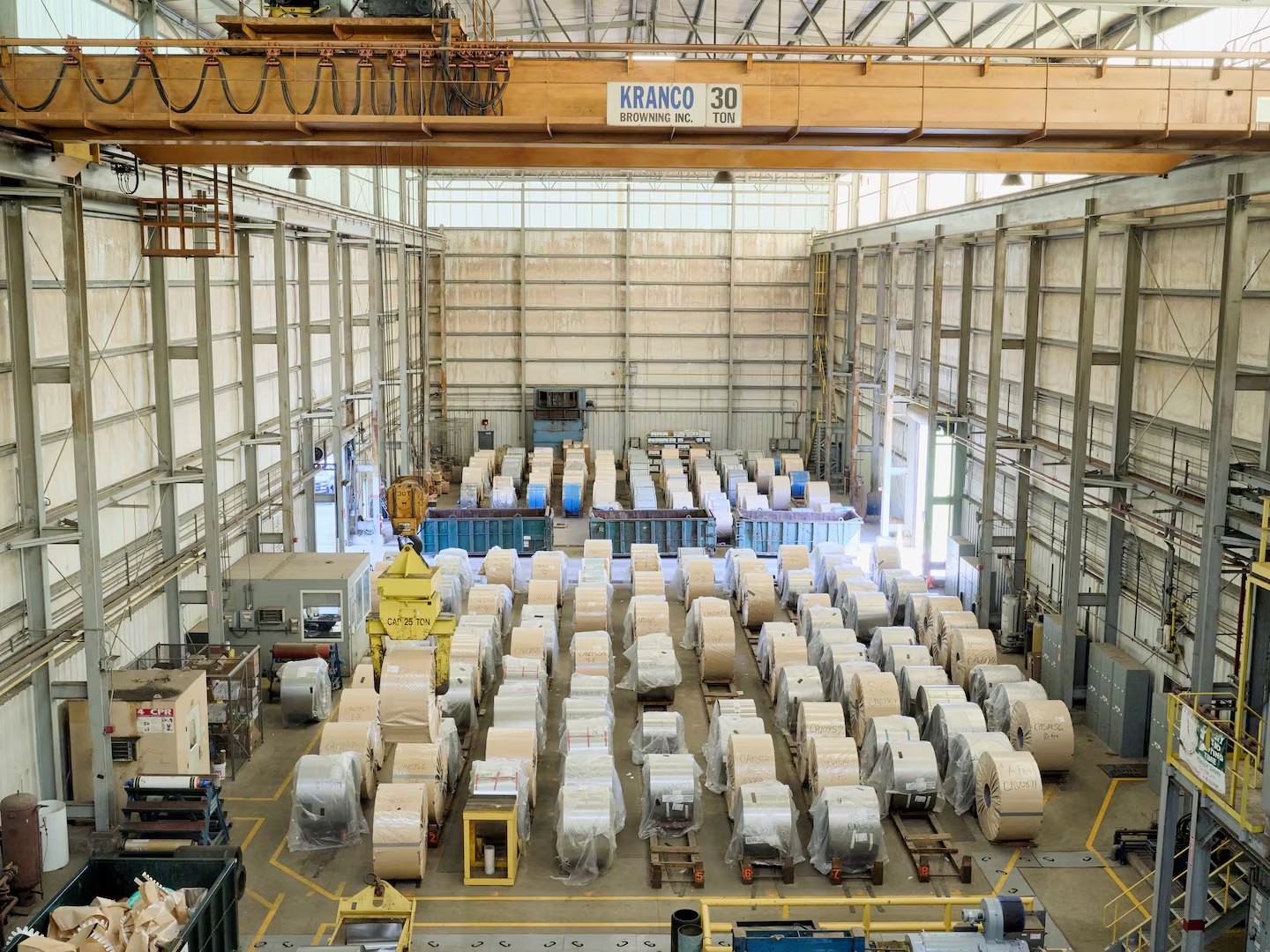
WASHINGTON — The U.S. government has started to refund some of the roughly $160 billion collected from tariffs that the Supreme Court deemed illegal, plus interest, turning what was once a prized windfall for President Donald Trump into a liability on the federal balance sheet.
Read more Kyle Bradish, Adley Rutschman help the Orioles win series as Yankees’ Max Fried leaves start early
At least two businesses confirmed this week that they had received a partial refund, almost three months after the nation’s highest court determined Trump did not have the power to enact his original, country-by-country duties without Congress.
The refund process is expected to be extensive, expensive and lengthy. The government must return money to about 330,000 importers, federal officials previously estimated, sending back what they paid in taxes. That money must be paid with interest, which is accruing at an estimated rate of about $650 million per month.
The money is reserved largely for businesses that imported goods, not for American families, though both have faced rising costs as a result of Trump’s trade war. Many large companies, including Costco, have separately sued the government to recoup their tariff payments, while they simultaneously stare down class-action cases brought by angry customers seeking financial relief.
The refund process comes at a difficult political moment for Trump, who arrived in China on Wednesday for high-stakes trade talks. Just last week, a panel of federal judges found that the president broke the law when he replaced his illegal duties with a 10% tax on nearly all imports.
The government has appealed that case, and the president’s 10% tariff has remained in place while arguments continue. But if it loses, the Trump administration may once again be on the hook to return billions of dollars in collected tariffs plus interest to businesses.
Perhaps sensing the fiscal and geopolitical implications, the president complained on social media this past weekend about the courts’ handling of his tariffs and said his administration should be able to keep all of the money anyway.
In one post on Sunday, Trump lamented that the Supreme Court did not add a “sentence” to its ruling allowing the government to keep money earned from illegal tariffs. In another, he attacked two of the court’s conservative justices, claiming they had forced the government to refund tariffs to “enemies, and people, companies, and Countries, that have been ripping us off for years.”
Read more US deportations to El Salvador double as Bukele aligns himself with Trump agenda
Trump’s enmity toward the refund process did not appear to interrupt the flow of money by Wednesday.
VOS Selections, a wine and spirits importer that had successfully sued Trump, said this week it had received a partial refund for tariffs paid under the International Emergency Economic Powers Act, or IEEPA.
Jay Foreman, the CEO of Basic Fun!, a toy company whose brands include Tonka trucks, said he had received a refund of about $400,000 in recent days. That represented a fraction of the roughly $7.4 million his company paid in IEEPA tariffs, he estimated.
Foreman’s company had been among those to sue over Trump’s new 10% tariff. He said he would be primarily reinvesting the money into the business.
“I don’t know whether they’re going to put the money out through a fire hose or a garden hose,” he said.
Customs officials indicated in a court filing Tuesday they had taken steps toward sending billions of dollars in additional, approved refunds to the Treasury Department for payment. The Trump administration has said it is still working to expand its system for processing refund requests.
Read more It’s back: MIAA approves Division 1A/Super 8 tournaments for baseball, boys’ and girls’ ice hockey
This article originally appeared in The New York Times.


Post Comment