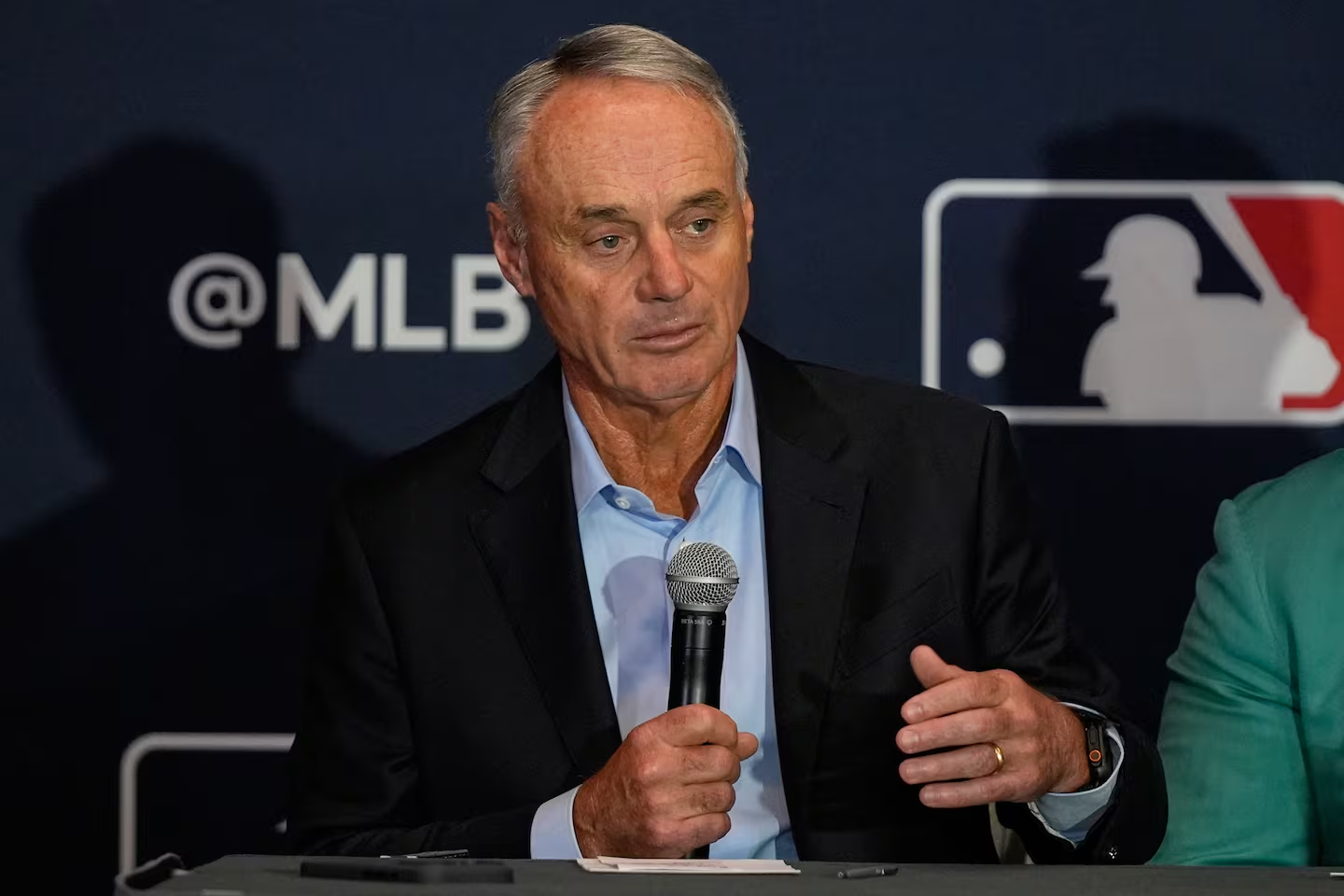
MLB commissioner Rob Manfred: competitive balance tax was a mistake, but salary cap might be a solution.
NEW YORK — After 23 years, Major League Baseball is now admitting it had it all wrong.
Read more Red Sox match their Fenway Park season-best in runs and hits in win over Orioles
Taxing the owners on their high payrolls is not going to scare off owners from spending what they want to spend and, presumably, level the playing field of which teams are competitive.
What will work, the league now believes, is capping the salaries of players.
And that is why, at the real risk of the first work stoppage since the last time the owners tried, the owners want the players to approve a salary cap.
“We had tried mightily over several rounds of bargaining to use a competitive balance tax to address competitive concerns,” said commissioner Rob Manfred of the competitive balance tax (CBT) system that’s been in use since 2003. “Sometimes you’ve got to admit you failed.”
Everything gets back to the notion of “competitiveness” for the owners’ plan.
If there’s more of it, the league believes, there will be more interest, and more interest will translate into higher revenues and higher franchise values, with players benefitting from the former.
And a cap, not taxes, is the path to competitiveness.
“Look, in the context of the postseason, we’re trying to generate interest and maximize viewership — I think it’s important to emphasize competitiveness,” said Manfred. “We haven’t had repeat winners until the Dodgers [last November]. I think that when we think about it from a labor perspective, we’re focused on an entirely different part of the calendar and that’s the offseason when you’re trying to sell season tickets. The perception among our fans that’s really strong is that we have a lack of competitiveness.
“We never thought about the CBT as a revenue-generating device, and when you see more and more tax getting paid, you realize that it is not the kind of speed bump that would help on the issue of competitiveness.”
In speaking about the players’ stance and also the owners, Manfred delivered mostly concise answers to questions.
The closest he got going toe-to-toe with MLBPA interim executive director Bruce Meyer was in asserting the union head presented an inaccurate picture of the cap’s impact.
Earlier this week, Meyer offered detailed explanations for why the union believes the salary cap is a flawed concept.
One problem, he said, was that players stood to make less money under the new proposed structure than they are making combined this season.
Read more Presidential museum showcases political and personal sides of Obama with sprawling community campus
“All I can tell you about our initial proposal is that it was specifically constructed to ensure that in the first year of the contract, major league players would make more money than they made in 2026,” said Manfred. “To the extent that anybody is suggesting something other than that, it’s just not accurate.”
He waved off the idea that the union’s early and definitive flat rejection of the salary cap meant there was no point to bringing it up.
“Everybody gets to make their own proposals – I think if I said I’m not interested in increasing the minimum salary no matter what, I doubt that the union would say, ‘OK, that’s great, no minimum salary,’ ” he said. “It’s a process. We think we made a proposal that addresses probably the most significant business concern for us, and we think addressing that concern will have really significant upside for the owners and the players.”
Asked if sticking with the cap proposal, even though the union has made it clear it will not accept it, is worth the risk of the first work stoppage in 32 years, Manfred said he would not speculate on work stoppages.
“I think that the players are smart people,” said Manfred. “I think they understand that payroll is a significant advantage for certain clubs, and that high-payroll clubs win more than low-payroll clubs.”
That concern from the fans shows up in quantifiable ways, he said.
“Teams that go through periods, particularly longer periods, of non-competitiveness not only have lower revenues but they are slower to recover once they become competitive,” he said.
Manfred said there are plenty of topics the sides have yet to start discussing. There is not a fixed date yet for the next round of talks.
“I’m anxious to get back in the room,” said Manfred.
The labor talks impact two key events in the not-so-distant future: MLB players participation in the LA Summer Olympics in 2028 and when the next World Baseball Classic will be held.
For the Olympics, Manfred said players are treating it on a different track than labor talks which he said was positive since “we can’t wait on a commitment for that.”
Read more Trump says he’s nominating Todd Blanche to serve as attorney general
The next WBC is expected to take place in 2029 or 2030.



Post Comment