The World Cup: What’s in it for NFL owners? Mostly a lot of hassle and not much revenue.
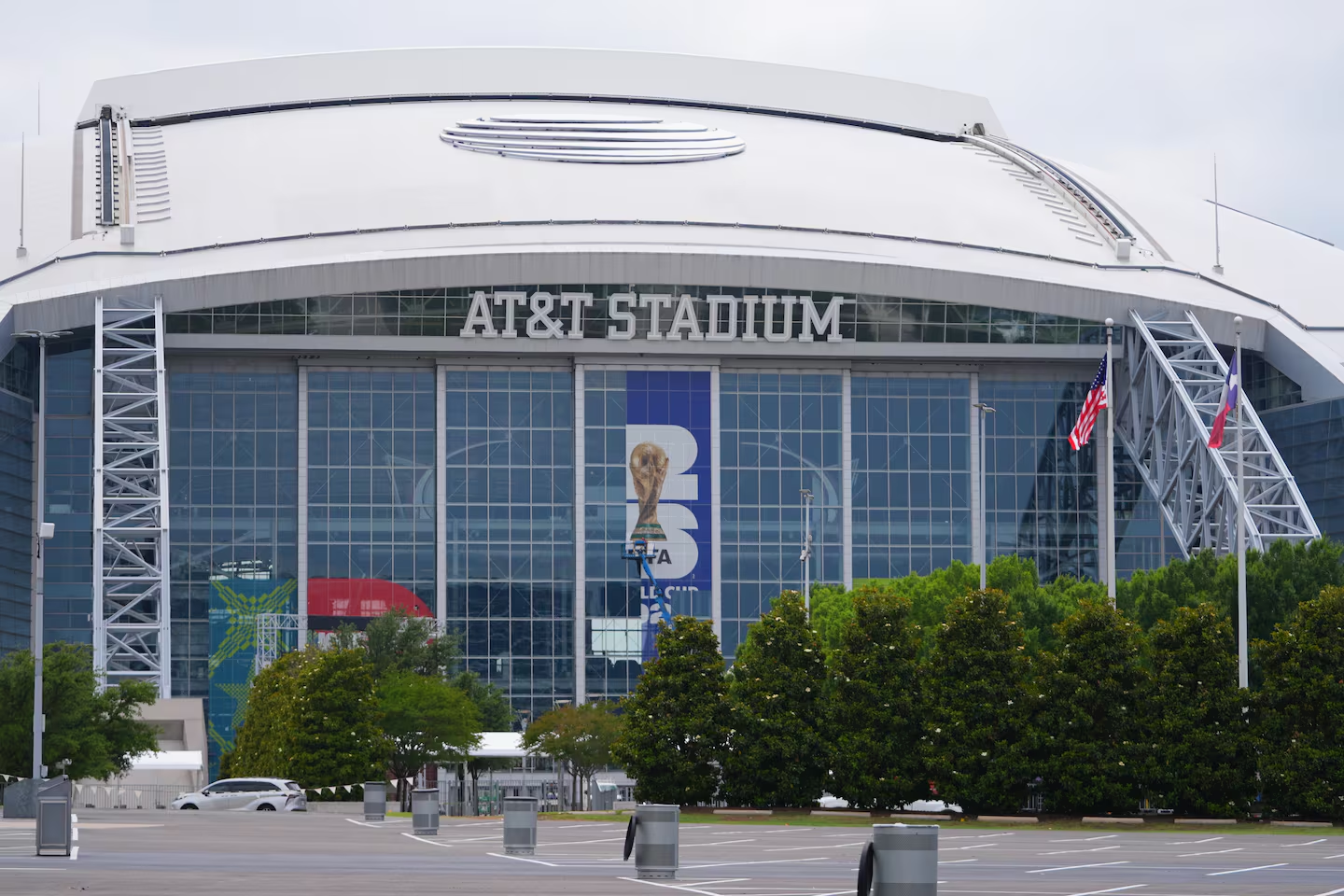
ORLANDO — Dallas Cowboys owners Jerry and Stephen Jones love a big event. Their AT&T Stadium has hosted a Super Bowl, College Football Playoff national championship game, Final Four, and NBA All-Star Weekend.
They are giddy about hosting nine World Cup matches this summer, the most of any stadium, including a semifinal.
“Can’t sleep,” Jerry Jones said recently at an NFL owners’ meeting. “This is a great chance to associate with the worldwide love with soccer, and lets us put a little notch on our belt and share it with what soccer’s about, too. They’ll never be able to take away that we held those games in that stadium.”
The Joneses are also shrewd businessmen, building the Cowboys into a $13 billion behemoth that rates as the most valuable sports franchise in the world. Surely, the Joneses are turning a profit when hosting the World Cup?
“Well, no,” said Stephen Jones, the Cowboys’ CEO. “We’ll be shut down all summer. But it’s worth it. I mean, this is about brand and, you know, being a part of something special.”
Bragging rights and a place in history might be the most compelling reasons to host World Cup matches, because it’s hard to see what’s in it for NFL owners, financially speaking. The experience is riddled with expensive headaches and hoop-jumping, while FIFA keeps most of the revenue, projected to be around $11 billion.
Eleven NFL stadiums will host matches, but several of the league’s cities, including Chicago, Washington, Minneapolis, Denver, and Phoenix, took a pass.
“I know more than a few teams weren’t disappointed to lose the bid,” said one NFL official from a city that won’t be hosting.
The 11 stadiums are built for football, not futbol. Seven had to be converted to natural grass (including Gillette Stadium), spending millions to install underground irrigation and ventilation. Domed stadiums in Atlanta, Dallas, Houston, and Los Angeles also installed LED lighting to grow the grass indoors, and are blasting air conditioning and keeping their roofs closed for the duration of the tournament to create a greenhouse effect.
Several stadiums, such as in Los Angeles and Kansas City, spent millions to remove concrete, field suites, and lower-bowl seating to widen the playing surface to FIFA specifications.
Another headache is FIFA’s “clean site” policy, which requires the stadiums to conceal all corporate logos and advertising that aren’t FIFA’s exclusive partners. Gillette Stadium has been rebranded as “Boston Stadium” for the tournament, and all of its advertising has been concealed, including the “Gillette” name out front (only one sign remains uncovered, for The Kraft Group). The one exception is the giant Mercedes-Benz logo on the roof of “Atlanta Stadium,” which is too cumbersome and expensive to cover up or remove.
There are also opportunity costs. FIFA has an “exclusive use” agreement with all 16 venues across the United States, Canada and Mexico, meaning none of the stadiums can host other events for the next month and a half. In New England, hosting seven matches, it means pushing “Monster Jam” back from April to late July, and a concert series that usually ends in August or early September now goes through October, forcing the Patriots to play three of their first four games on the road. The Patriots Hall of Fame is also closed for two months for FIFA operations, and the team’s pro shop had to relocate to Patriot Place.
Other FIFA stadiums are simply forgoing concerts this summer.
“Last year we had a record year with concerts. We won’t have any this year,” Chiefs president Mark Donovan told Sports Business Journal. “So, you’re giving that up.”
Then there are the little hassles. The Giants and Jets couldn’t host their draft parties at MetLife Stadium, and the Giants will hold the first two weeks of training camp in West Virginia. In Dallas, Jerry Jones has to cover the large window paneling that allows sunlight to beam through, and won’t be able to watch the matches from his owners’ suite.
“I think I’ve got to go someplace else, but that was a part of it,” Jones said. “We did a lot of things to make this work.”
FIFA is paying to rent out the stadiums (though the agreements have been kept under wraps), and local organizing committees are helping pay for many of the costs. But this doesn’t appear to be a windfall for NFL owners. FIFA keeps the revenue from sponsorships, tickets, suites, merchandise, concessions, and parking.
“Just like the Super Bowl, they drive a hard bargain,” Stephen Jones said. “But I think everybody understands how valuable it is to get to host an event like the World Cup in your building. We’re just honored to get to be a part of it.”
Despite FIFA’s Draconian restrictions, the World Cup still brings benefits to some NFL owners. Seven also own teams in Major League Soccer, a league that formed following the 1994 World Cup in the United States, and they are hopeful for a similar boost in soccer this time.
“There’s a great excitement around the World Cup, and I know the fan engagement, the fan interest will just grow dramatically,” said Mark Wilf, owner of the Minnesota Vikings and Orlando City SC. “The stars of the world, the great sport, so much of our youth are playing soccer and it’s a great community bonder. So hopefully they come to a game after this. They’ll get more excited about soccer and raise it to the next level.”
For the hosts who don’t own MLS teams, their participation is more about being seen on TV, and helping the local economy.
“I think it’s an enormous benefit of the economic engine of all of South Florida during the summertime, when maybe hotels aren’t as full,” said Tom Garfinkel, CEO of the Miami Dolphins and Hard Rock Stadium. “To be able to showcase South Florida as a very important market for international soccer and bring the world to South Florida during the summer is a great thing for everyone.”
Rarely do NFL owners act in anything but their best financial interests. But they may have met their match in the World Cup.
“The people that view the World Cup around the world is crazy, the numbers that I’ve seen,” Stephen Jones said. “We want to put on a great show, be a great host. This is a unique opportunity, a once-in-a-lifetime deal, and everybody knows how big the World Cup is.”



Post Comment